


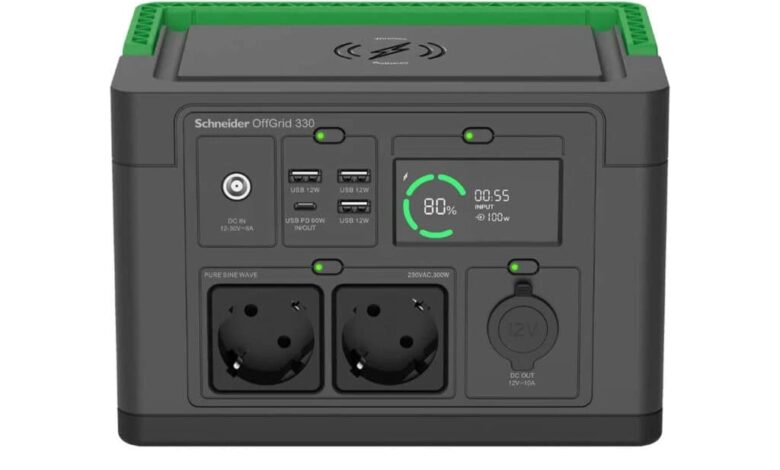
Schneider has brought OffGrid to Indonesia at a time when portable power is moving beyond outdoor recreation and into everyday home use. The device is aimed at users who want a practical energy source that can be carried easily and used without relying entirely on the conventional grid.
The appeal is straightforward. On a camping trip or during overlanding, a portable power station can keep phones, laptops, cameras, and other small devices running far from a wall socket. At home, the same device can serve as a temporary backup when the electricity goes out unexpectedly.
A flexible power station for multiple scenarios
Schneider positions OffGrid as a portable power station built to handle both outdoor activity and household backup needs in one unit. That approach reflects a broader shift in demand, as more consumers look for compact power solutions that are useful in several situations rather than only one.
The device offers a broad set of ports, including AC outlets, USB-A, USB-C, a DC port, an additional car socket, and wireless charging. This range gives users more freedom to charge different devices without carrying multiple adapters.
That versatility makes OffGrid relevant not only for outdoor enthusiasts, but also for mobile workers and home users who need a simple way to keep essential low-power electronics available. Schneider also emphasizes portability, with a design described as light yet durable enough for repeated movement.
Quiet use, with no fuel emissions
One of OffGrid’s practical advantages is the way it operates. Schneider says the unit runs with minimal noise and without the fuel emissions associated with generator-based backup power.
That matters in places where silence is important, such as campsites, and it also makes the device more suitable for home use than many fuel-powered alternatives. For users who want backup power without the sound and fumes of a generator, that difference can be decisive.
Charging options for home, car, and solar use
OffGrid can be recharged through a home wall outlet, a car socket, or a solar panel. The inclusion of solar charging adds flexibility for longer outdoor use, especially in areas far from electricity access.
Car charging also strengthens the product’s portable profile, since users can top it up during travel before arriving at a destination. In practice, the device is meant to shift easily between everyday backup duty and on-the-go power support.
| Charging Method | Use Case |
|---|---|
| Home outlet | Convenient everyday recharging |
| Car socket | Topping up while traveling |
| Solar panel | Outdoor use in off-grid locations |
Emergency features and live status monitoring
Schneider has also equipped OffGrid with an ambient LED light and a blinking SOS mode. Those features are intended to help in emergency situations, especially during outdoor trips or when a home experiences a blackout.
There is also an LCD screen that shows battery capacity and operating status in real time. That display helps users manage power more carefully by indicating how much charge remains and which devices should be prioritized.
Environmental positioning is part of the launch
Schneider says OffGrid is made with 60 percent post-consumer recycled plastic, while its packaging is claimed to be 100 percent recyclable. The device also includes an Eco Mode that automatically shuts power off when not in use.
Those details place sustainability alongside function in the product’s positioning. Portable energy products are increasingly being judged not only by convenience, but also by how efficiently they use power and materials.
Indonesia becomes a more serious market for portable power
The launch suggests that portable power stations are being taken more seriously in Indonesia. What was once mostly seen as a niche item for outdoor hobbyists is now relevant to households, content creators, mobile workers, and anyone who wants a better response to sudden power cuts.
That broader use case helps explain why a product like OffGrid can fit more than one type of consumer. It supports the kind of connected lifestyle where phones, cameras, and laptops need backup power more often than before.
For customers in Indonesia, Schneider OffGrid is available through the company’s official channels, the official APC store, and several e-commerce platforms. The product is priced from Rp 4.9 million.