


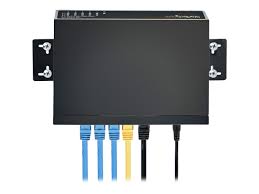
For many home users, the real bottleneck is no longer the internet plan from the ISP. The slower point is often the equipment inside the house, which is why a $44 managed 2.5Gb switch is drawing attention as a practical upgrade.
GoodTop’s GT-ST018M stands out because it combines eight 2.5Gb ports with one 10Gb SFP+ slot at a very low price for its category. That mix gives a home network room to grow without forcing every device to move to 10Gb at once.
Why the upgrade matters
Modern home networks carry far more traffic than they did a few years ago. NAS devices, streaming, online gaming, cloud apps, smart home hardware, and home lab setups all add pressure to the local network.
In that environment, 1Gbps can still cover basic use, but it becomes easier to saturate when large file transfers, backups, and sync jobs run at the same time. Moving key links to 2.5Gb can make those tasks feel much faster even if the internet connection itself remains at 1Gbps or below.
The benefit is most obvious between devices that move a lot of data, such as a desktop and a NAS. Faster LAN traffic can improve local workflows without depending on a faster broadband package.
What the GT-ST018M offers
The GoodTop GT-ST018M is a managed switch with VLAN support and other management features. It is not a big-name enterprise model, but its specifications make it notable in the budget segment.
| Specification | Detail |
|---|---|
| Total ports | 9 |
| 2.5Gb ports | 8 |
| Uplink slot | 1 x 10Gb SFP+ |
| Chipset | Realtek RTL8373N |
| Cooling | Fanless |
| Enclosure | Full metal |
| Power draw | About 12 watts under load |
| Price | $44 during Prime Day |
That combination of speed, port count, and managed features is the main selling point. For users building a faster home network on a tight budget, the value proposition is hard to ignore.
Not just about faster internet
Network upgrades are often discussed as if they only matter for internet speed, but local traffic is where many home setups feel the strain first. Once the backbone or trunk between rooms is improved, file movement between devices can accelerate immediately.
That is why a mixed approach can make sense, with a 10Gb trunk between areas of the house and 2.5Gb switches on the client side to keep costs under control. It is a more realistic path than trying to make every endpoint 10Gb from the start.
If client devices are still limited to Gigabit, they will negotiate down to that ceiling anyway. In that case, the extra network capacity cannot be fully used, which is why 2.5Gb often lands as the most practical middle ground.
Who it suits best
This type of switch is most relevant for users adding a NAS, a small server, or a DIY router or firewall at home. It also fits neatly into more complex smart home and home lab setups where traffic is growing and management features matter.
The switch is also described as a good match with existing router setups, including OPNsense-based configurations. For households that need fewer Ethernet ports, a 4-port version is also available.
That smaller model was said to be discounted to $36 during Prime Day and includes two SFP+ slots. Together, the two versions show that faster home networking does not have to start with expensive enterprise gear.