Valve’s move to expand SteamOS support for desktop PCs with NVIDIA GeForce GPUs marks a more serious push into mainstream Linux gaming. The development matters because NVIDIA hardware has long been one of the biggest friction points for Linux users who wanted a smooth gaming setup.
For PC gamers, the significance is straightforward: SteamOS is no longer being positioned only as a Steam Deck companion. It is starting to look like a broader gaming platform that could appeal to desktop users who want a simpler, more controlled Linux experience.
A smoother path for GeForce users
Valve is reportedly working with NVIDIA to improve driver support on SteamOS, with the goal of making GeForce-based desktop PCs easier to run on the operating system. That would reduce the manual work usually associated with Linux gaming on NVIDIA hardware.
In the traditional Linux setup, proprietary NVIDIA drivers often require extra configuration before everything works properly. That has kept many users away from Linux as a gaming platform, especially those who want convenience rather than technical tinkering.
The updated support aims to move SteamOS closer to a plug-and-play experience. In practical terms, that means fewer barriers between installing the system and actually starting a game.
Why this matters beyond Steam Deck
The expansion also signals that SteamOS is being shaped as a more open platform for different PC configurations. SteamOS already supports AMD and Intel GPUs, while NVIDIA compatibility has remained a work in progress.
If that gap closes, desktop gamers will have more hardware choices without losing the simplicity that SteamOS is trying to deliver. That is an important shift in a market where GPU ownership is spread across multiple ecosystems, not just one dominant option.
SteamOS itself is built as an immutable Linux system, which means its core structure is not freely altered. That design favors stability and security while keeping the operating system focused on gaming rather than general-purpose customization.
| SteamOS Direction | What It Means | Why It Matters |
|---|---|---|
| Immutable Linux base | Core system changes are restricted | Supports stability and security |
| AMD and Intel support | Already available on SteamOS | Broadens hardware compatibility |
| NVIDIA GeForce support | Currently being improved | Could simplify desktop adoption |
Proton remains a key part of the story
Hardware support is only one part of Valve’s wider plan. SteamOS also relies on Proton, the compatibility layer that allows thousands of Windows games to run on Linux.
That layer is essential because game availability has always been one of Linux’s biggest weaknesses. Proton reduces that gap by letting players access a large library without waiting for every title to receive a native Linux version.
Even so, the platform still faces limits. Anti-cheat systems and DRM technologies continue to block access to some popular games, especially in competitive multiplayer categories.
Many anti-cheat mechanisms are still not fully compatible with Linux, which means broader driver support cannot solve every problem on its own. The NVIDIA collaboration should therefore be seen as one piece of a larger effort to make Linux gaming more practical.
Part of a wider Valve strategy
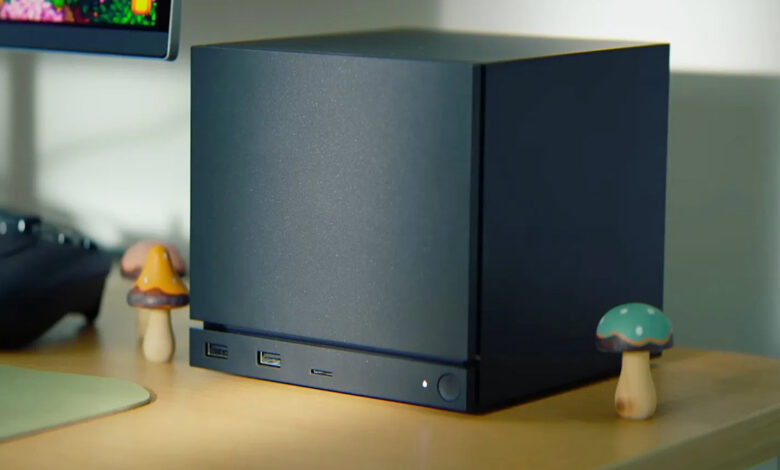
The push toward NVIDIA support also fits Valve’s broader effort to bring SteamOS into the living room through Steam Machine. The device is scheduled to launch on 29 June, with prices starting at $1,049 and early access available through a reservation system.
Steam Machine runs SteamOS and is meant to combine console-like simplicity with PC performance. In that context, desktop GeForce support becomes strategically important because it expands the hardware base that can sit inside the SteamOS ecosystem.
Valve’s direction is becoming clearer: make Linux a more realistic option for mainstream gaming by reducing setup friction and improving device compatibility. That approach could make SteamOS more approachable for users who do not want a deeply technical operating system.
What it could mean for the broader Linux gaming market
The effect is not limited to Valve alone. The Linux gaming community has also been supported by other projects such as Bazzite and ChimeraOS, both of which serve different needs for players.
Still, Valve’s investment sends a stronger signal to hardware makers and game developers that Linux deserves attention as a real gaming market. Over time, that could improve device support and potentially encourage more native Linux game development.
SteamOS may also become a gateway for users who have never seriously considered Linux before. Because the system is focused narrowly on gaming, it offers a more understandable entry point than general-purpose Linux distributions.
At the same time, the immutable design highlights Linux’s strengths in security and stability, which can extend beyond gaming into more controlled environments. With Linux’s share on Steam currently said to be around 4%, every major compatibility improvement could matter in pushing adoption further.