


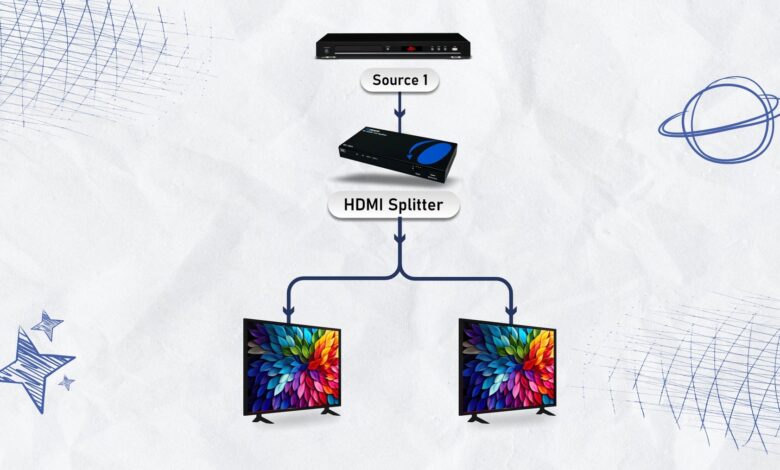
Many buyers still confuse HDMI switch and HDMI splitter when choosing equipment for a TV, monitor, or presentation setup. The mistake seems small, but the two devices do opposite jobs and choosing the wrong one can leave a system unfit for daily use.
The confusion is easy to understand because modern entertainment and work devices keep multiplying. Game consoles, laptops, projectors, TV boxes, and smart TVs all rely on HDMI as a standard for video and audio connections.
Why an HDMI switch is used
An HDMI switch connects several source devices to one display through a single HDMI port. It is designed for users who want to move between input devices without unplugging cables every time.
In practical use, the device is a fit for televisions with limited HDMI ports but multiple devices to connect. Users usually press a button or use a remote control to choose which source appears on screen.
Why an HDMI splitter is different
An HDMI splitter does not choose between sources. Instead, it duplicates one HDMI signal and sends the same image to two or more screens at the same time.
This makes the splitter useful for conference rooms, retail promotion displays, or multi-room viewing where the same content must appear on several displays at once.
| Device | Main Function | Best Use Case |
|---|---|---|
| HDMI Switch | Connects multiple devices to one display | Limited TV ports, frequent source changes |
| HDMI Splitter | Copies one signal to multiple displays | Presentations, retail screens, multi-room viewing |
How to choose the right one
The best choice depends on the setup that will be used every day. If a television has too few HDMI ports and the user owns many devices, an HDMI switch is the more practical option.
If the same content must appear on several screens, an HDMI splitter is the correct choice. The two devices are not interchangeable because their purposes are fundamentally different.
Before buying, resolution support should be checked carefully. The right model should match the intended use, whether it is Full HD, 4K, or 8K with newer devices.
HDMI version compatibility also matters because it helps preserve picture and sound quality while ensuring the device works properly with connected equipment. A device that fits physically is not necessarily the one that performs best.
Power supply is another important detail. Models with an external power adapter generally provide more stable signals, especially when handling high resolutions or multiple screens at once.
Port count should also be reviewed before purchase. Checking the number of input and output ports in advance can help avoid later upgrades and create a cleaner, more efficient setup.
The difference between an HDMI splitter and an HDMI switch is simple, but it is often overlooked during shopping. Understanding the purpose of each device helps buyers choose the right tool instead of being misled by a low price or by a larger number of ports.