Ford is rewriting part of its quality strategy by bringing back experienced engineers after heavy reliance on automation and AI did not deliver the results it expected. The company says the shift is now helping both early product quality and cost efficiency.
The move highlights a broader lesson for the automotive industry: software can support quality control, but it cannot fully replace hard-earned engineering judgment. In Ford’s case, that judgment had been thinning out just as the company leaned more aggressively on automated systems.
Veteran engineers are back in the process
According to Bloomberg, Ford has rehired around 350 veteran engineers over the past three years. The group includes former Ford employees as well as people from suppliers with long industry experience.
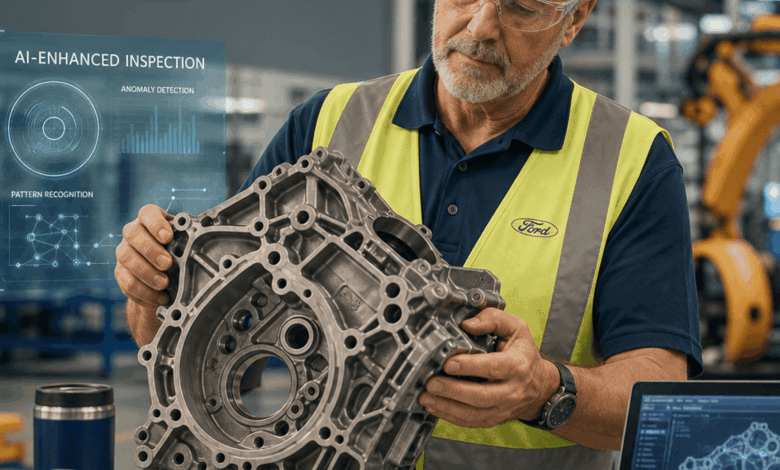
Internally, these seasoned specialists are known as “gray beard” engineers. Their role is not limited to advisory work, since they now help mentor younger staff, retrain AI tools, and spot defects before they reach the factory floor.
| Quality Recovery Step | What Ford Is Doing |
|---|---|
| Veteran hiring | Rehired about 350 experienced engineers in three years |
| Human oversight | Veterans lead mandatory quality reviews in development |
| Software support | A 40-person software quality assurance team was created |
| AI validation | More than 100,000 AI-based validation tests were added |
Charles Poon, Ford’s vice president for vehicle hardware engineering, said the company overestimated what AI could do on its own. He said Ford wrongly assumed that feeding design requirements into an AI system would automatically produce high-quality vehicles.
Poon still described AI as a strong tool, but he stressed that its results depend heavily on the data used to train it. That dependence became a problem when the company had not preserved enough of the practical know-how held by its most experienced engineers.
Ford’s quality reset goes beyond hardware
Chief Operating Officer Kumar Galhotra said Ford had increasingly relied on automated quality systems without getting the results it wanted. He positioned veteran engineers at the center of the company’s recovery plan.
Those engineers now lead required quality reviews during development, shifting the process away from fixing problems after they appear. Ford says the new approach is designed to catch weaknesses earlier, before they become production or customer issues.
The company has also tightened collaboration across software, manufacturing, and supply chain teams. Ford says that closer coordination helps problems surface earlier in the development cycle, rather than later in the factory or after delivery.
A dedicated 40-person software quality assurance team has been formed as well. Its job is to improve software reliability before vehicles reach customers, reflecting how much modern vehicle quality now depends on code as much as hardware.
AI remains, but with stronger human input
Ford is not abandoning AI. Instead, it is feeding the systems better input from experienced engineers so the output is more accurate and relevant.
The company says it has added more than 100,000 AI-based validation tests to help find edge cases and stress-test vehicle software under a wide range of conditions. The automated framework also allows engineers to quickly revalidate software when late-stage changes are made.
That combination of automation and human review is helping Ford move from a reactive model to a preventive one. The company says the early signs are encouraging, with improvements appearing in both quality and cost performance.
For Ford, the turnaround appears to be less about choosing people over machines than about restoring balance between them. AI still matters, but the company is now relying on the judgment of engineers who understand the full path from design to production.