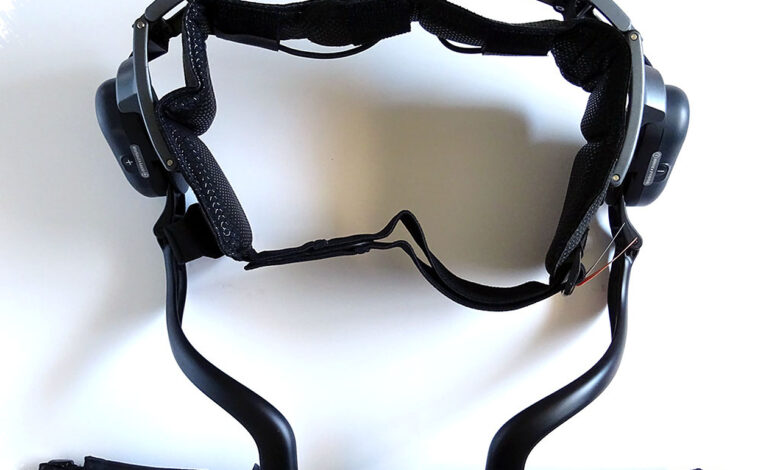
Dnsys X1 Carbon is drawing attention for a simple reason: it promises real help on hills, stairs, and long walks without being marketed as a medical or rehabilitation device. Weighing 1.6 kg, the hip-assist exoskeleton is designed to add power when users need it and resistance when they want a harder workout.
That positioning makes it different from many wearable mobility products. Dnsys says the X1 Carbon does not provide balance support, but instead transfers extra force to the hip joint or switches into training-focused modes that make the body work harder.
Where X1 Carbon sits in the lineup
The X1 Carbon is the middle model in the Dnsys X1 family. Below it sits the X1 Lite, while the X1 Carbon Pro adds a second battery, titanium components, and engraving options.
The product first appeared on Kickstarter, where it raised around $1.4 million from more than 1,700 backers. It is now sold directly through Dnsys, with a retail price of $1,299, and it also appeared in a Prime Day promotion at $829 after a $470 discount plus one free X1 Smart Battery.
| Model | Position | Notable Difference | Price Detail |
|---|---|---|---|
| X1 Lite | Entry model | Lower tier than X1 Carbon | Not stated |
| X1 Carbon | Mid model | Balanced feature set | $1,299 retail |
| X1 Carbon Pro | Top model | Second battery, titanium parts, engraving | Not stated |
Dnsys says the production version is noticeably refined compared with the earliest prototype. The company points to a wider and softer waist belt, a more secure front lock, a battery clipped to the belt, quieter motors, and a more intuitive control system.
What the exoskeleton is built for
The X1 Carbon appears most useful for people who regularly deal with long inclines, stair-heavy days, or uneven terrain. In those situations, the extra force at the hips is more noticeable than it would be on flat sidewalks.
It may also appeal to younger and older users who still have full mobility but want to extend range or feel less fatigue after activity. Dnsys does not recommend it for users with skeletal, muscular, or neurological conditions, or for anyone with balance limitations.
Fast setup, compact package
The retail package includes the exoskeleton unit, one 2,400 mAh Smart Battery, a charger and EU wall adapter, a battery-to-exoskeleton cable, a carry case, a USB-C cable, two waist Velcro sizes, and two thigh strap inserts. Dnsys says the full package remains under 2 kg.
Fitting is designed to take less than 60 seconds. The device is worn like a belt around the waist, then its power arms are connected to the legs with elastic straps.
The belt sits high on the hips and uses a rear dial for fine adjustment, while the thigh cuffs tighten with a side dial. The battery is mounted on the belt so it stays stable during movement.
Dnsys also provides fitting guidance in the companion app. That matters because the device needs to match the user’s posture and stride to deliver the most effective support.
Six modes, from support to resistance
Control works through either the app or the belt buttons. The plus button increases support, the minus button reduces it, and color-coded LEDs show the active mode.
The available modes are Eco, Sport, Boost, Transparent, Aqua, and Aqua Plus. Eco gives light assistance with the best battery efficiency, Sport is intended for hills and longer walks, and Boost provides maximum support for sprints and steep climbs.
Transparent keeps the motor active without delivering noticeable push. Aqua and Aqua Plus reverse the motor function to create resistance, making the hips, glutes, and hip flexors work harder.
The app also shows step count, battery remaining, and the amount of force being delivered. Presets are included for scenarios such as walking and hill climbing.
On-road behavior and battery life
In Eco mode on flat ground, the support is subtle. Its presence becomes easier to notice when the device is switched off mid-walk, because the body immediately has to do more work.
Sport is described as the most useful mode for climbing. Steep hills feel easier to manage, and leg strain is reduced compared with walking without assistance.
Boost delivers the most obvious push with each step. Dnsys says sprint assistance can reach 17 km/h, although that figure has not been independently verified in the usage shared so far.
The system also adapts to walking pace. If a user selects Boost but keeps a relaxed pace, the motor works only lightly because the device follows the user’s rhythm instead of forcing a faster gait.
Aqua mode serves a different purpose on descents. Its controlled resistance can help reduce stress on the knees and quadriceps during long downhill sections.
Dnsys claims up to 7 hours of battery life per battery on the X1 Carbon. That figure appears realistic in Eco mode on flat terrain, but it can drop closer to 3 hours in Sport on sustained climbs and fall further in Boost or Aqua Plus under constant load.
When battery capacity falls below 20 percent, the device limits itself to Eco mode. A full charge from empty takes around an hour and a half.
Comfort, noise, and practical trade-offs
Multi-hour use is described as comfortable overall. Some sweat build-up can happen under the belt in warm weather, but there are no reports of excessive chafing or thigh cuffs biting in.
The unit is also said to handle splashes and light rain without issue. Still, all-day use in heavy rain is not recommended.
The most noticeable compromise is motor noise when assistance is active. The hum is audible with every step, although the benefit it provides is considered enough to make that trade-off acceptable.
If the battery runs out mid-trip, the user is still carrying about 2 kg of passive hardware at the waist. That remains manageable for a few miles, but it is a factor worth considering before taking the X1 Carbon on a long and demanding route.
What buyers should keep in mind
A spare battery looks important for serious users. The additional Smart Battery costs $139, while the X1 Carbon Pro includes two batteries from the start.
There is also a small practical bonus in the battery base: it includes a USB-C output that can be used to charge a phone in an emergency.
For users who frequently face stairs, steep streets, or uneven walking routes, the X1 Carbon aims to make those moments feel less demanding. For everyone else, it remains a niche but unusually capable piece of wearable hardware.