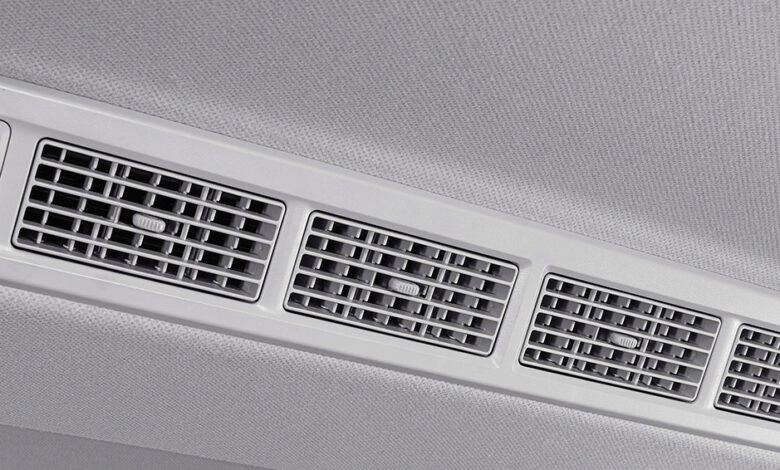
A car air conditioner that suddenly stops cooling can be alarming, especially when the cabin quickly turns uncomfortable in hot weather. In many cases, however, the problem does not require an immediate major teardown or an expensive workshop visit.
Several basic checks can help narrow down the source of the fault before a technician is involved. That early assessment can also prevent a small issue from developing into a more serious and costly repair.
Start with the compressor
The compressor is one of the main components that deserves attention first. When the engine is running and the AC is set to the lowest temperature, drivers can open the hood and listen for a “click” sound while checking whether the center of the compressor pulley turns together.
If the sound is absent or the pulley does not move, the magnetic clutch may be the issue. The problem can also be related to a relay, a fuse, or refrigerant pressure that has dropped too low.
Check the AC pipes for temperature changes
After the AC has been on for about five minutes, the pipes in the engine bay can provide important clues. Under normal conditions, the smaller pipe should feel warm, while the larger pipe should feel very cold and may even develop condensation.
If both pipes show no clear temperature difference, the cooling system should be suspected. That pattern suggests the cooling process is not working as it should.
Do not ignore a dirty condenser
The condenser, located in front of the radiator, must release heat effectively for the AC system to work well. When its surface is covered with dust, mud, or dry leaves, heat dissipation becomes less efficient.
As a result, the air coming from the cabin vents may no longer feel as cold as usual. Cleaning should be done with low-pressure water spray so the fins are not damaged.
Make sure the cooling fan is operating
When the AC is switched on, the condenser fan should also spin. If it does not, the symptoms are often more noticeable when the car is stationary, because the AC turns warm and then becomes cold again once the vehicle starts moving.
That pattern usually points to a fan-system fault. The cause may be the fan motor, a relay, or a fuse.
A clogged cabin filter can weaken airflow
Many owners assume the AC has failed when the real problem is restricted airflow. A cabin filter filled with dust can reduce the strength of the air coming into the cabin and may also create an unpleasant smell inside the vehicle.
If the filter is still serviceable, it can be cleaned. If it is too dirty, replacement is usually the better option to restore proper airflow.
Watch for signs of low refrigerant
Refrigerant is essential to the cooling process, but it does not disappear on its own unless there is a leak. For that reason, AC that stays cold only briefly, emits a hissing sound, or causes the compressor to cycle on and off too often should be checked promptly.
Those symptoms can indicate abnormal refrigerant pressure. If ignored, AC performance will keep dropping and the risk of damage to other components may rise.
| Check | Normal Sign | Possible Problem |
|---|---|---|
| Compressor | Click sound and pulley rotation | Magnetic clutch, relay, fuse, or low refrigerant pressure |
| Pipes | Small pipe warm, large pipe very cold | Cooling system not working properly |
| Condenser | Clean surface and effective heat release | Dirt, mud, or leaves blocking heat dissipation |
| Cooling fan | Fan spins when AC is on | Fan motor, relay, or fuse fault |
| Cabin filter | Strong airflow and no odor | Dust buildup restricting air circulation |
| Refrigerant | Stable cooling performance | Pressure abnormal, possibly due to a leak |
As a general reference, normal AC outlet temperature is around 5 to 10 degrees Celsius. If the air being blown out is already in the 12 to 15 degrees Celsius range or higher, the system likely needs further inspection.
These simple checks do not replace professional diagnosis at a workshop, but they can help drivers identify trouble sooner. They also make it easier to judge whether the AC still needs only light maintenance or immediate attention from a technician.