


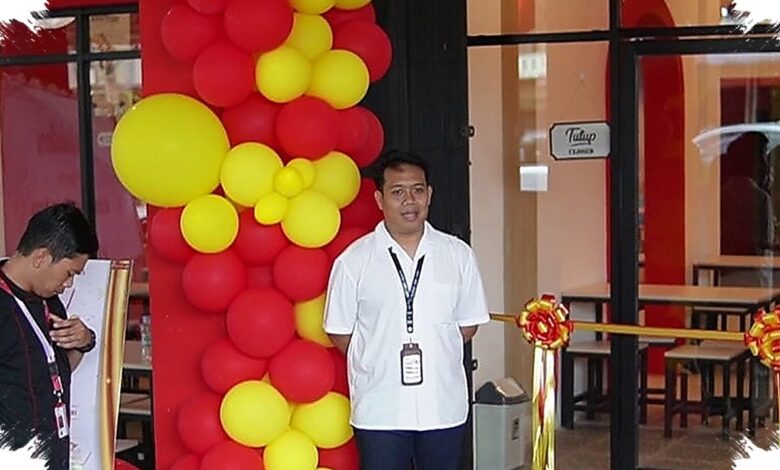
In a business climate that changes quickly, Rama Aditya sees technology as more than a support tool. For him, it is the foundation for building a company that stays efficient, measurable, and ready to grow.
That view reflects the path of a Tangerang entrepreneur who now leads PT IKN and PT FSI as CEO. His approach centers on systems, not shortcuts, and on using digital tools to make operations more resilient.
Building resilience from the start
Rama Aditya, also known as Aditya Ramadhan, was born in Tangerang on February 11, 1996. As the eldest of four siblings, he grew up with a strong sense of responsibility and a habit of treating challenges as problems that must be solved.
That mindset shaped his business outlook early on. He has said that success is not defined by where someone starts, but by the courage to begin and the consistency to keep going.
| Profile Detail | Information |
|---|---|
| Full name | Aditya Ramadhan |
| Known as | Rama Aditya |
| Birthplace | Tangerang |
| Date of birth | February 11, 1996 |
| Current roles | CEO of PT IKN and PT FSI |
He also once noted, “History has repeatedly proven that many great people were born from zero, from limitations, and from being underestimated. Anyone can become anything.” The statement shows how personal experience can become a source of endurance in business.
Technology as a management foundation
Rama’s educational background in Management Informatics at STMIK Jakarta helped shape his view of technology as a core part of business governance. He sees digital systems as the practical way to make work faster and more consistent.
With technology integrated into management, companies are less dependent on old habits. Information systems can reduce operational errors, maintain quality standards, and support expansion across different regions.
That approach also helps decision-making become more measured. Data becomes the basis for growth, so business development does not happen randomly but follows a clear and repeatable process.
Turning pressure into opportunity
For Rama, challenges are not always obstacles. In many cases, pressure can push a company to improve its systems, speed up innovation, and find more effective ways of working.
This is where technology becomes especially valuable. When the right system is in place, a company can use difficult conditions to build a stronger structure in daily operations and in business expansion.
The same logic helps maintain consistency as scale increases. Technology makes processes easier to replicate, which keeps service and work quality aligned even across different locations.
A culture of innovation cannot wait
Rama believes comfort can slow growth. Because of that, he argues that change should begin now and innovation should become part of organizational culture, not just a reaction after problems appear.
That mindset matters for any business looking to endure over the long term. If a company only moves when pressure arrives, room for growth shrinks and opportunities to lead may disappear faster.
When technology becomes a routine part of work, an organization has a better chance of building a system that can withstand testing. At that point, challenges are no longer seen only as threats, but as openings to improve operations and widen the impact of the business.
For Rama Aditya, that shift from limitation to structure is the real value of technology. It is not simply about keeping up with change, but about creating a business model that can face it with discipline and stay relevant as conditions evolve.