The Rp400,000 smartband segment is no longer defined by basic step counting alone. Devices in this price range now commonly offer AMOLED displays, health tracking, and long battery life, making them far more practical for everyday use.
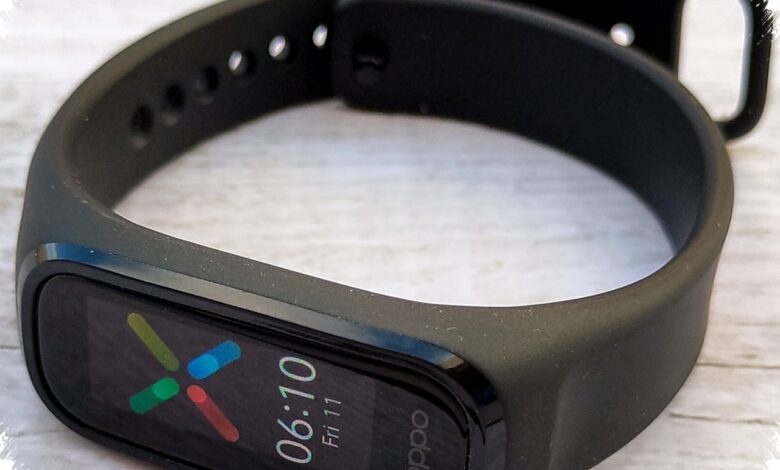
That shift is what keeps OPPO Band Sport relevant for buyers who want a compact wearable without paying smartwatch prices. Its light build, AMOLED screen, and health-monitoring features still place it in a competitive position for daily activity tracking.
Why the entry-level smartband market has changed
In 2026, entry-level wearables are increasingly expected to monitor heart rate 24 hours a day, track SpO2, record sleep, and support multiple sports modes. For students, office workers, and first-time health-conscious users, that combination is often more useful than a larger smartwatch body.
Smartbands also remain attractive because they are easier to wear all day. Their slim shape and lighter weight make them more comfortable for walking, cycling, jogging, and sleep tracking than many bulkier wearables.
Where OPPO Band Sport still stands out
OPPO Band Sport’s main appeal is its AMOLED display. At around Rp400,000, an AMOLED panel is still a notable advantage because it generally offers brighter visuals, sharper colors, and better power efficiency than TFT alternatives.
The lightweight design adds to that appeal. A smartband that stays comfortable from morning to night is easier to use consistently, especially when it is also worn during exercise or overnight sleep monitoring.
Its health features are also part of the attraction. Heart-rate tracking, SpO2 measurement, and sleep monitoring remain among the most important functions buyers look for before choosing a budget smartband.
| Device | Key Features | Battery Claim | Price Range |
|---|---|---|---|
| OPPO Band Sport | AMOLED display, lightweight body, heart-rate tracking, SpO2, sleep monitoring | Not stated in the source | Around Rp400,000 |
| Xiaomi Smart Band 9 Active | 1.47-inch display, more than 50 sports modes, heart-rate monitoring, SpO2, sleep tracking | Up to 18 days in normal use | Still around Rp400,000 on Indonesian marketplaces |
What buyers now expect below Rp500,000
The competition in this segment has become tighter as brands push more features into lower price brackets. Battery life of 10 to 18 days is now common, along with water resistance that supports everyday sports use and routine exposure to water.
Xiaomi Smart Band 9 Active is one of the clearest examples of that pressure. With a 1.47-inch screen, more than 50 sports modes, and a battery that can last up to 18 days in normal use, it shows how much value is now available at roughly the same price.
Features that matter before buying
Display quality remains one of the first things to check because many smartbands in this price range now use AMOLED panels. Some models also include Always On Display, which lets users see time and notifications without fully waking the screen.
Sports mode variety is another important factor. Walking, running, cycling, yoga, swimming, and strength training are all examples of activities that become easier to track when the device supports a broad set of exercise profiles.
Battery and water resistance also deserve attention. Most strong contenders in this category offer at least IP67 or 5 ATM protection, making them suitable for rain, handwashing, and general workout use when handled according to the maker’s guidance.
The companion app can be just as important as the hardware. Stable syncing, software updates, and notification settings are easier to manage when the device works with a mature platform such as Mi Fitness, Zepp Life, or Huawei Health.
For that reason, smartband buyers are increasingly evaluating the ecosystem behind the device, not just the screen or sensor list. In a market where budget wearables are no longer stripped down, OPPO Band Sport still makes sense for users who want the basics done well in a compact form.