


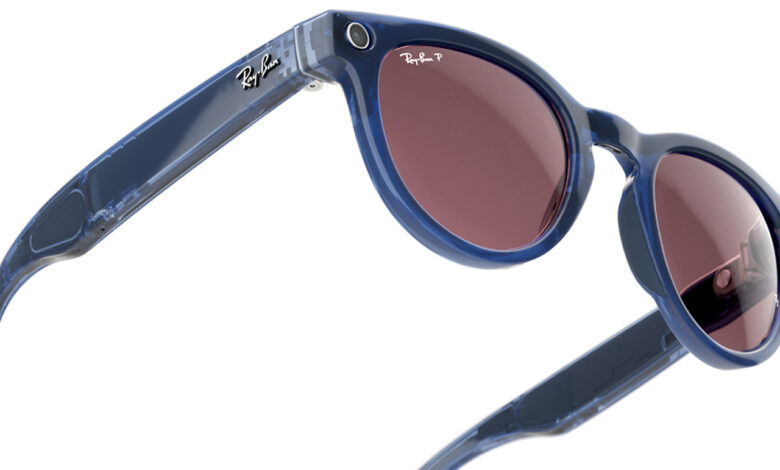
Meta has started limiting one of the most practical features on Ray-Ban Meta smart glasses, and the new rule is likely to frustrate users who relied on it in daily conversations. Conversation Focus, which makes it easier to hear the person directly in front of the wearer, now comes with a tight free-use cap and a paid tier for heavier use.
The change is notable because Conversation Focus is not a flashy add-on. It is designed to amplify the voice of a nearby speaker while reducing surrounding chatter, using the glasses’ microphones and speakers to make face-to-face conversations clearer in noisy environments.
Free usage is now sharply limited
Meta says users without a Meta One Premium subscription get only three hours of Conversation Focus each month. That works out to roughly six minutes a day, which is a narrow allowance for a feature meant to be useful in everyday situations.
Users who want more access must pay $20 per month for Meta One Premium. The subscription increases the limit to 15 hours per month, or about 30 minutes per day, according to Meta’s help page.
| Plan | Monthly Price | Conversation Focus Limit |
|---|---|---|
| Free | $0 | 3 hours per month |
| Meta One Premium | $20 per month | 15 hours per month |
The restriction stands out because Conversation Focus does not appear to depend on Meta’s AI system to function. Instead, it seems to rely mainly on the glasses’ hardware and microphone processing to strengthen the relevant voice in front of the user.
That makes the paywall feel unusual, especially since Meta One Premium is presented as a package for “advanced AI features” across Meta platforms and devices. Conversation Focus now sits inside that paid bundle even though its core function looks more like audio enhancement than generative AI.
Meta says the glasses still include some free usage
Meta says there is no subscription requirement to use AI glasses, and that devices still include “free monthly usage” for certain features. Even so, the three-hour cap leaves little room for people who may need Conversation Focus in specific social or work settings.
Another limitation is that unused minutes do not roll over into the next month. For users who only need the feature occasionally, the cap may feel even tighter than it first appears.
Version 26 brings other updates too
Conversation Focus is part of the Ray-Ban Meta software version 26 rollout, which Meta has been bringing to different markets gradually since it was announced in 2025. The same update also adds Muse Spark AI, described as the next generation of the feature.
Other additions in the update include Dynamic Photo burst mode, support for Instagram Instants, and voice chat on WhatsApp. Meta also added a battery saver mode to improve power efficiency on the glasses.
Language support is expanding as well. Ray-Ban Meta now fully supports Japanese and Korean, while 14 new translation languages have been added, including Greek, Dutch, Thai, Russian, Turkish, and Mandarin.
Among all of these additions, the paywall around Conversation Focus is the most controversial change. Meta is not applying a similar paid restriction to Muse Spark, which makes the decision to charge for a conversation-centered hardware feature feel even less expected.
Meta does not classify Conversation Focus as an accessibility feature, but in real-world use it can still support users who need a clearer way to follow speech in crowded places. For those looking for a similar experience without a subscription, Apple AirPods Pro 3 offer a related feature, though they require an iPhone.
The move suggests that Meta is broadening what it places inside premium access. It is no longer only advanced AI that gets tied to a subscription, but also a hardware-based feature that can make ordinary conversations easier to hear.