


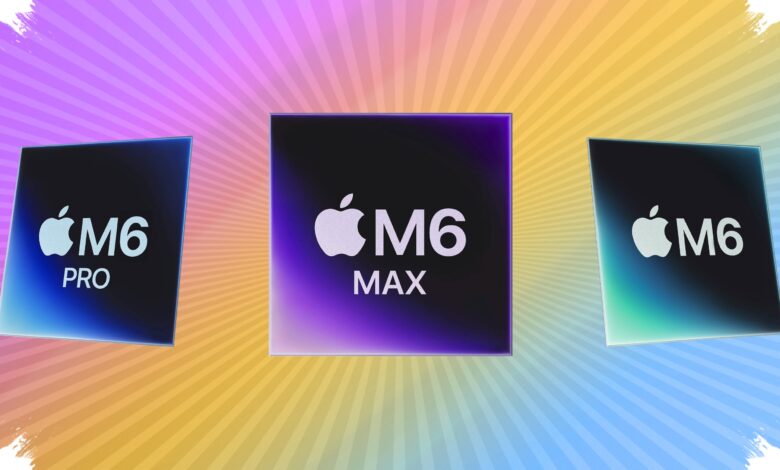
Apple is reportedly preparing a notable shift in its Apple Silicon roadmap. According to Bloomberg, the company may release the M6 only in a standard version, without continuing the Pro and Max variants that have typically followed.
The move would break a pattern Apple has maintained since the transition to Apple Silicon in 2020. If the report proves accurate, M6 would become the first Apple Silicon chip generation to arrive in a single configuration only.
Why the change stands out
Apple has long structured its Mac chip lineup in layers. A base model would usually be followed by Pro, Max, and later Ultra versions to serve users with progressively heavier workloads.
That approach has been used from M1 through the latest chip generations. As a result, the reported absence of M6 Pro and M6 Max is being viewed as the most visible departure from Apple’s usual processor strategy.
The focus appears to be moving to M7
Bloomberg reports that Apple is changing its internal priorities. Instead of fully developing the M6 family, company resources are said to be shifting directly toward accelerating the next-generation M7.
The reported adjustment suggests Apple may be aiming for a bigger jump in its next chip cycle. It also points to a strategy that values a faster transition to the following generation over expanding the M6 lineup.
Apple has not confirmed the report, so the discussion remains in rumor territory for now. Even so, the possibility is already drawing attention because it could reshape how Mac updates are rolled out across different user segments.
Potential impact on the Mac lineup
If only the standard M6 launches, Macs that usually depend on Pro or Max chips may not receive upgrades on the same schedule as before. Professional users could therefore face a longer wait for hardware improvements at the higher end of the lineup.
The current Apple Silicon structure gives clear separation between mainstream and professional devices. Base chips cover everyday computing, while Pro and Max variants handle more demanding creative and technical workloads.
Removing M6 Pro and M6 Max would simplify the product rhythm, at least temporarily. It would also reduce the number of chip choices available across Apple’s Mac portfolio during that cycle.
| Chip Generation | Usual Pattern | Reported M6 Plan |
|---|---|---|
| M1 to recent generations | Base, Pro, Max, and sometimes Ultra | Not reported as changing in the same way |
| M6 | Would typically expand into Pro and Max | May arrive only as a standard version |
| M7 | Future generation | Development may be accelerated |
Why the report matters
Apple has built its reputation on steady gains in CPU performance, GPU capability, and energy efficiency with each Apple Silicon generation. Because of that, even a rumored change in chip planning becomes a major talking point for the market and industry watchers.
A faster push toward M7 suggests Apple may be targeting a more meaningful leap rather than a gradual extension of M6 into multiple versions. If that strategy works, Mac could become even stronger in the premium segment where efficiency and performance matter most.
For now, however, the practical consequence is uncertainty for users who were expecting the usual progression of Pro and Max models. The next few chip cycles may reveal whether Apple is simplifying the roadmap temporarily or setting a new direction for Apple Silicon altogether.