


Indonesia is trying to turn its mineral wealth into leverage in the global race for AI and semiconductors. Rather than remain only a technology market, the country wants to position itself as a player that can influence how the digital ecosystem develops.
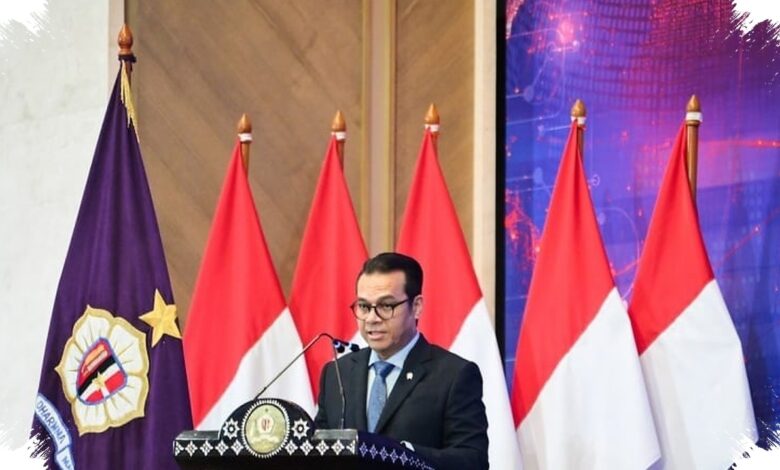
The clearest signal comes from the government’s push for chip diplomacy, with critical minerals, data centers, and access to compute placed at the center of national strategy. In Jakarta Geopolitical Forum remarks quoted by Suara.com, Deputy Minister of Communication and Digital Nezar Patria said those assets should be used to negotiate technology access, transfer, and manufacturing partnerships.
Minerals as bargaining power
Indonesia’s advantage starts with commodities that sit at the core of modern technology supply chains. Nezar highlighted nickel, cobalt, and copper as strategic assets that can help Indonesia secure better access to compute and semiconductor manufacturing.
| Commodity | Indonesia’s Position | Role in the Digital Ecosystem |
|---|---|---|
| Nickel | Largest reserves in the world | Global battery supply chains |
| Cobalt | Second-largest producer in the world | High-performance batteries and advanced semiconductors |
| Copper | Third-largest ore exporter | Wiring systems and AI data center cooling |
He also warned that the country should not stop at exporting raw materials. The strategic value of those minerals, he argued, should help Indonesia move beyond being a technology consumer and into a central role in the global AI ecosystem.
Four national strengths in one strategy
Indonesia’s approach is built around four major strengths: critical mineral reserves, the largest digital market in Southeast Asia, a demographic dividend, and potential computing capacity. Officials see those pillars as the basis for a broader digital geopolitics strategy that protects national interests in a period of rivalry between the United States and China.
Nezar said those advantages must be connected to digital talent development, stronger data governance, and a growing technology industry. In his view, future national strength will depend not only on innovation, but on the ability to build an entire AI ecosystem.
What the government wants next
The government’s priorities now include chip diplomacy, stronger energy supply for data centers, AI and semiconductor talent development, data sovereignty, and AI technologies adapted to Indonesia’s needs. Officials believe those steps are necessary if the country is to avoid falling behind in an increasingly competitive technology landscape.
Nezar said progress toward the Indonesia Emas 2045 vision depends on consistency in building digital foundations. Those foundations include infrastructure, data centers, institutions, and human resources capable of supporting the country’s ambitions in the AI era.
He also stressed that digital strength is not only about technology. “Digital power is ultimately not just about technology itself. It is about political will, the will to sustain strategy across governments, to build institutions gradually, and to decide the future geopolitical direction of Indonesia,” he said.
With strategic minerals, a large digital market, and a demographic dividend, Indonesia is now treating AI and semiconductors as part of geopolitics rather than only industrial policy. The remaining challenge is whether those strengths can be connected into one ecosystem strong enough to raise the country’s bargaining position on the global stage.
| Priority Area | Government Focus | Strategic Goal |
|---|---|---|
| Chip diplomacy | Negotiating access and partnerships | Better technology transfer and manufacturing ties |
| Data centers | Energy supply and infrastructure | Support AI-scale operations |
| Talent and data | AI and semiconductor skills, data sovereignty | Build a durable national ecosystem |