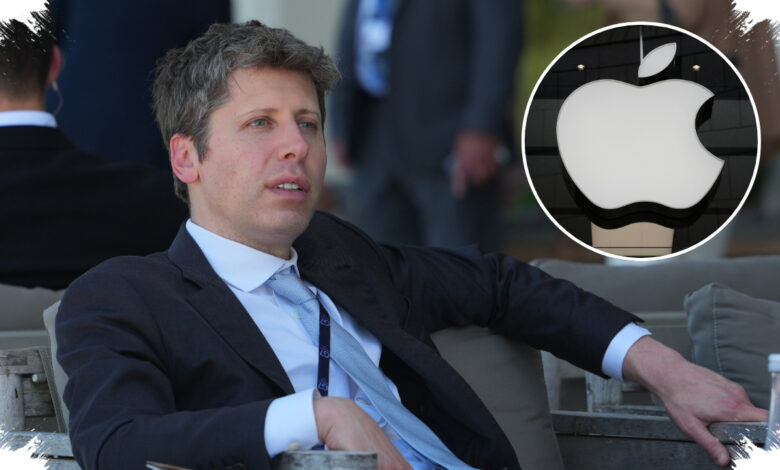
Apple has taken OpenAI to federal court in the United States, escalating a business relationship that once looked cooperative into a high-stakes legal fight. The complaint accuses the ChatGPT maker of using confidential Apple information to accelerate its own AI hardware ambitions.
The lawsuit, filed on Friday, July 10, 2026, also names io Products, the design startup now owned by OpenAI, along with two former Apple employees, Tang Tan and Chang Liu. Apple says the case involves trade secret misappropriation and breach of contract.
Apple Says The Hiring Pattern Was Not Accidental
Apple argues that OpenAI followed a coordinated pattern to obtain sensitive information by hiring former Apple staff. OpenAI has denied the allegations and said it has no interest in other companies’ trade secrets.
According to a spokesperson, the company remains focused on building innovative technology that empowers people around the world. Apple, however, claims the strategy went far beyond ordinary talent recruitment.
| Party | Role In The Lawsuit | Main Allegation |
|---|---|---|
| OpenAI | Primary defendant | Accused of using Apple trade secrets |
| io Products | OpenAI-owned design startup | Tied to AI hardware development |
| Tang Tan | Former Apple VP of Product Design, now OpenAI Chief Hardware Officer | Accused of carrying Apple internal information |
| Chang Liu | Former senior Apple engineer | Accused of accessing and downloading confidential documents |
Tang Tan And Chang Liu Are At The Center Of The Complaint
Tan is one of the most prominent figures in the case. Apple says the longtime leader of iPhone and Apple Watch development had been in contact with OpenAI months before formally leaving the company.
During that period, Tan allegedly sent internal Apple documents to his personal account. Apple says those files included supplier information, project summaries, and product development processes.
The company also alleges that Tan used confidential information while interviewing candidates who were still working at Apple. In one of the more unusual claims, Apple says he asked applicants to bring Apple hardware components, CAD designs, and product artifacts to interviews so OpenAI could study internal technology.
Apple further claims Tan instructed new hires not to tell Apple that they were joining OpenAI. That, according to the lawsuit, would help avoid triggering Apple’s security review process.
| Person | Background | Apple’s Allegation |
|---|---|---|
| Tang Tan | Former Apple VP of Product Design | Sent internal documents and helped facilitate candidate interviews |
| Chang Liu | Former senior Apple engineer | Accessed internal servers and downloaded confidential files |
Apple Claims More Than 1,000 Pages Were Taken
Apple also focuses on Chang Liu, who it says could still access Apple’s internal network after joining OpenAI in January 2026. The company says that happened because of a bug in the authentication system.
Rather than reporting the flaw, Apple alleges, Liu used it to access internal Apple servers. In a text message quoted by Apple, Liu wrote to a friend still working at the company, “LOL, I still can access the server. So funny”.
Apple claims Liu then downloaded more than 1,000 pages of confidential material. The files allegedly included technical presentations, spreadsheets, PDFs, and hardware development documents that had not yet been announced.
Hardware Plans And Supplier Ties Are Also Under Scrutiny
Apple says OpenAI would gain a major advantage if it had access to that information. By understanding design processes, suppliers, manufacturing methods, and decades of Apple hardware development, OpenAI could shorten research time and cut production costs.
In its filing, Apple says OpenAI has used trade secret misappropriation to “ride on the back of Apple’s decades of innovation.” Apple also points to OpenAI’s AI hardware work with suppliers that already have long ties to Apple, including Foxconn, Luxshare, and Goertek.
The company alleges that OpenAI has recruited more than 400 former Apple engineers and executives, including several former Vision Pro leaders. Apple says the pattern is not simply about hiring talent, but about capturing internal company knowledge.
Apple is asking the court to block OpenAI from using the disputed confidential information and to award damages, though the amount has not been disclosed. The lawsuit comes at a moment when the companies’ relationship has shifted sharply from collaboration to confrontation.
In 2024, Apple integrated ChatGPT into iPhone, iPad, and Mac through Apple Intelligence. This year, Apple began moving some AI features to Google’s Gemini models, while OpenAI’s hardware push became more visible after its $6.5 billion acquisition of io, or around Rp 106.2 trillion.
io sits under LoveFrom, the design company led by Jony Ive, the former Apple design chief. OpenAI and Ive are said to be preparing an AI device, with rumors pointing to a pendant, a smart pen, earbuds, or even an AI phone.
OpenAI has also signaled that its first AI gadget could be introduced in the second half of 2026. Chief Policy Officer Chris Lehane said the company was “on track” to unveil its first AI device by the end of 2026, though he did not confirm whether it would immediately go on sale.
With Apple now challenging that hardware effort in court, OpenAI’s push into consumer devices faces a much closer spotlight. The outcome could shape how far the company can move into a market long defined by Apple’s hardware playbook.