


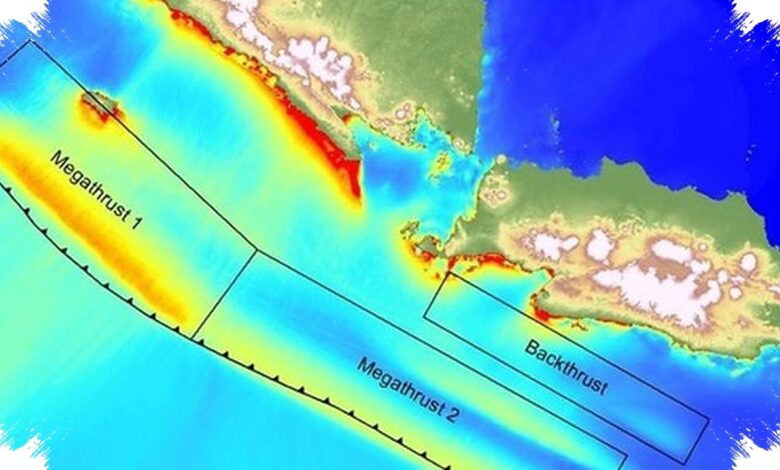
A mild earthquake felt along the coast does not necessarily mean the danger has passed. The 2006 Pangandaran tsunami showed how a magnitude 7.7 quake with limited damage on land could still trigger deadly waves.
More than 668 people were killed, thousands were injured, and many residents lost their homes after the disaster on July 17, 2006. The event remains a warning for communities across the Southern Java Coast, an area located near an active megathrust subduction zone.
| Natural sign | Possible meaning | Immediate action |
|---|---|---|
| A strong or mild earthquake with long swaying | Possible tsunami threat near the coast | Move away from the shore toward higher ground |
| Sudden sea retreat | A natural tsunami warning sign | Evacuate immediately |
| Roaring sound from the sea | A sign requiring vigilance | Do not approach the beach or sea |
1. A mild coastal earthquake is still a warning
The Pangandaran quake was classified as a tsunami earthquake, which can generate major waves even when shaking on land feels relatively weak. This characteristic caused many people to remain on the beach because they did not consider the quake dangerous.
2. Evacuation must not wait for severe shaking
Daryono of the Indonesian Disaster Experts Association stressed that people at the beach should leave immediately after an earthquake occurs. The decision to move should not depend on whether the shaking feels intense.
3. A tsunami can arrive within minutes
Waves from the Pangandaran tsunami reportedly reached the shore around 15 to 20 minutes after the earthquake. That short interval makes independent evacuation based on natural signs essential, rather than waiting only for sirens or official alerts.
4. Public knowledge can save lives
Early warning systems, information applications, and sirens remain important parts of disaster response. However, people who understand tsunami signs can act even when technology has not yet issued a warning.
5. Tourist beaches can face greater casualty risks
Pangandaran was crowded with visitors when the tsunami struck in the afternoon during a holiday period. Many victims were visitors unfamiliar with evacuation routes and safe locations around the coast.
6. Safe routes must be reachable quickly
The 2006 waves in Pangandaran were estimated at roughly 5 to 8 meters high, with reports of more than 10 meters at some locations. Evacuation routes need to allow people to reach safer ground on foot within the limited available time.
7. Coastal danger is not limited to earthquake shaking
The Pangandaran earthquake itself was said to have caused little major damage, while the tsunami accounted for the greatest loss of life. For that reason, tsunami preparedness must address both the earthquake and the coastal waves it may generate.
8. Vigilance is needed along Southern Java
The tsunami affected Pangandaran, Tasikmalaya, Garut, Cilacap, Kebumen, Purworejo, and Bantul. Daryono said the experience demonstrates the need for a tsunami-ready culture in every district along the southern coast of Java.
9. Warning systems need prepared communities
Indonesia has tsunami early warning systems, hazard maps, evacuation routes, earthquake and tsunami field schools, and Tsunami Ready UNESCO programs in several areas. Daryono emphasized that megathrust threats must be confronted through knowledge, preparedness, and a culture of mitigation.