


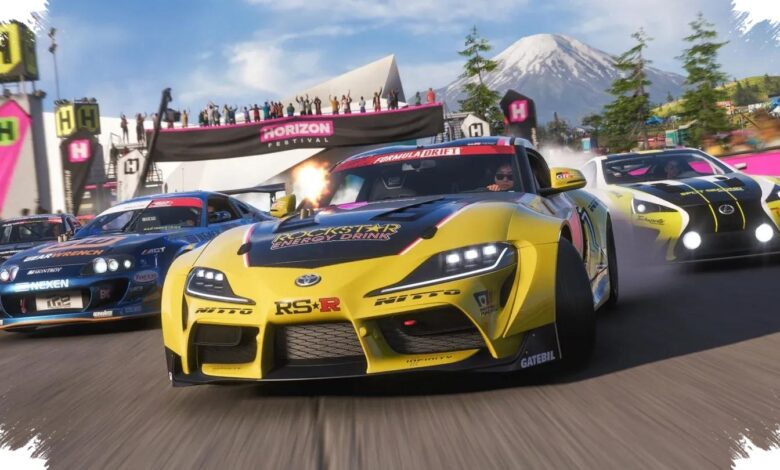
Forza Horizon 6 is set to make Japan the setting for its next open-world racing festival, combining the intensity of Tokyo with quiet rural roads and mountain passes. The setting is positioned as one of the game’s biggest strengths, while its story is presented as a more uneven part of the experience.
Players begin as tourists trying to qualify for the Horizon Invitational. The premise has potential, but dialogue from several characters, including Mei, is described as stiff and does not fully match the atmosphere created by the game world.
A Map Built Around Contrasts
The Japanese map is designed by Playground Games as its largest and most varied area to date. It allows players to travel from dense metropolitan districts to traditional countryside, narrow mountain roads, and snowy regions.
Tokyo includes landmarks such as Shibuya Crossing, Tokyo Tower, and Gingko Avenue. Street-racing fans can drive through the C1 Loop, while mountain routes draw inspiration from Mount Haruna and Bandai Azuma.
Dynamic seasons return with a more noticeable effect on how each route behaves. Winter turns mountain roads into slippery icy surfaces, while the northern Alpine area offers permanent snow for vehicle testing at any time.
| Information | Details |
|---|---|
| Platforms | PC, Xbox Series X/S |
| Developer | Playground Games |
| Publisher | Xbox Game Studios |
| Release date | May 19, 2026 |
| Genre | Racing |
Driving Changes and Car Progression
The driving model keeps the accessible simcade character of the Horizon series while retaining room for players seeking more serious control. Cockpit steering can now display up to 540 degrees of rotation dynamically, depending on the mechanical traits of each car.
Direct Drive users receive more precise force feedback as rear-wheel traction begins to fade. The adjustment is intended to make drifting feel more intuitive without removing the series’ arcade-oriented identity.
Performance Index limits have been reduced by 100 points for every class compared with the previous game. Class A now tops out at PI 700, while the new R, or Really Fast, class accommodates extreme-performance hypercars.
Players still earn credits through races and other activities to expand their vehicle collections. Driving points gained while exploring can also improve abilities on certain cars, giving favorite vehicles a more personal development path.
Community Events Without Separate Matchmaking
Three types of community activity operate directly in the shared open world. Drag Meets offer straight-line runs with 12 slots, and players can challenge others simply by parking at the starting line.
Time Attack Circuits focus on setting the fastest lap time across selected routes. Results can be checked through interactive physical leaderboards placed beside the road.
Car Meets provide dedicated parking areas for showcasing body designs and exchanging copies of mechanical modifications from other players’ cars. Community-made designs can also be downloaded directly at these gathering spots.
Modification culture expands with the return of Forza Edition cars and the Aftermarket Cars system. Pre-modified cars can be found parked at hidden locations and purchased for less than their dealer price.
Legend Island and Exploration Tasks
The campaign uses seven colored wristband tiers to control access to cars and events. Each tier gradually unlocks performance categories and disciplines including Road Racing, Dirt Racing, and Cross Country.
The Gold Wristband opens Legend Island, a separate location containing the Legend Island Circuit, high-risk street races, and a new Goliath route using the map’s main expressways. Players can also fill a Collection Journal by collecting exploration stamps for unique items and clues to rare vehicles.
Side activities extend beyond boards and photo opportunities. They include photography assignments with Larry Chen, cultural mural documentation, and food-delivery work for RakuRaku Express using a small Kei truck.
The broad range of racing scenarios, strong soundtrack, and Japanese landscape remain central to the game’s appeal. Even with a rigid story and the absence of an underground parking-garage circuit, the open world and driving feel provide the main reasons to explore its roads.