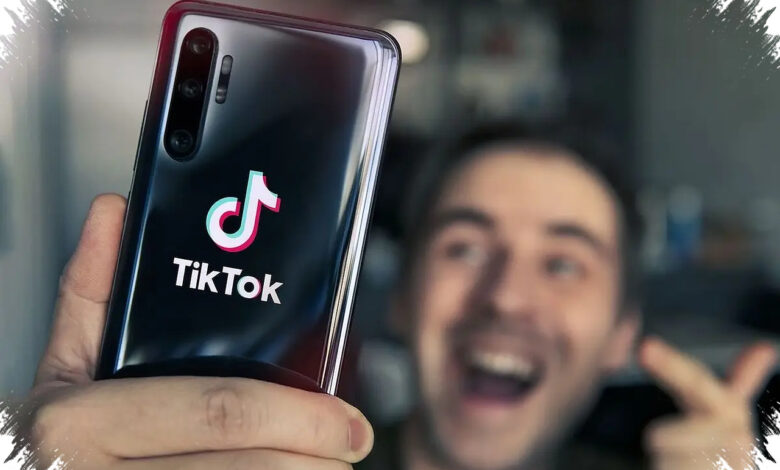
US federal employees may again download TikTok onto government-issued work devices, marking a major shift from the broad restrictions imposed at the end of 2022. The permission does not require every federal agency to allow the app.
Individual agencies retain the authority to ban TikTok or maintain existing restrictions under their own internal security policies. As a result, access for an employee may depend on the rules of the agency that manages the device.
The change follows a Justice Department assessment that the earlier congressional restriction does not apply to the current version of TikTok available in the United States. The previous measure was directed at a version of the app with a different ownership structure.
A Justice Department memo stated that President Donald Trump authorized employees of executive branch agencies to download TikTok on government devices. Operational decisions, however, remain with each agency.
Why the ownership structure matters
TikTok’s US operations have been transferred to a new joint venture backed primarily by American investors. ByteDance continues to hold a 19.9 percent stake in that venture.
Under the Justice Department’s interpretation, the prior law was not a blanket prohibition on every version of TikTok. Its focus was the ownership arrangement viewed as creating a national security risk.
| Party | Position in the new structure |
|---|---|
| Oracle | Security partner |
| Silver Lake | Joint venture investor |
| MGX | Joint venture investor |
| ByteDance | Retains a 19.9 percent stake |
Oracle serves as the security partner in the arrangement. Details of the joint venture and Oracle’s role were reported by TechCrunch, as cited by tekno.kompas.com.
A ban rooted in data security concerns
Congress passed a bipartisan law at the end of 2022 requiring agencies under the executive branch to remove TikTok from government-owned devices. The action reflected concerns over national security and the protection of personal data.
US officials had argued that TikTok’s ownership by ByteDance, a company headquartered in Beijing, could potentially expose data from American users to China. Those concerns later led to pressure for ByteDance to sell TikTok.
The US government set January 19 as a deadline, warning that the application could no longer be downloaded if a sale did not occur by that date. ByteDance challenged the blocking effort, arguing that it violated First Amendment protections for free speech.
Justices of the US Supreme Court were said to be inclined to uphold the TikTok block. The new ownership arrangement has since changed the basis on which the earlier restrictions were assessed.
Permission does not end the debate
The reopening of access does not remove the security debate surrounding TikTok from the federal workplace. Agencies may still conclude that the app is incompatible with their cybersecurity requirements.
For federal employees, the practical effect is therefore limited: TikTok can be downloaded again where an agency permits it. The final decision on work devices remains decentralized across the federal government.