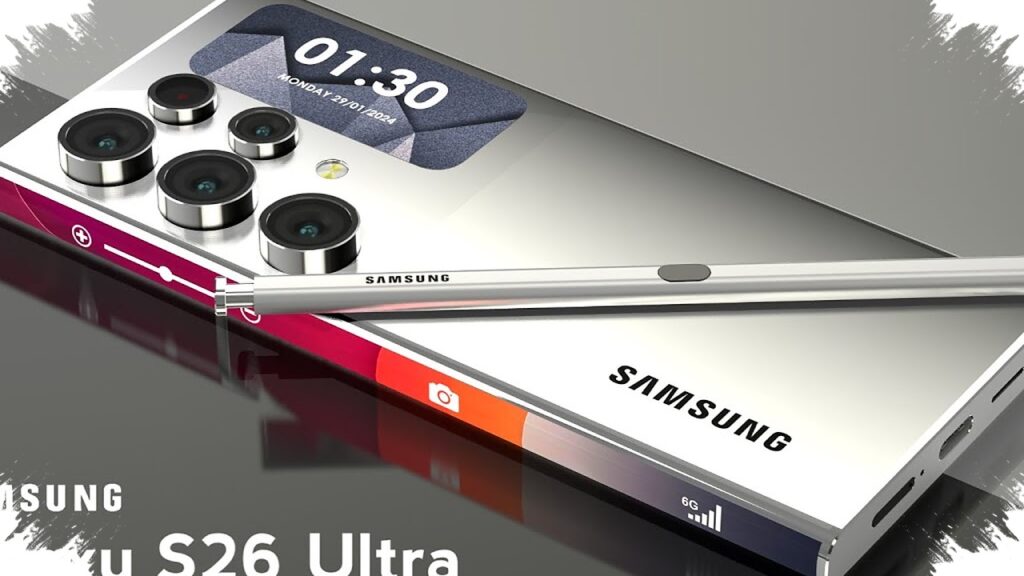
Samsung has officially positioned the Galaxy S26 Ultra as its most advanced flagship for 2026, and the device arrives with a clear focus on privacy, camera quality, and smarter on-device AI. The phone is designed for users who want a premium experience that goes beyond raw speed, especially for work in public spaces and content creation on the go.
The most attention-grabbing change is Privacy Display, a hardware-based anti-peek feature that keeps the screen readable from the front while making it difficult to view from the side. That matters for people who often check messages, emails, or documents in airports, cafes, and trains, where shoulder surfing remains a common privacy risk.
A hardware privacy layer, not just a software trick
Samsung’s Privacy Display stands out because it is integrated into the device itself. That means protection is not limited to a screen protector or a simple filter, and users can turn it on directly from the system when sensitive content appears on the display.
This approach gives the Galaxy S26 Ultra a practical edge in daily use. For professionals who move between meetings and public transport, the feature can reduce the chance of exposing private work conversations or confidential files to nearby people.
Low-light photography gets a major push
Samsung keeps the 200MP main camera, but it now uses a wider f/1.4 aperture. A larger aperture allows more light to reach the sensor, which should improve night shots, reduce noise, and make indoor photos look cleaner without heavy processing.
According to launch data, the wider aperture increases light intake by 47 percent. That is a meaningful jump for a flagship camera, since many high-end phones still struggle when light drops and detail starts to fade.
The 5x telephoto periscope camera also receives an upgrade with an f/2.9 aperture. That should help zoom shots stay sharper in dim environments, where telephoto lenses often lose clarity faster than main cameras.
Why the camera update matters in real use
For everyday users, the camera changes are not only about resolution. They also affect how the phone handles dinner photos, night streets, indoor events, and video clips recorded under weak lighting.
The practical gains can be summarized simply:
- More light enters the sensor for brighter images.
- Noise drops in darker scenes.
- Zoom performance improves in low light.
- Video footage becomes more stable in difficult lighting.
Snapdragon 8 Elite Gen 5 powers the Ultra model
Under the hood, Samsung uses the Snapdragon 8 Elite Gen 5 for Galaxy, a custom-tuned version of Qualcomm’s latest premium chip. Samsung says the chip delivers a 19 percent CPU boost, a 24 percent GPU boost, and a 39 percent NPU uplift for AI workloads.
That combination matters because the Galaxy S26 Ultra is not only targeting gaming and multitasking. It is also built to run more AI functions locally, which can improve speed while reducing dependence on cloud processing for certain tasks.
The phone also gets a Vapor Chamber system that Samsung claims is 30 percent more efficient. Better thermal control should help the handset maintain performance during long gaming sessions, video editing, or heavy AI use.
Galaxy AI becomes more contextual
Samsung is pushing Galaxy AI deeper into daily interaction, and the new Call Screening AI is one of the clearest examples. It can answer a call, ask the caller why they are calling, and then turn the conversation into text so the user can decide whether to pick it up.
Bixby also becomes more natural and less rigid. A simple phrase such as “My eyes are tired” can trigger Eye Comfort Mode without requiring technical phrasing, which makes the assistant feel closer to a real context-aware tool than a command-only system.
Another useful addition is Creation Studio, which can generate greeting cards, posters, and simple images from text prompts. Samsung says it supports Indonesian language input, making the feature more accessible for quick creative work and social content.
A thinner body with a premium finish
Despite the large 6.9-inch display, the Galaxy S26 Ultra measures 7.9 mm thick and weighs 214 grams. Samsung still uses an aluminum frame, a choice that helps with heat management while keeping the device premium in hand.
The color lineup includes Titanium Black, Sky Blue, and Cobalt Violet, giving the phone a more refined appearance. The design remains unmistakably Ultra, but the slimmer build makes it look less bulky than previous generations.
Indonesia pricing places it in ultra-premium territory
In Indonesia, the Galaxy S26 Ultra starts at about $1,500 for the 256GB model and rises to around $1,960 for the 1TB version. Pre-order offers reportedly include memory upgrades, cashback, and other launch incentives, which may help soften the high entry price for early buyers.
With its hardware-level privacy screen, brighter low-light camera, faster chip, and more contextual AI, the Galaxy S26 Ultra is clearly aimed at users who want one of the most complete flagship packages available in 2026.