


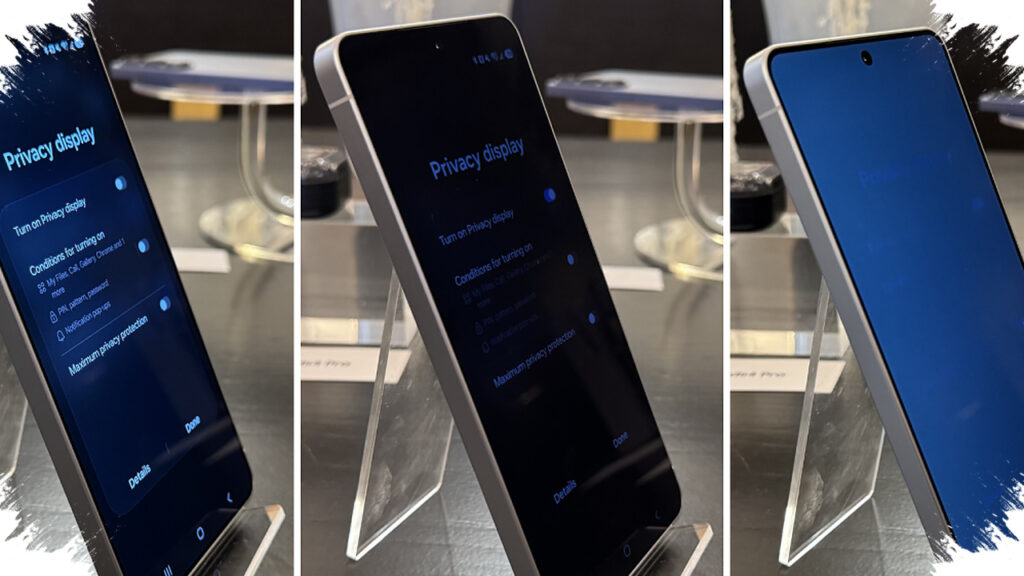
Samsung Galaxy S26 Ultra is drawing attention for a feature that goes beyond raw speed, large storage, or camera upgrades. The main highlight is a privacy-focused display layer that aims to make on-screen content harder to read from side angles, which could give the phone a new role as a personal data shield in crowded public spaces.
That matters because more daily tasks now happen on mobile screens, from banking and email to work chats and private messages. In that setting, traditional security tools such as passcodes and biometrics only protect access, while visual privacy protects what others can see in real time.
Why privacy display matters now
The rise of remote work, mobile payments, and constant messaging has made screen privacy a practical issue rather than a niche concern. A device can be locked, but sensitive text, financial details, and confidential business material can still be exposed when someone stands nearby.
Samsung’s approach on the Galaxy S26 Ultra appears designed for those everyday risks. The feature reportedly lets users reduce side visibility without needing a separate privacy screen protector, which keeps the display cleaner and avoids the extra layer that can affect touch feel or image quality.
A privacy display also fits the way many people use flagship phones today. Users want one device for entertainment, productivity, and personal communications, but they also want more control over who can glance at the screen in a train, elevator, café, or meeting room.
How the technology is expected to work
Reports suggest the Galaxy S26 Ultra uses a next-generation OLED panel to support this visual privacy system. The display can control light more precisely at the pixel level, keeping the front view bright and clear while making the picture less visible from the side.
- It limits visibility from angled viewing positions.
- It keeps the main viewing experience sharp for the user.
- It aims to preserve color accuracy and responsiveness.
- It can be switched on or off depending on the situation.
That flexibility is important. Users do not always need a privacy screen, so a built-in option is more practical than a permanent accessory, especially for people who switch often between private and public environments.
What this means for a flagship phone
The Galaxy S26 Ultra is still expected to carry the hardware profile associated with Samsung’s Ultra line. That includes a large AMOLED display, a high refresh rate, strong brightness for outdoor use, and top-tier performance for gaming, editing, and multitasking.
The phone is also expected to remain a premium camera device. For many buyers, that combination matters because a flagship needs to balance productivity, entertainment, and content creation without sacrificing speed or battery efficiency.
Samsung’s memory options are another part of the appeal, with expected variants of 256GB with 12GB RAM, 512GB with 12GB RAM, and 1TB with 16GB RAM. The 512GB version is seen as a strong middle ground for users who want generous storage without moving to the highest-priced model.
Key points at a glance
| Feature | Expected detail |
|---|---|
| Main focus | Visual privacy for the display |
| Display technology | Next-generation OLED panel |
| Privacy behavior | Reduces side-angle visibility |
| Activation | Can be enabled in settings |
| Memory options | 256GB/12GB, 512GB/12GB, 1TB/16GB |
The broader significance of the Galaxy S26 Ultra is not just that it may look advanced, but that it reflects a shift in what users value from a flagship phone. As personal and professional data keep moving onto a single screen, a built-in privacy layer could become one of the clearest reasons to pay attention to Samsung’s next Ultra model.