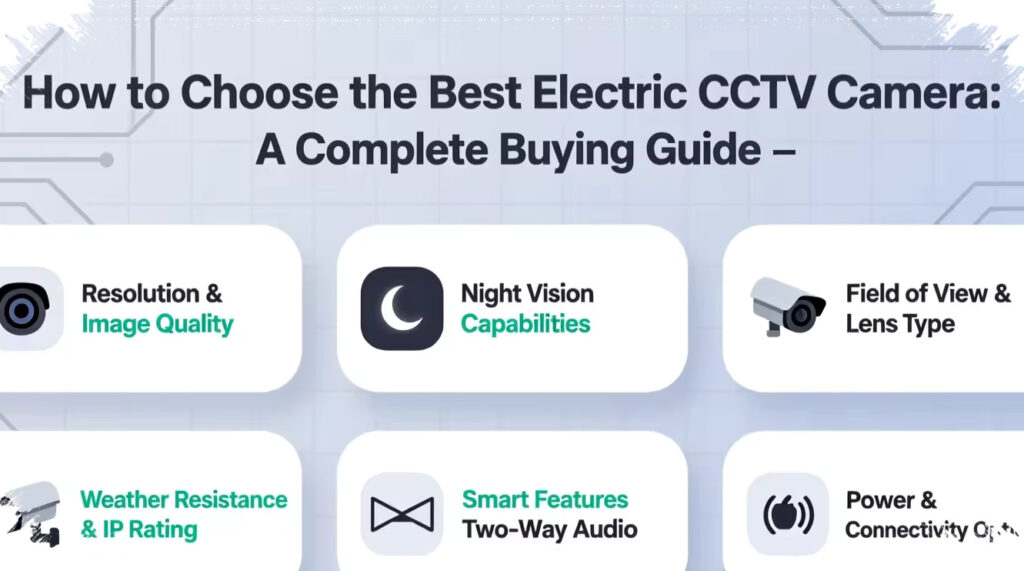
Choosing a CCTV system for a home should start with practical needs, not with price tags or brand names. A camera that looks attractive on paper can still fail in daily use if it does not match the installation area, power source, storage plan, and monitoring habits.
Home security depends on the right balance between image quality, coverage, and ease of use. That is why buyers should review several technical points before spending money, especially if the goal is long-term protection without costly mistakes.
1. Start with the installation location
The first question is simple: will the camera be used indoors, outdoors, or both? Outdoor CCTV models are usually built to handle rain, heat, dust, and temperature shifts, while indoor models are often lighter and more affordable.
This difference matters because a garage, porch, or front yard needs stronger protection than a living room. If the location is clear from the start, the buyer can avoid paying for features that never get used.
2. Check the power source and installation plan
CCTV systems usually run on either wired electricity or battery power, and each option comes with trade-offs. Battery-powered cameras offer flexibility, but they need charging and regular checks to stay reliable.
Wired cameras can run continuously, but they require a cleaner installation plan. Cable length, outlet position, and placement near the mounting point can decide whether the setup is smooth or inconvenient.
3. Choose storage based on daily use
Storage affects how footage is saved, reviewed, and protected after an incident. The two main options are local storage, such as microSD cards or hard drives, and cloud storage, which uploads recordings to an online server.
Local storage works well for users who want simple access without monthly fees. Cloud storage offers easier remote viewing, and some systems combine both so recordings remain available if one method fails.
4. Make night vision a priority
A camera should not only perform in daylight. It also needs clear nighttime visibility, because many security incidents happen when lighting is weak or absent.
Night vision usually comes in two forms: infrared, which produces black-and-white footage, and white light, which can create color video. Color footage may be easier to interpret, but bright lights can make the camera more visible and less discreet.
5. Match the field of view to the area
Field of view determines how much space the camera can cover from one position. A wider angle, such as 180 degrees, can capture a larger area, while a narrower angle may miss activity outside its frame.
This is important for driveways, long corridors, entrances, and yard edges. If the viewing angle is too limited, critical movement can slip past unnoticed even when the camera is working correctly.
6. Do not ignore resolution
Resolution affects how sharp the recording looks and how much detail can be seen later. Common choices include 1080p HD, 2K, and 4K, with 4K offering the highest image clarity among the three.
For indoor spaces, 1080p HD or 2K is often enough for routine monitoring. For outdoor areas, higher resolution can help when identifying faces, catching license plates, or zooming in on small objects.
7. Check audio features before buying
Video is important, but audio can add another layer of security. Some CCTV cameras include a microphone and speaker for two-way communication, while others only record sound.
This feature can help homeowners warn visitors, talk to delivery staff, or listen for unusual sounds near the camera. If audio matters, the buyer should confirm that it is included before making a decision.
Quick comparison of what matters most
| Consideration | Why it matters |
|---|---|
| Installation location | Determines whether the camera must handle indoor or outdoor conditions |
| Power source | Affects flexibility, reliability, and ease of setup |
| Storage type | Influences access, backup, and possible subscription costs |
| Night vision | Keeps footage useful after dark |
| Field of view | Decides how much area the camera can monitor |
| Resolution | Improves detail for identification and review |
| Audio features | Adds communication and sound monitoring value |
Buyers should also look at app usability, warranty support, and possible subscription fees for cloud services. Some cameras appear affordable at first, but total ownership costs can rise once storage plans and extra features are added, so a careful review before purchase can prevent regret later.