


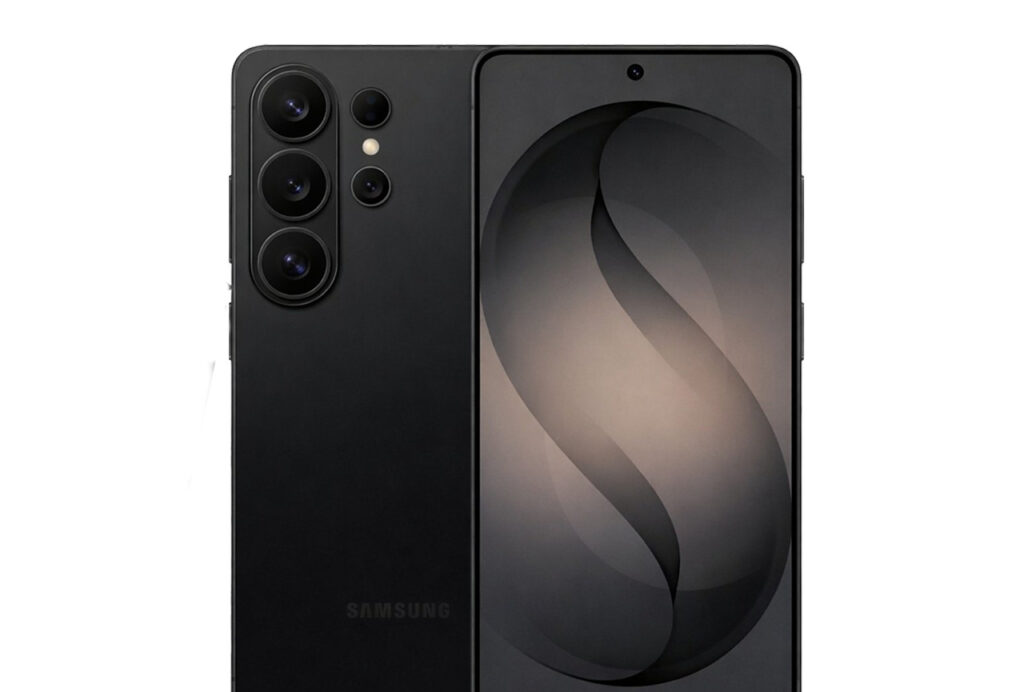
Samsung’s Galaxy S26 lineup appears to be gaining momentum before it even reaches the market. Reports say the company has raised its April production target for the series to 3 million units, up from an initial plan of 2.4 million after March orders came in stronger than expected.
The revised allocation points to a firmer response around Samsung’s newest flagship family, but the demand picture is not evenly spread across the three models. The Galaxy S26 Ultra is emerging as the clear focal point, while the base model is also outperforming early expectations and the Plus variant is losing ground.
Ultra model leads the demand story
The strongest signal in the updated production plan is the Galaxy S26 Ultra, which is reportedly set for 1.5 million units. That makes it the largest contributor to total series volume and a central driver behind the higher target.
A third-party report cited by Notebookcheck says the Ultra could account for around 60% to 80% of overall Galaxy S26 demand. If that estimate holds, it would represent the highest Ultra share ever seen in the Galaxy S line.
Industry sources quoted in the report point to the Privacy Display feature as one of the reasons for the interest. The hardware-level screen protection narrows the viewing angle so content is clearly visible mainly from the front, giving the device a feature that stands out in day-to-day use.
Base Galaxy S26 also beats the original plan
Demand is not limited to the most expensive model. Samsung has also increased production for the standard Galaxy S26 to 1.3 million units, which is 500,000 units above the earlier estimate.
That adjustment suggests buyers are still responding to a flagship experience without necessarily moving to the highest-end version. The regular model appears to benefit from a balance of premium performance and a more practical size and price position compared with the Ultra.
Analysts cited in the report view that mix as a major reason for the stronger interest in the base device. In a market where top-tier phones often compete on cameras and raw speed, the standard Galaxy S26 seems to offer a more accessible entry point into Samsung’s flagship range.
Galaxy S26+ slips behind the rest of the family
While the Ultra and standard model are seeing higher allocation, the Galaxy S26+ is moving in the opposite direction. Samsung has reportedly cut its April production target by 100,000 units, leaving the model at 200,000 units.
That weaker number reinforces the long-running challenge facing “Plus” versions in the Galaxy S lineup. Positioned between the regular model and the Ultra, the S26+ appears to struggle to define a clear reason for buyers to choose it over either alternative.
With less traction than the two other models, the Plus variant is increasingly squeezed in the middle. Buyers seem more drawn either to the lower-cost flagship experience of the standard model or the more distinct feature set of the Ultra.
Broader production shifts reach Samsung’s midrange line
The revised flagship plan also has knock-on effects for other Samsung devices. Production targets for the Galaxy A57 were reduced from 1.8 million units to 1.6 million units for April, while the Galaxy A17 was cut more sharply from 4.4 million units to 3.9 million units.
The same report says rising memory costs are making it harder for Samsung to keep lower-priced devices in line on pricing. That pressure appears to be influencing how production capacity is distributed across the company’s product portfolio.
Notebookcheck also noted that Samsung is said to have lowered its production forecast for May, although that figure has not been confirmed. At the same time, the company is reported to have cut the prices of the Galaxy S26 and S26+ by $100 each, while the Galaxy S26 Ultra was reduced by $200, adding another layer to the changing demand pattern around the series.
Source: www.notebookcheck.net