


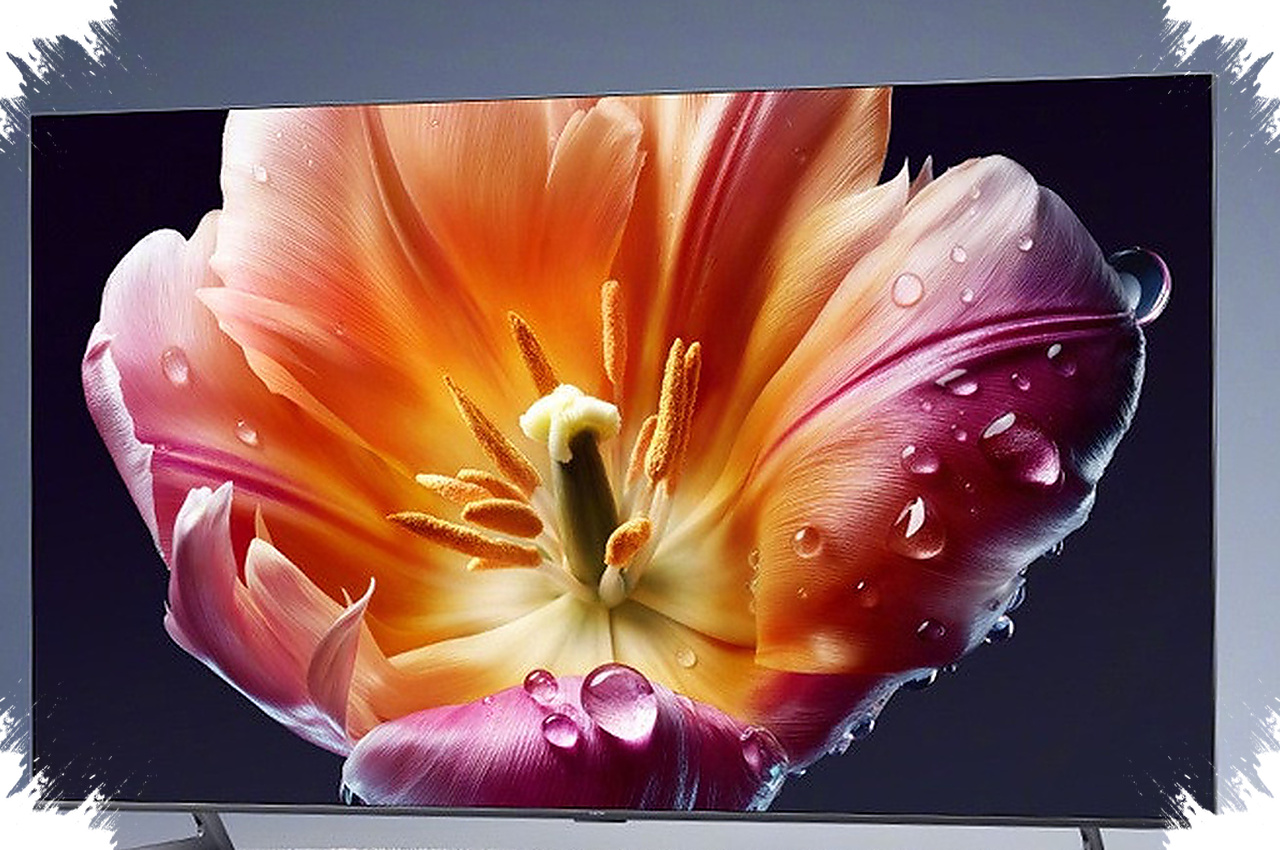
Mini LED televisions are drawing stronger attention because they bring picture quality closer to OLED in ways that matter most to viewers: deeper contrast and far higher brightness. The difference comes from the way the backlight is built, with thousands of very small LEDs allowing far more precise light control than conventional LED TVs.
That tighter control changes how a screen handles difficult scenes. Dark and bright elements can appear in the same frame with better separation, while local dimming across thousands of zones helps blacks look richer, preserves detail, and makes HDR content feel more dynamic.
Why the backlight matters
Mini LED uses a denser backlight approach, and the individual lamps are said to be about 1/40 the size of conventional LEDs. Because the light sources are so much smaller, the panel can manage illumination in narrower areas, which reduces the halo or blooming effect around bright objects on dark backgrounds.
That is one of the main reasons Mini LED is often discussed as a serious step up from standard LED televisions. The technology does not fully match OLED’s perfect black levels, but it comes close enough for many viewers while offering a clear advantage in brightness.
Strong performance for HDR and bright rooms
High brightness remains one of Mini LED’s biggest strengths. HDR content benefits from stronger contrast and richer-looking colors, while the overall image can stay vivid in rooms that are not fully dark.
This makes Mini LED especially appealing for everyday use, not just for dedicated movie viewing. For users who want premium picture quality without always choosing OLED, the technology sits in a compelling middle position between performance and cost.
More complete for modern entertainment
In the models appearing in 2026, Mini LED TVs are increasingly paired with 4K resolution, high refresh rates, and AI-based processing. That combination supports sharper, more realistic images and better responsiveness for home entertainment.
Features such as Dolby Vision, Dolby Atmos, HDMI 2.1, and ALLM are also becoming more common. As a result, Mini LED is no longer viewed only as a display technology with strong visuals, but also as a platform ready for streaming, film, and modern gaming needs.
Examples from major brands
Several major manufacturers are pushing Mini LED forward through their latest lineups. Xiaomi TV S Mini LED 2026 comes in sizes from 55 to 98 inches and offers up to 880 independent backlight zones, 1700 nits of brightness, 120Hz to 144Hz refresh rates, Google TV, and 34W speakers.
LG has introduced QNED evo Mini LED 2026 with ultra-large panel options up to 115 inches and 100 inches. The model uses an AI processor to improve image quality in real time, aiming for a more immersive viewing experience.
Hisense brings premium specifications through the U8QG and U7SG, including brightness up to 3000 nits and refresh rates as high as 165Hz. Samsung continues developing Neo QLED with a focus on stronger contrast and sharper visuals, while Sony keeps using Mini LED in its Bravia series with an emphasis on image accuracy.
Where Mini LED stands against OLED and standard LED
Compared with standard LED, Mini LED delivers a major jump in both contrast and brightness. That improvement comes from the far greater number of backlights and the more precise zone control behind the panel.
Against OLED, Mini LED still gives up some ground because OLED can control each pixel independently and produce true perfect blacks. Even so, Mini LED counters with higher peak brightness and is seen as having potential advantages in durability, which keeps it relevant as a premium option for many households.
In markets such as Indonesia, the presence of choices from TCL, Samsung, LG, and Sony shows that Mini LED has become a more mature display category. With stronger contrast, maximum brightness, and a growing list of features, it continues moving closer to the high-end viewing experience long associated with OLED.