


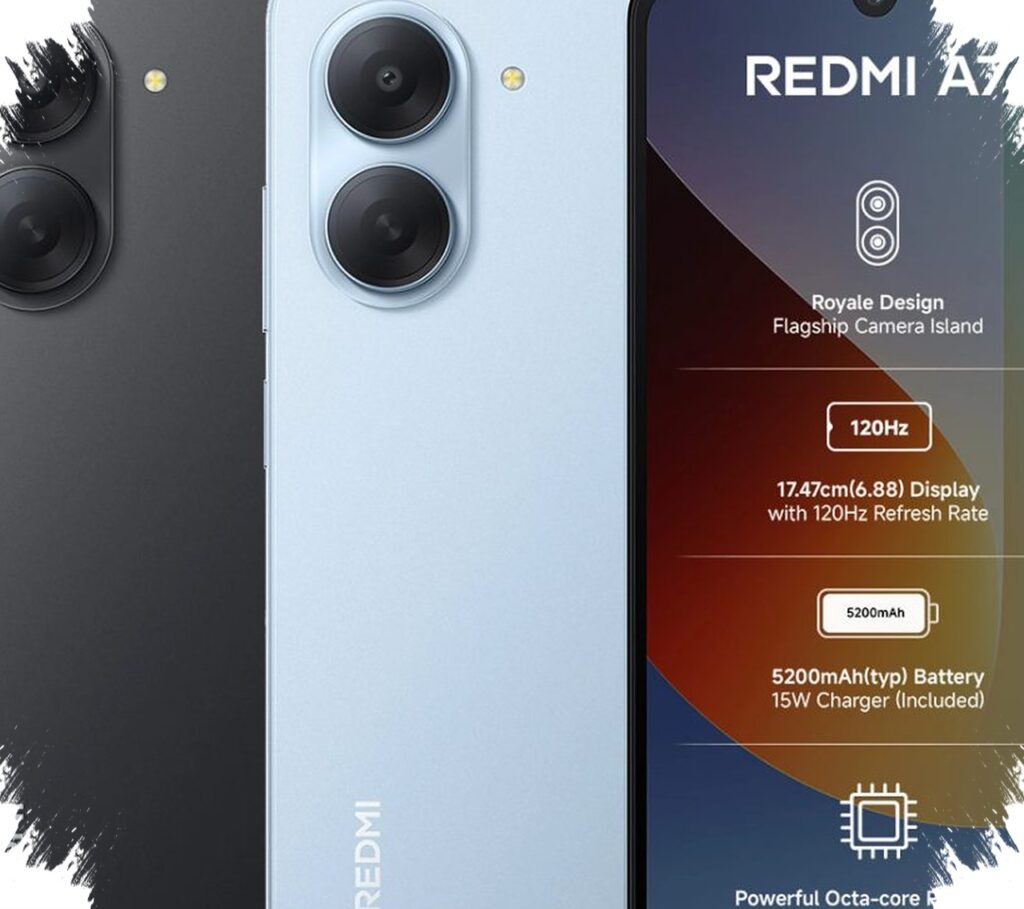
The smartphone market is showing two very different directions at once, and both are drawing attention. On one side, Redmi A7 Pro 5G pushes entry-level hardware with a 120Hz display and a large battery, while Huawei is preparing the Pura 90 series with a more daring flagship identity.
The contrast is easy to see. Redmi focuses on everyday practicality at an affordable level, while Huawei is leaning into design and premium positioning to reshape how a flagship can look.
Redmi A7 Pro 5G brings a fast display to the low-cost segment
Redmi A7 Pro 5G enters the market as an aggressive option in the entry-level class. It carries a 6.9-inch HD Plus display with a 120Hz refresh rate, which gives it a smoother visual experience than many phones in the same price range.
That screen setup is paired with Unisoc T8300 chipset, 4 GB of RAM, and storage of up to 128 GB. The combination suggests a device aimed at daily use, especially for users who want a large screen without moving into a higher price bracket.
The phone also includes a 32 MP main camera. Redmi adds a 6,300 mAh battery, which becomes one of the main selling points for the device.
Battery endurance and practical extras matter more here
The 6,300 mAh capacity makes the Redmi A7 Pro 5G look well prepared for long hours of use. For many users, that kind of battery is more important than extra features that do not directly affect daily convenience.
Redmi also includes reverse charging, which adds a useful layer of flexibility. That function allows the phone to serve as a backup power source for other devices when needed.
This approach shows how the brand is trying to raise expectations in the affordable category. Features once associated with more expensive phones are now appearing in lower price ranges, and Redmi is using that shift to strengthen its position.
Huawei Pura 90 series moves in a different direction
While Redmi is targeting value-conscious buyers, Huawei is preparing the Pura 90 Pro and Pura 90 Pro Max for a more premium audience. The two models are scheduled to appear in China, and the series is already drawing attention because of its new camera module design.
Huawei is using a triangular camera layout as a fresh visual identity for the Pura line. That shape is meant to stand out from more common flagship designs and create a stronger product character.
The company has not revealed every specification yet, but the available information still places the series firmly in flagship territory. The Pura 90 models are said to support up to 16 GB of RAM and storage of up to 1 TB.
Color options also become part of the flagship message
Huawei appears to be treating appearance as seriously as specifications. The Pura 90 Pro Max is expected to come in five color choices, while the Pro version carries four options with gradient finishes.
These details suggest that Huawei wants the device to stand out not only through performance, but also through presentation. In a crowded premium market, visual identity can be a major differentiator.
Huawei is also preparing the Pura XMAX on the same date. That foldable device is said to feature a larger screen and a horizontal camera module, widening the brand’s premium lineup even further.
Larger trends are shaping both devices
The two product directions highlight how the market is changing. On one hand, a budget phone can now offer a 120Hz screen and a large battery, both of which were once difficult to find at this level.
On the other hand, a flagship series is trying to win attention through bold design choices and high-end configurations. Huawei has already shown a similar pattern with the Enjoy 90M Plus, which comes with a 120Hz display, a 50 MP main camera, and a 6,620 mAh battery.
Taken together, the Redmi A7 Pro 5G and the Huawei Pura 90 series show that smartphones are no longer competing on one dimension alone. Display speed, battery size, and design identity now play a central role across both affordable and premium segments.