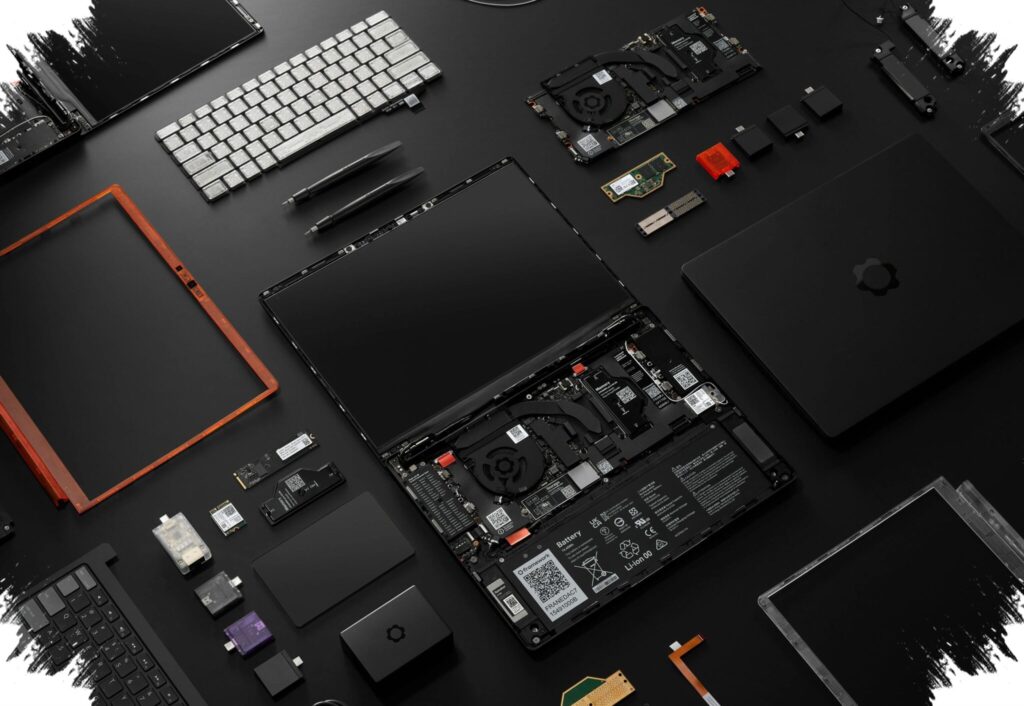
Framework has pushed the Laptop 13 Pro beyond a routine update, turning it into a full redesign aimed at users who want a compact machine without giving up performance or repairability. The company is positioning it as a more serious step forward for its modular lineup, with hardware choices that lean toward higher-end capability while keeping the brand’s upgrade-friendly identity intact.
The most notable shift is not limited to the processor. Framework says the Laptop 13 Pro is a “ground up redesign” of the Framework Laptop 13, which means core parts of the machine were reworked rather than simply refreshed on the surface. That approach reflects a broader attempt to balance portability, serviceability, and the kind of endurance usually expected from larger premium laptops.
A bigger focus on performance
Inside, the Laptop 13 Pro uses Intel Core Series 3 chips, with Core Ultra 5, Core Ultra X7, and Core Ultra X9 options available. That selection places the device in a more performance-oriented class than the company’s earlier compact models, while still fitting within Framework’s modular design philosophy.
Memory also follows that same direction. Instead of relying on a more conventional setup, Framework has moved to LPCAMM2, with 16GB, 32GB, and 64GB configurations currently listed. The company says larger RAM variants will arrive later, suggesting that the platform is meant to stay expandable over time rather than remain locked to a fixed ceiling.
Battery life becomes a headline feature
One of the strongest selling points is the 74Wh battery, which can still be removed and replaced. That matters because many thin laptops now use sealed designs, leaving users with fewer options when battery health declines.
Framework claims the Laptop 13 Pro can deliver more than 20 hours of 4K Netflix playback, and says that figure is 12 hours longer than the standard Laptop 13. To support the larger battery, the company includes a 100W GaN adapter, replacing the 60W unit used on the previous model and giving the new machine stronger charging support.
Display, storage, and wireless upgrades
The screen also receives a premium treatment. Framework fitted the Laptop 13 Pro with a 13.5-inch touchscreen that runs at 2,880 x 1,920 resolution and supports adaptive refresh rates from 30Hz to 120Hz.
That combination gives the display more flexibility, since it can save power when high refresh rates are not needed and still offer smoother motion when the situation calls for it. The touchscreen layer adds another input option for work, browsing, and light creative use.
Storage and connectivity have also been expanded. Framework says this is its first laptop to support PCIe 5.0, with NVMe SSD capacity reaching up to 8TB. Wireless support moves to Wi‑Fi 7, and the laptop also includes four Thunderbolt 4 ports for docking, external displays, and fast peripherals.
Still built around repair and upgrades
Despite the more ambitious hardware, Framework is keeping the same principle that defines its products. The company says nearly all components remain compatible with other Framework laptops, giving users more flexibility when repairing or upgrading a device.
That matters in a market where many premium laptops have become increasingly difficult to open or service. Framework continues to take the opposite route, making long-term ownership part of the product’s appeal rather than an afterthought.
The Laptop 13 Pro is available for pre-order starting at $1,199 for the DIY edition and $1,499 for the pre-built version. Shipping is set to begin in June, while Framework has also updated other products in its lineup, including the Laptop 16 with a one-piece haptic touchpad, a one-piece keyboard, and Ryzen 5 configurations, plus the OCuLink Dev Kit for high-bandwidth accessories such as eGPUs and the Framework Wireless Touchpad Keyboard for more convenient living-room use.
Source: www.xda-developers.com