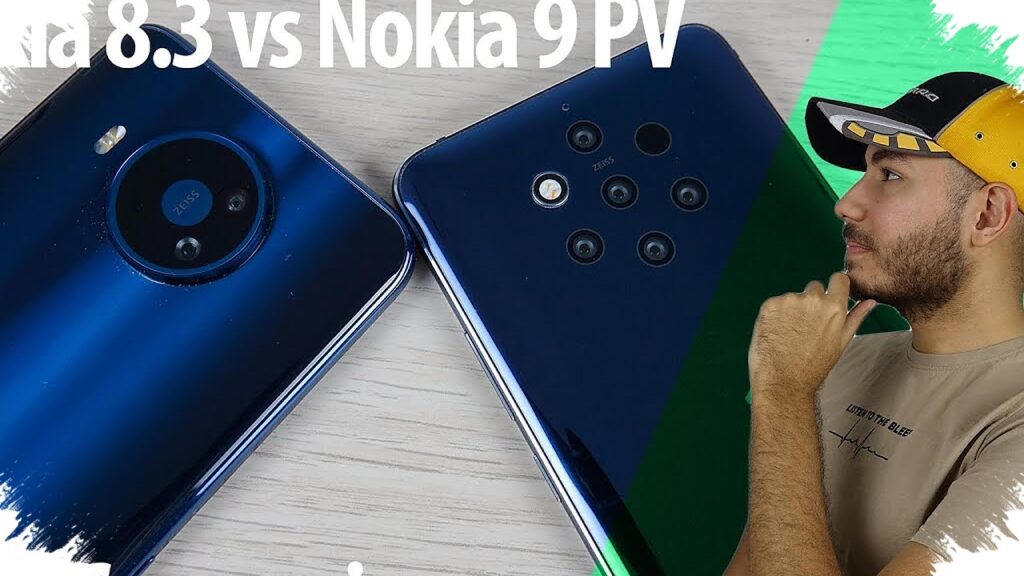
In a market now dominated by foldables and one-inch camera sensors, two older Nokia phones still stand out for a different reason. Nokia 8.3 5G and Nokia 9 PureView represent two very different ideas about mobile photography, and that contrast still matters when they are discussed in 2026.
The comparison is not just about nostalgia. Nokia 9 PureView still appeals through its unusual five-camera setup, while Nokia 8.3 5G is better known for delivering a more practical shooting experience for everyday use.
Two very different camera philosophies
Nokia 9 PureView became known as a bold experiment. Its rear camera system uses five cameras in a way that does not rely heavily on aggressive processing, but instead focuses on raw data handling to preserve detail and image character.
That approach gives its photos a more artistic and moody feel. In an era when many modern phones lean on heavy AI polishing, Nokia 9 PureView still offers images that can look more natural, with dynamic range that is often described as very organic.
A monochrome sensor also helps separate it from more conventional camera phones. For users who value fine detail and an experimental photography experience, the five-camera concept still feels distinct from the increasingly similar outputs common in many modern devices.
Why Nokia 8.3 5G feels easier to use
Nokia 8.3 5G takes a different route. Rather than chasing experimentation, it focuses on convenience and a more ready-to-share result.
ZEISS optics help give its images a more vibrant look, which makes the output appealing with little or no editing. That makes the phone a practical choice for users who want fast shooting and flexible everyday use.
In real-world use, Nokia 8.3 5G is also considered more comfortable for night photos. Its image processing is described as faster and more efficient than the multi-camera system on Nokia 9 PureView, which matters when the goal is quick content capture rather than a more complex photographic process.
Daylight reveals the split clearly
Under daylight conditions, Nokia 9 PureView tends to show stronger texture detail. Leaf fibers and skin pores are said to appear more defined, while Nokia 8.3 5G leans into stronger color saturation.
This difference reflects each phone’s intent. Nokia 9 PureView aims for depth and detail, while Nokia 8.3 5G prioritizes pleasing color and a look that is easier for many users to accept immediately.
That is also why the two phones still attract attention in different ways. One is about image character, and the other is about convenience.
Video gives Nokia 8.3 5G an advantage
For video, Nokia 8.3 5G has the edge because of better stabilization. That makes it more suitable as a backup camera for short-form content, especially when speed matters more than a complicated shooting style.
The advantage is not dramatic in terms of modern flagship standards, but it remains relevant in everyday use. For quick recordings, the simpler and faster approach of Nokia 8.3 5G can be more useful than the more experimental route taken by Nokia 9 PureView.
Older phones, but still defined by image identity
Both devices are now behind newer phones in application performance, but their camera identities still hold up in conversation. Their value today is not based on megapixel numbers alone.
Nokia 9 PureView is the better fit for users who want character, detail, and an experimental feel in photos. Nokia 8.3 5G suits those who prefer practicality, vivid color, and a faster shooting process.
Together, they also serve as a reminder that Nokia once set a compelling standard in mobile photography. Their lens, sensor, and processing choices show that image quality can still depend on more than specs on paper.