


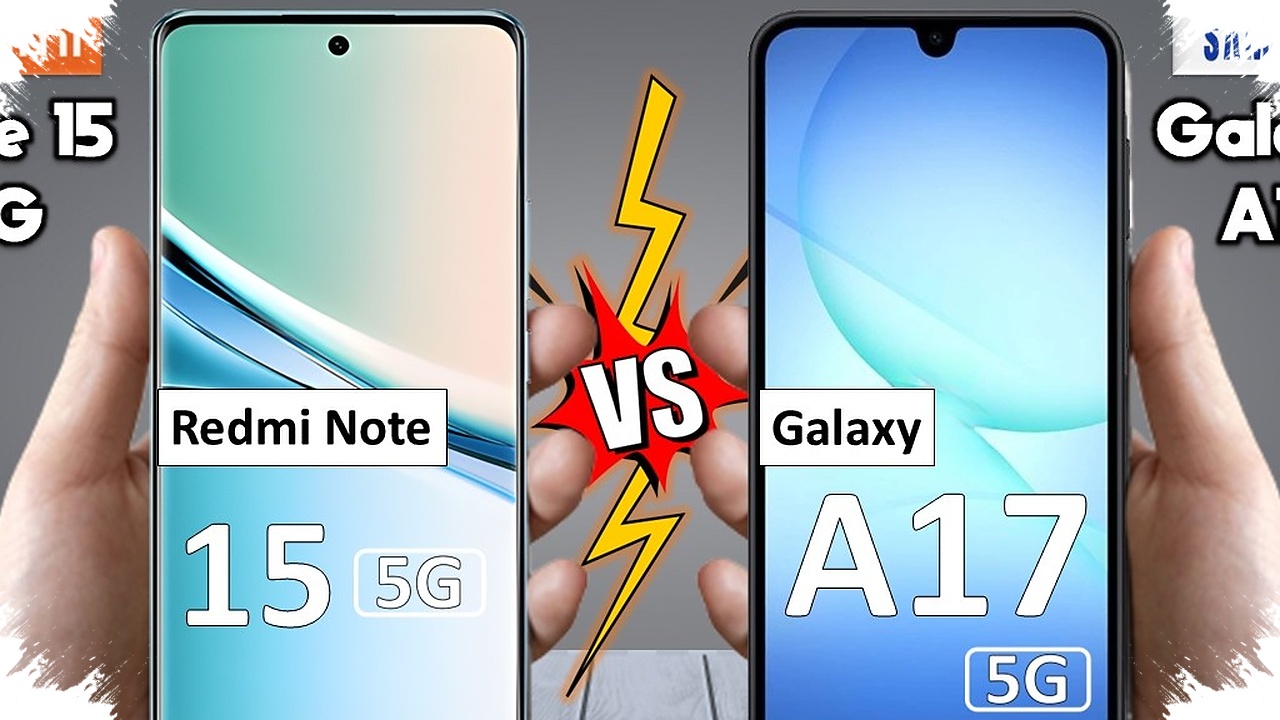
For buyers in the Rp3 million range, Samsung Galaxy A17 5G and Redmi Note 15 5G do not chase the same strengths. One is built around long-term stability and software support, while the other pushes harder on speed, display smoothness, and battery capacity.
That difference makes the buying decision much more practical than competitive on paper. The better choice depends on whether the priority is durability of experience or stronger day-to-day hardware performance.
Pricing and configuration choices
Samsung Galaxy A17 5G arrives in a single version priced at around Rp3.799.000 for the 8GB RAM and 256GB storage model. The setup is straightforward, so users do not need to spend much time comparing multiple tiers before deciding.
Redmi Note 15 5G offers more flexibility. The 6/128GB variant starts at around Rp3.359.000, the 8/256GB model sits in the Rp3.8 million range, and the 12/512GB option is priced at around Rp4.7 million.
That wider spread gives Redmi more room for different budgets and usage needs. Samsung, on the other hand, may feel easier for buyers who prefer a simple lineup without many configuration choices.
Display experience favors Redmi on motion
Samsung Galaxy A17 5G uses a 6.7-inch Super AMOLED panel with a 90Hz refresh rate. The screen is positioned as a comfortable daily-use display with sharp visuals and a pleasing overall presentation.
Redmi Note 15 5G steps up with a 6.77-inch AMOLED display and a 120Hz refresh rate. The higher refresh rate makes scrolling, app switching, and gaming look smoother, while the higher brightness level is also said to help in outdoor use.
Samsung still keeps an advantage in color character, which is described as more accurate and pleasant for general viewing. That makes it suitable for users who value a balanced screen rather than a more aggressive visual spec.
Performance is where the gap becomes clearer
Under the hood, Samsung Galaxy A17 5G relies on the Exynos 1330. The chip is considered stable for daily activity and fits light to medium multitasking without aiming for extreme speed.
Redmi Note 15 5G uses the Snapdragon 6 Gen 3, which is described as stronger in raw power. The phone reacts more quickly in general use, and the difference is more noticeable in gaming or other heavier tasks.
For users who regularly push their phone harder, Redmi appears to have the edge. Samsung still stands out for efficiency and stability, two traits that often matter more over a longer ownership period.
Camera priorities shift toward Redmi for detail and selfies
Samsung Galaxy A17 5G carries a 50 MP main camera with OIS. The setup is designed to keep results steady for everyday shooting and to improve consistency when capturing photos.
Redmi Note 15 5G answers with a 108 MP main camera and OIS. In terms of detail, it looks more capable, especially in bright conditions where higher resolution can be more apparent.
The front camera also leans in Redmi’s favor. It uses a 20 MP sensor, while Samsung sits around 13 MP, making Redmi more appealing for selfie users and light content creation.
Battery and extras round out the comparison
Samsung Galaxy A17 5G is powered by a 5000 mAh battery with 25W fast charging. That capacity is enough for a full day of normal use, especially for users who do not demand very heavy activity.
Redmi Note 15 5G comes with a larger 5520 mAh battery and 45W fast charging. Charging is quicker, and the phone also includes reverse charging, which is not available on Samsung.
Redmi adds Wi-Fi 6E and an IP66 rating to its feature list. Samsung counters with a major long-term advantage: support for OS updates up to six generations, which gives users more confidence if the phone is expected to last for years.
In practical terms, Redmi Note 15 5G looks stronger for buyers who want faster performance, a smoother display, a higher-resolution camera, and a bigger battery at this price point. Samsung Galaxy A17 5G remains relevant for users who value stability, efficiency, and a longer software support cycle.