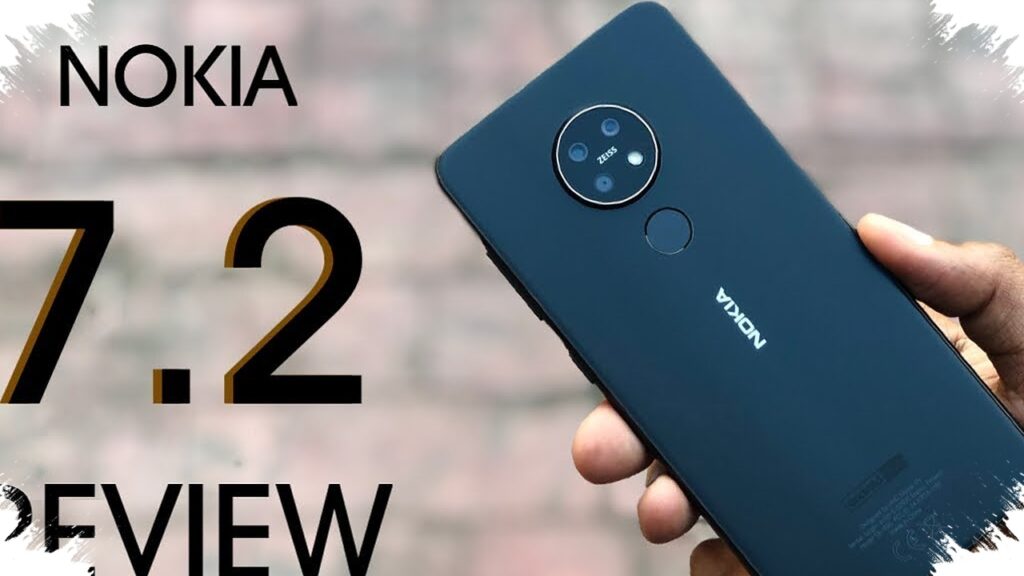
Nokia 7.2 still stands out in a market crowded with foldables, AI features, and ultra-thin bodies. Its appeal in daily use does not come from chasing the latest trends, but from a mix of solid build quality, distinct camera character, and a few useful tools that remain relevant for certain users.
The question is not whether it looks old by current standards. The real question is whether it can still serve as a practical phone without forcing too many compromises in everyday use.
A body that still feels reassuring
One of the most noticeable strengths of Nokia 7.2 is how solid it feels in the hand. The frame gives a sturdy impression and never feels fragile during long use, which sets it apart from many newer devices that focus heavily on being slim and light.
That extra weight can actually work in its favor for users who prefer a phone with a clear physical identity. Instead of feeling delicate, the device feels grounded and dependable.
Zeiss branding still matters
The Zeiss name remains one of the biggest reasons Nokia 7.2 continues to attract attention. In bright light, the main camera can still capture detail with natural-looking colors that do not appear overly processed.
The experience is not flawless, however. Focus can still be inconsistent at times, and the ultrawide camera drops off noticeably when the light gets weaker.
Video recording follows the same pattern. The 4K mode does not feel fully stable, so 1080p remains the safer option when a cleaner and less shaky result is needed.
Manual control is still a plus
For users who like more hands-on photography, Pro Mode gives Nokia 7.2 an advantage that many people may still appreciate. It shows ISO and exposure in real time, allowing more control over the final image.
This makes the phone feel less dependent on automatic settings. It is one of the reasons the device can still appeal to people who enjoy mobile photography with a more active role in the process.
The front camera brings its own style too. The automatic beautify effect can make selfies look very smooth, although that same effect may feel less natural for users who prefer a more realistic appearance.
Battery life remains the hardest part to accept
If there is one area that makes Nokia 7.2 difficult to recommend as an everyday primary phone, it is battery endurance. Nokia once claimed the device could last up to two days, but moderate use tells a different story.
With activities such as navigation, browsing, and some video recording, the battery feels just enough to get through the day, not enough to remove concern. Some users may even see it run out before the day ends.
There is also a further trade-off behind that limited endurance. Throttling on the processor to save power can make the phone feel warm and less responsive in certain situations.
Better as a second phone than a main one
Because of those limits, Nokia 7.2 makes more sense as a secondary device. It fits users who value a solid body, a more distinctive camera approach, and a design that still carries character.
Its bokeh feature also remains a small but interesting bonus, including for non-human subjects. The result can add a more artistic look to photos and give the device a creative edge that many newer mainstream phones do not emphasize.
For users who need a main phone for heavy daily routines, the compromises are harder to ignore. Battery life remains the biggest weakness, followed by performance and efficiency that no longer match today’s demands.
Even so, Nokia 7.2 still has a place for users who care more about character than convenience. In that sense, it remains a phone with a strong identity, but one that asks for patience when used as a daily driver.