Xiaomi’s product direction is becoming more layered, and the lineup points to a strategy that goes well beyond low-cost Redmi phones. Across its brands, the company is positioning devices for everyday use, performance-focused buyers, and premium users who want stronger cameras and larger batteries.
That approach is visible in the range of devices highlighted in the latest lineup. Redmi still covers the entry level, Poco pushes harder on speed and endurance, while Xiaomi’s main series adds compact flagships and Leica-branded imaging.
Entry-level Redmi still prioritizes essentials
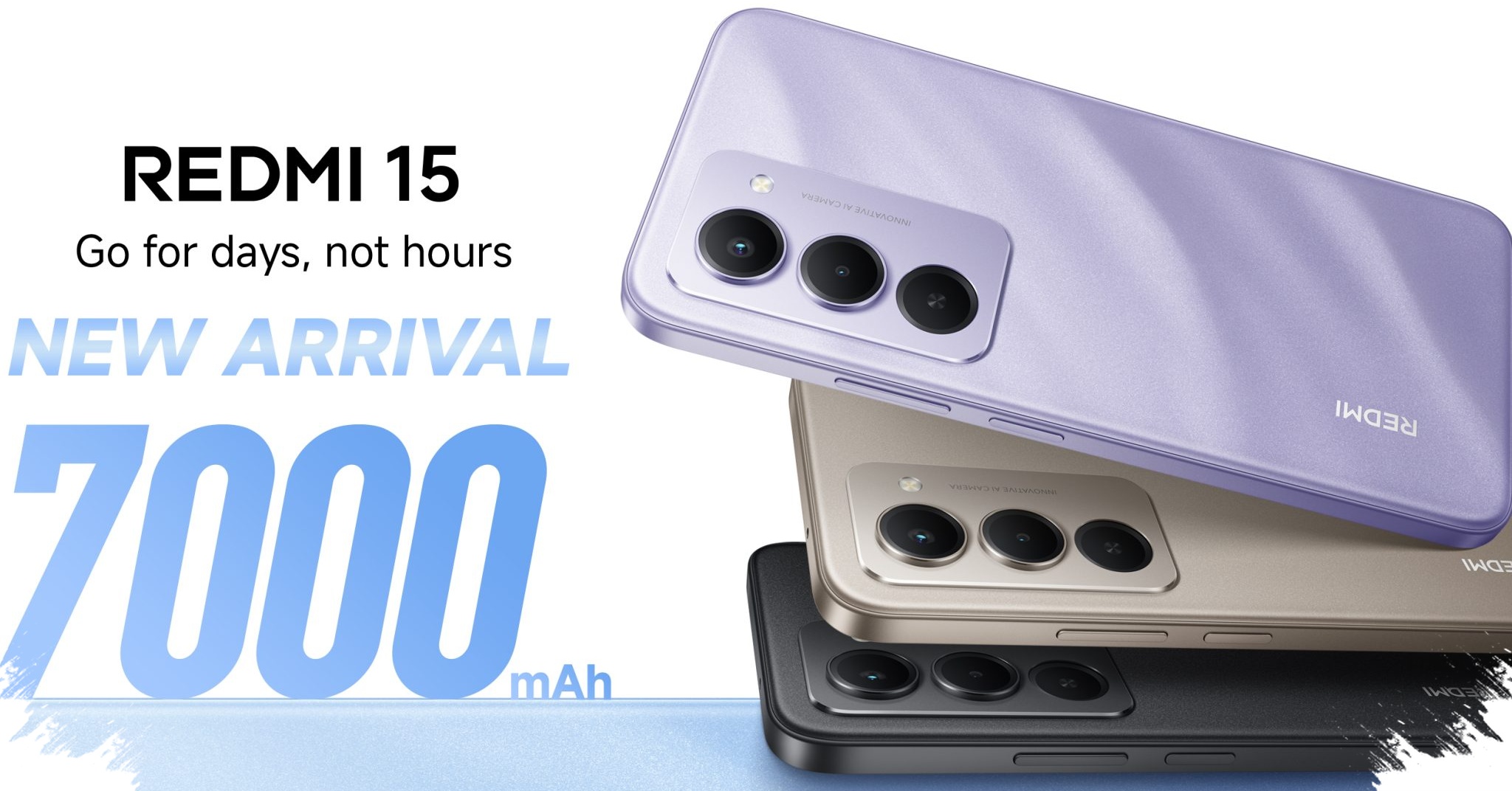
At the most affordable end, Redmi keeps things simple but practical. The phone uses an almost 7-inch IPS LCD panel with HD+ resolution and a 120Hz refresh rate, paired with a Unisoc T7250 chipset.
Its camera setup is modest, with a 13 MP rear camera and an 8 MP front camera. The 6000 mAh battery stands out as the main appeal, especially for users who want basic communication, light entertainment, and long daily usage without frequent charging.
Redmi Note 15 moves into a more balanced midrange role
The Redmi Note 15 4G takes a more refined route with a 6.8-inch AMOLED display, Full HD+ resolution, and a 120Hz refresh rate. It is powered by the MediaTek Helio G1 Ultra and comes with up to 8GB of RAM and 256GB of storage.
This model also features a 108 MP main camera and a 6000 mAh battery with 33W fast charging. The combination makes it a more complete option for users who want a clear jump from entry-level hardware without moving into a premium price segment.
5G brings brighter screens and stronger charging
The Redmi Note 15 5G follows the same general formula but adds newer connectivity and a different internal setup. It uses a 6.7-inch AMOLED display with brightness reaching up to 3000 nits, Snapdragon 6 Gen 3, up to 12GB of RAM, and storage up to 256GB.
Its camera remains centered on a 108 MP sensor, while the battery is rated at 5500 mAh and supports 45W fast charging. That makes it a practical choice for users who value a brighter display and stronger network support alongside solid daily performance.
Pro models push camera hardware further
The Redmi Note 15 Pro and Pro Plus sit higher in the range and focus on imaging. Both models use AMOLED 1.5K displays with a 120Hz refresh rate and a 200 MP main camera with OIS, making camera performance one of the key selling points.
The Pro version runs on the Dimensity 7400 Ultra, while the Pro Plus uses Snapdragon 7 Gen 4. Both are equipped with a 6500 mAh battery and 100W fast charging, giving the series a stronger balance between endurance and speed than the lower models.
Poco goes after performance buyers
Poco remains the branch for users who want more aggressive specifications. The Poco F8 Ultra leads that effort with a 6.9-inch AMOLED display, Snapdragon 8 Elite Gen 5, and a triple 50 MP camera system that includes telephoto support and up to 5x optical zoom.
The phone also brings a 6500 mAh battery, 100W wired charging, and 50W wireless charging. The Poco F8 Pro keeps a similar flagship identity with a 6.59-inch AMOLED screen, high brightness, Snapdragon 8 Elite, LPDDR5X RAM, UFS 4.0 storage, a 50 MP main camera, and a 6210 mAh battery with 100W fast charging.
Battery capacity becomes a major talking point
Among the more attention-grabbing models is the Poco X8 Pro Max, which is built around an unusually large battery. The device is listed with a 9000 mAh capacity, or around 8500 mAh for Indonesia, alongside a 6.83-inch OLED screen with 1.5K resolution, Dimensity 9500S, and up to 16GB of RAM.
That specification set shows how Xiaomi and Poco are treating endurance as a serious feature, especially for users who need longer usage time and do not want to depend heavily on daily charging. It also adds another layer to Xiaomi’s broader portfolio, where battery size is becoming just as important as raw speed.
Xiaomi’s main series leans on Leica and a compact flagship feel
The Xiaomi 17 is positioned for users who prefer a smaller flagship without giving up premium hardware. It comes with a 6.3-inch display, Snapdragon 8 Elite Gen 5, and Leica camera collaboration, which remains one of its main differentiators.
The Leica partnership is important because it shifts attention from specification lists to image quality. In Xiaomi’s premium line, that collaboration helps define the brand’s higher-end identity more clearly than hardware alone.
A larger-screen option remains in the premium mix
The Xiaomi 15T Series expands the premium offering with a 6.83-inch AMOLED display, 2K resolution, and a 144Hz refresh rate. It comes in two versions: a standard model with Dimensity 8400 Ultra and a Pro model with Dimensity 9400+.
Both versions use a 50 MP camera and a 5500 mAh battery with fast charging of up to 90W. With that setup, Xiaomi covers both compact flagship buyers and users who want a larger display, while keeping the premium tier spread across different needs without relying on a single product style.
-

-

-

-