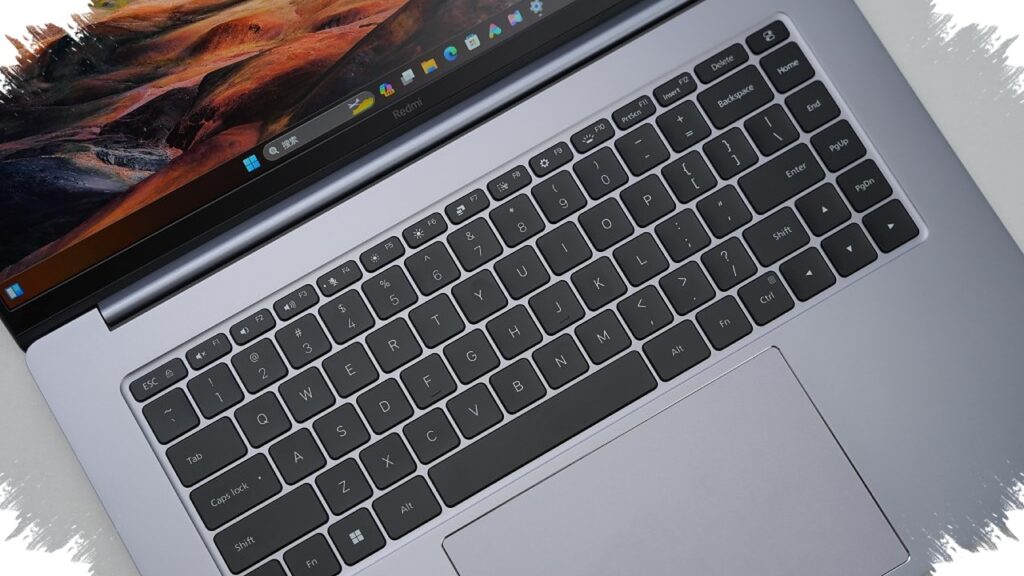
Xiaomi has expanded its thin-and-light laptop lineup in China with the Redmi Book 14 and Redmi Book 16 in the 2026 version. Both models are positioned for daily productivity, combining Intel Core Ultra power, 120Hz displays, and large batteries in a body aimed at users who move between workspaces.
For an early launch push, Xiaomi is also offering a 500 yuan discount until 23 April 2026. That promotion adds extra appeal to two laptops that are clearly built for practical use rather than flashy presentation.
Performance built for everyday workloads
At the center of both devices is the Intel Core Ultra 5 125H, a chip with 14 cores and 18 threads. Xiaomi pairs it with performance support of up to 60W, which is intended to help the laptops handle multitasking and heavier productivity tasks with more confidence.
To keep sustained performance stable, Xiaomi uses a dual-fan cooling system with dual heat pipes. That setup matters for thin laptops, where heat control often becomes a limiting factor during longer work sessions.
Memory and storage are also tuned for speed. Both laptops can be configured with up to 32GB of LPDDR5X RAM running at 7467 MT/s, while storage goes up to a 1TB PCIe 4.0 SSD.
Two display sizes, one smooth experience
The Redmi Book 14 2026 comes with a 2.8K panel at 2880 x 1800 pixels and a peak brightness of 500 nits. It also keeps its weight at 1.49 kg, which helps preserve portability for users who need a laptop that travels easily.
The Redmi Book 16 2026 uses a 2.5K display at 2560 x 1600 pixels with 400 nits of brightness. It is heavier at 1.86 kg, but Xiaomi still places it in the thin-and-portable category rather than the full-size workstation class.
Both models support a 120Hz refresh rate. That should make movement feel smoother when switching between windows, scrolling through documents, or consuming entertainment content after work.
Battery life and charging designed for mobility
Xiaomi equips both Redmi Book models with an 80Wh battery. The capacity is one of the main selling points here, especially for users who want longer unplugged use and fewer charging interruptions during a busy day.
Charging is handled by a 100W USB-C GaN adapter, which can also charge a smartphone. That detail fits the mobile-first profile of the lineup, since one charger can cover more than one device in a lighter travel setup.
The fast-charging support also makes sense for students, office workers, and light content creators who need to get back to work quickly. For those user groups, short charging stops are often more useful than carrying a bulky power setup.
Ports, expansion, and ecosystem features
Connectivity is broad enough to reduce reliance on dongles. Xiaomi includes Thunderbolt 4, full-function USB-C, HDMI 2.1, USB-A, and a 3.5mm audio jack, giving the laptops practical flexibility for monitors, accessories, and presentation gear.
There is also a secondary M.2 expansion slot for users who may want more storage later. That option adds some long-term flexibility without forcing an immediate upgrade to a different machine.
Xiaomi further ties the laptops into its “human x car x home” ecosystem. The supported features include shared keyboard and mouse control, cross-device control, NFC, and cross-device camera functions, showing that the Redmi Book line is meant to work alongside other Xiaomi products.
Official pricing in China
The Redmi Book 14 2026 is priced at 5999 yuan for the 16GB + 512GB version, 6499 yuan for 16GB + 1TB, and 6999 yuan for 32GB + 1TB. The Redmi Book 16 2026 is listed at 6199 yuan for 16GB + 512GB, 6699 yuan for 16GB + 1TB, and 7199 yuan for 32GB + 1TB.
With prices kept relatively close between the two, the choice comes down mainly to display size, weight, and how much portability matters in daily use. Both laptops are clearly aimed at users who want a slim machine with strong performance, quick responsiveness, and enough battery life to stay productive away from a desk.