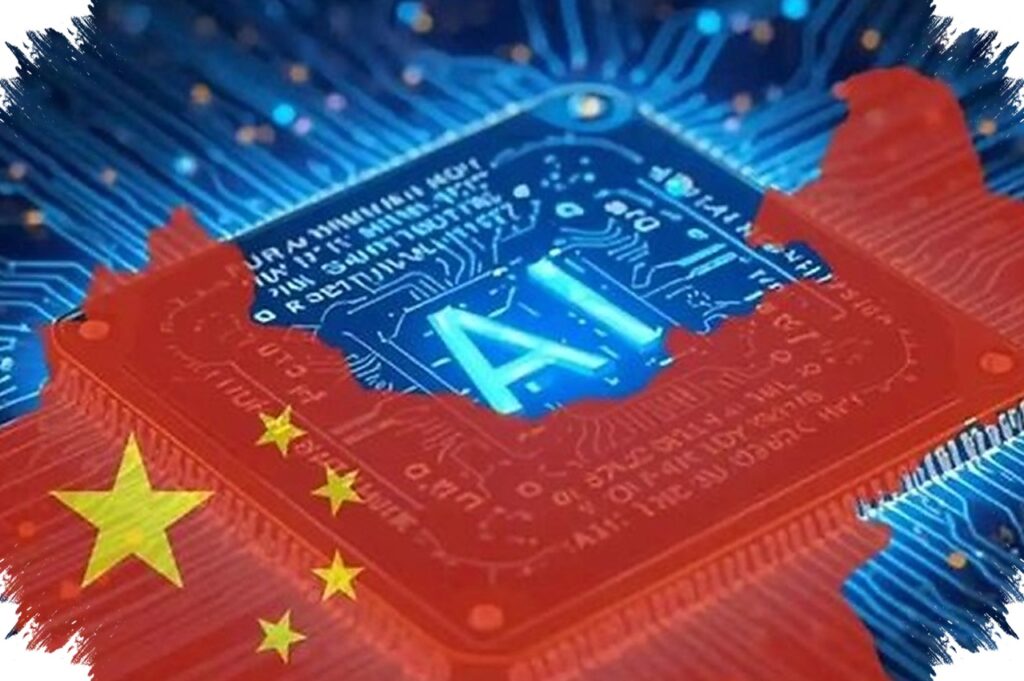
DeepSeek’s latest model release is drawing attention not only for its technical ambitions, but also for what it suggests about the direction of China’s AI industry. DeepSeek V4 arrives at a time when access to advanced American chips has become increasingly restricted, pushing domestic developers to rely more heavily on local hardware.
That shift places Huawei’s Ascend chipsets in a more important position. DeepSeek V4 is designed to run optimally on Huawei’s hardware, marking a notable change from earlier generations that still depended on Nvidia GPUs for training and model operations.
A clearer move toward local AI infrastructure
The release reflects a broader adjustment inside China’s technology ecosystem. As export restrictions limit access to high-end Nvidia chips, domestic AI firms are under growing pressure to build systems that can keep development stable without depending entirely on foreign supply.
In that setting, local hardware has become more than a backup option. It is now part of a strategic effort to support AI development with infrastructure that can be controlled and scaled within the country.
Two versions for different workloads
DeepSeek V4 is available in two variants, Pro and Flash. The Pro version is intended for demanding tasks that require higher performance, including programming and complex reasoning.
Flash, meanwhile, is built with resource efficiency in mind. The split shows that DeepSeek is trying to address different use cases rather than focus on a single model profile.
Large context capacity stands out
One of the model’s most notable features is its ability to handle context of more than one million tokens. That places DeepSeek V4 among the AI systems capable of processing extremely large volumes of text.
Such capacity is particularly relevant for work involving long documents and extensive analysis. It also signals that China’s local AI technology is advancing in areas often associated with established global players.
Geopolitics is shaping product strategy
The timing of the launch cannot be separated from the broader geopolitical environment. Restrictions on Nvidia chip supplies have encouraged many Chinese companies to pursue alternatives that are more dependent on domestic control.
Huawei’s chipset performance is said not to fully match Nvidia’s technology yet, but the move still matters. It provides a base for a more self-reliant AI ecosystem and strengthens the country’s domestic technology supply chain.
What the release signals for China’s AI sector
DeepSeek V4 suggests that China’s AI industry is moving further toward technological independence. If that path continues, reliance on foreign hardware could gradually decline.
The release is therefore more than a model update. It also reflects a deeper competitive shift in the technology race between China and the United States, where control over AI infrastructure is becoming increasingly strategic.