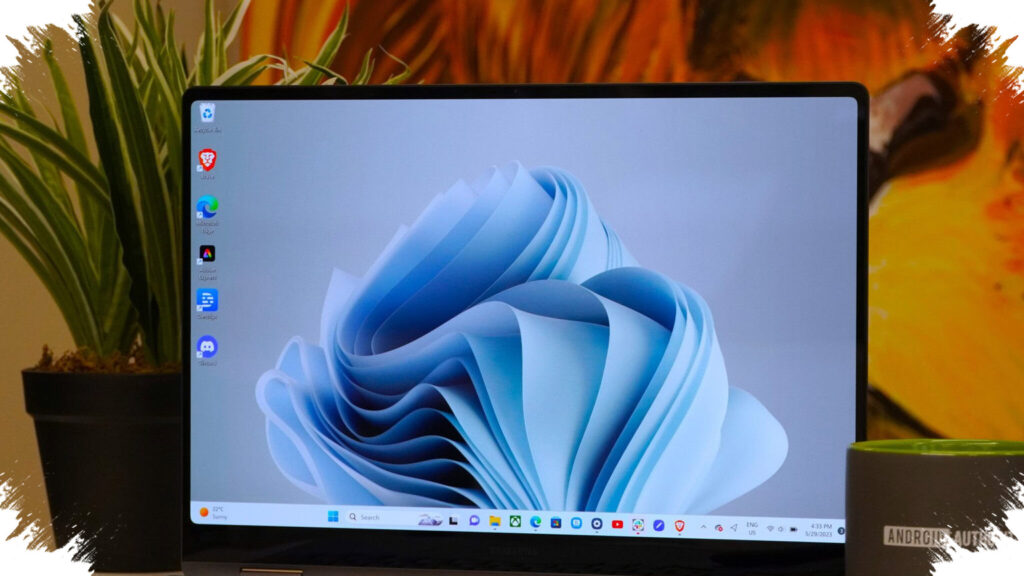
Samsung’s Galaxy Book lineup may be heading toward its biggest shift yet, with three new models reportedly planned around Android instead of Windows. The move would mark a major departure for a product family long associated with Microsoft’s PC platform.
The development has immediately raised questions about where Windows fits in Samsung’s laptop strategy. Galaxy Book has traditionally been positioned as a Windows-based notebook line, so any switch to Android would signal a far more fundamental change than a simple hardware refresh.
A different software foundation
According to Sammobile, the systems behind these devices are not expected to use standard Android alone. The laptops are said to rely on a new ChromeOS version built on Android, carrying the internal codename Aluminum OS.
Samsung is also reportedly preparing deep user interface customization for the lineup. The experience is described as being shaped to feel closer to DeX, the desktop-style mode already familiar to users of several Samsung phones and tablets.
That approach would give the new Galaxy Book machines a distinct identity inside Samsung’s broader ecosystem. Instead of behaving like conventional Windows laptops, they could be designed to extend the same software environment already used on Galaxy mobile devices.
Three models, different market positions
The leak points to at least three Galaxy Book models in development, each aimed at a different segment. One is said to be an entry-level device, while another would sit at the premium end with stronger performance.
The most affordable model is reportedly being positioned to compete with the Apple MacBook Neo. Even so, key details such as display size, memory configuration, and other technical specifications have not been revealed.
Samsung has also not disclosed the commercial names for any of the three devices. At this stage, the lineup remains unannounced, and the company has not provided an official launch timetable.
Timing still appears distant
Even without a confirmed release schedule, one clue suggests the project is not expected to arrive immediately. The mention of Android 17 points to a possible launch window in the second half of 2026 or the first half of 2027.
That timeline also places the project alongside another recent rumor about the Galaxy Book family. Galaxy Book6 Edge is said to be getting Qualcomm Snapdragon X2 Elite, which would already represent a notable shift from the Intel-powered Galaxy Book6.
A move from Intel to Snapdragon would be significant on its own. But a transition from Windows to Android would go much further, altering the core software experience rather than only the processor platform.
What it could mean for Galaxy’s ecosystem
The most interesting part of the report is the suggested integration of AI features. Samsung is said to be bringing several AI capabilities already known from its phones to the new laptop lineup.
The exact features have not been listed, but the direction matches Samsung’s recent emphasis on AI across multiple product categories. If the plan moves forward, Galaxy Book could become less of a standard PC line and more of a direct extension of Samsung’s mobile ecosystem.
For now, it is still unclear whether the Android-based approach would debut with Galaxy Book6 Edge or wait until Galaxy Book7. That uncertainty matters because it will determine how quickly Samsung’s new strategy could take shape.
What is already clear is that the combination of Android, One UI 9, Aluminum OS, and a DeX-like interface would be a major departure from the current Galaxy Book formula. If Samsung follows through, the next generation of Galaxy Book devices may look far closer to a mobile-first computing platform than to the Windows laptops that came before it.