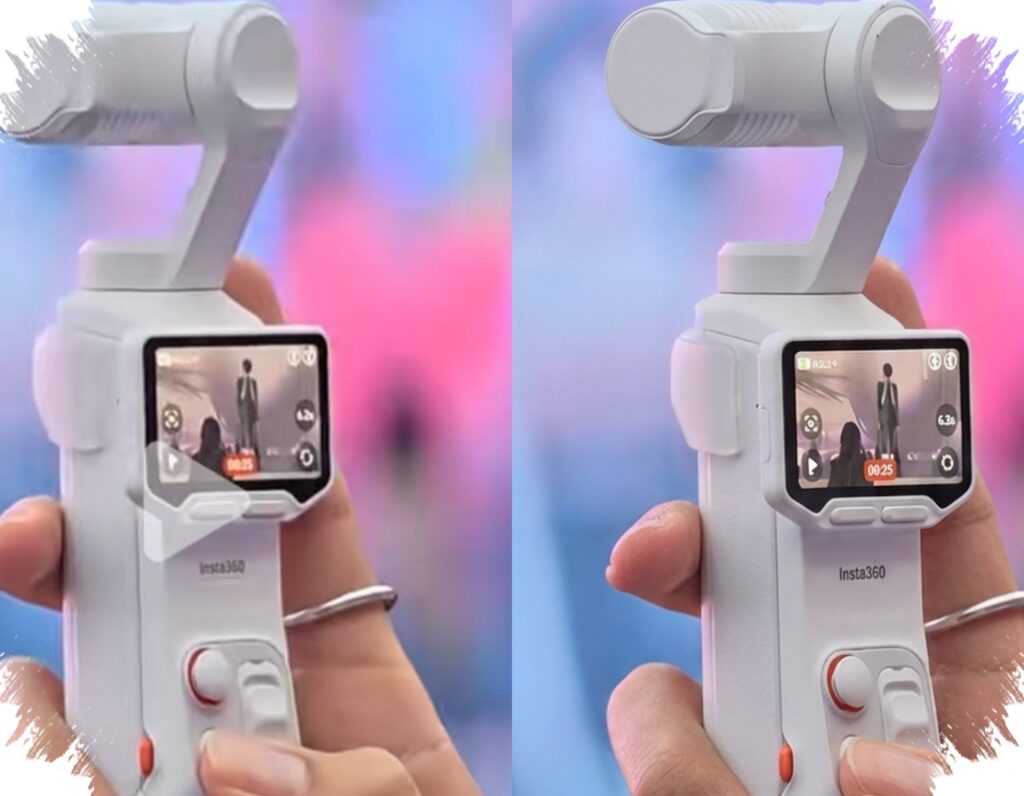
Insta360’s Luna Ultra is shaping up to be one of the more disruptive compact gimbal cameras in sight, mainly because it does not rely on a single headline feature to stand out. Instead, it combines 8K capture, a dual-camera setup, and a modular design in a package that appears aimed squarely at creators who want more than a simple pocket camera.
That combination matters because the device is being positioned as a direct rival to DJI Pocket 4 and Pocket 4 Pro. By focusing on higher resolution, stronger zoom capabilities, and tighter ecosystem integration, Luna Ultra is building a case that may persuade some buyers to wait rather than move quickly on another compact gimbal camera.
8K capture sets the tone
The most obvious selling point is 8K video recording. In this category, that level of resolution gives Luna Ultra a strong advantage on paper for travel videos, documentary work, and other projects where fine detail matters.
The camera also supports 4K recording at up to 120fps. That makes it more appealing for creators who regularly use slow motion but still want smooth footage.
For post-production, Insta360 includes 10-bit I-log color and 14 stops of dynamic range. Those tools should give editors more room during color correction, especially when trying to preserve detail in both bright and dark areas.
Dual cameras broaden the shooting options
Luna Ultra uses a dual-camera system with a wide-angle lens and a telephoto lens. That setup gives users more flexibility across different scenes, from landscapes to subjects that sit farther away.
One of its standout features is lossless zoom up to 6x. For users who often find pocket gimbal cameras too limited when shooting distant details, that capability could be a major reason to look at Luna Ultra more closely.
The lens combination also makes the device more practical as an all-in-one tool. It can handle vlogging, travel shots, close-ups, and medium-distance framing without requiring a switch to another camera.
An F1.8 aperture and Leica-tuned optics further strengthen the package. Those elements are intended to improve clarity, color accuracy, and low-light performance within a compact body.
Modular design gives it a wider reach
Beyond imaging specs, the modular concept is a major differentiator. The camera module can be removed, used on its own, or attached to a range of accessories.
That approach opens the door to more use cases than a typical compact gimbal camera. Tech Court says the modular design is suitable for handheld vlogging as well as drone-mounted cinematography.
It also suggests room for future accessory support. For buyers, that can matter just as much as the launch-day feature list, since a camera often stays relevant longer when its ecosystem can grow with user needs.
Controls, screen, and audio are built for quick use
Luna Ultra includes a 2-inch rotating OLED touchscreen that is meant to stay readable in different lighting conditions. It also helps users adjust settings from more angles.
Insta360 has kept the control layout simple enough for one-handed use. A dedicated record button and a joystick-style wheel are included to make navigation faster in dynamic shooting situations.
The textured grip is another practical touch. That matters because compact gimbal cameras are often used while walking, traveling, or capturing spontaneous moments.
Audio has also been given attention. Insta360 is pairing the camera with a wireless microphone system that supports 32-bit float audio and an e-ink display for real-time monitoring. The system connects directly to the camera without extra adapters, which should make the workflow more convenient for creators who want fewer external accessories.
Launch timing and pricing may decide its impact
Insta360 is targeting a U.S. launch in May 2026. That timing is notable because it lines up with limited DJI availability in the region.
Expected pricing sits between $400 and $600. If that range holds at launch, Luna Ultra would land in an attractive spot between premium features and a still-accessible price band.
The final specifications, final price, and real-world performance have not been officially confirmed yet. Even so, the current package already gives Luna Ultra a clear identity: a compact gimbal camera that leans on 8K, dual lenses, 6x lossless zoom, modularity, a rotating OLED display, and wireless 32-bit float audio to challenge the usual expectations in this category.