


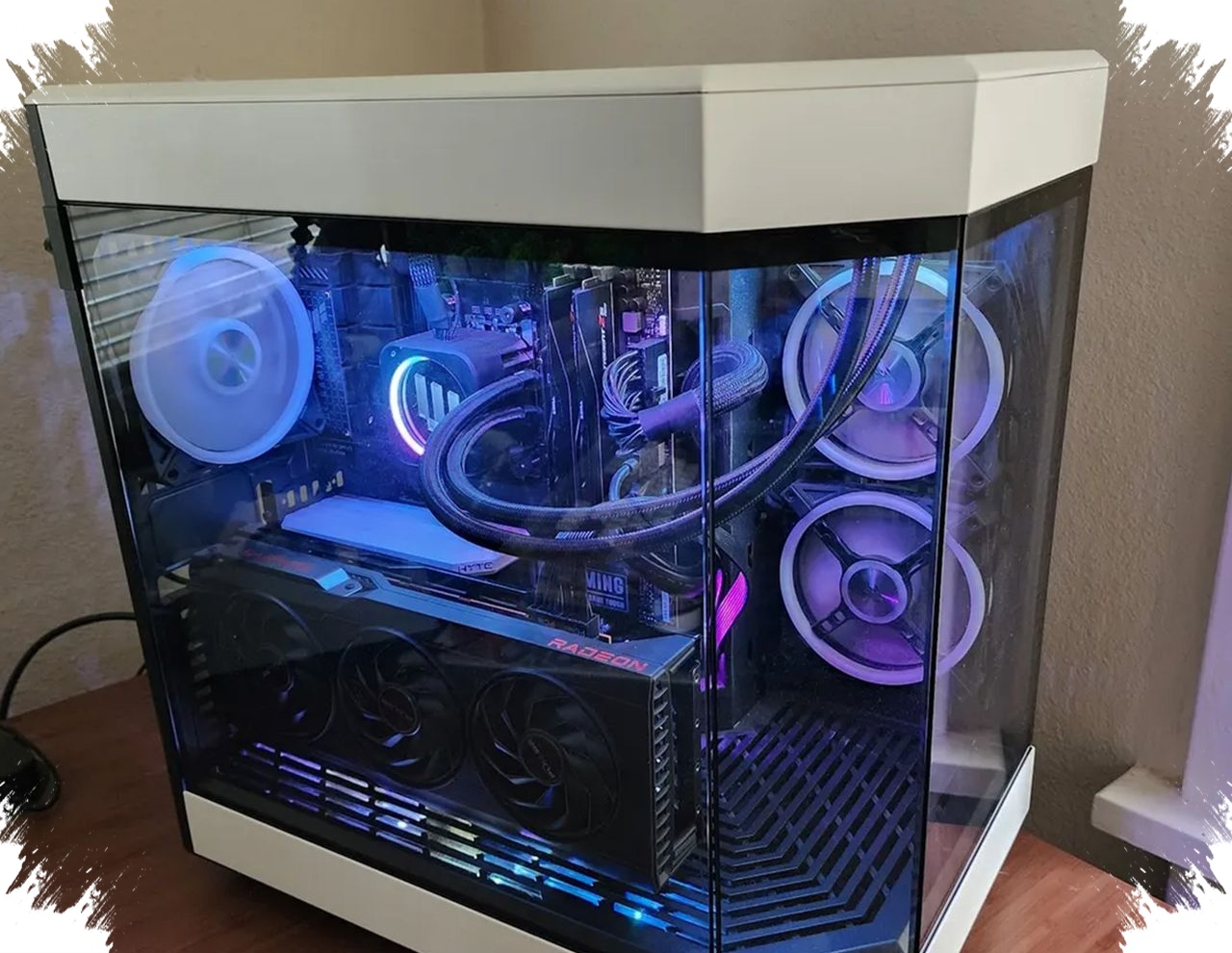
A PC build has drawn attention for treating a display inside the case as more than decoration. Instead of using a conventional LCD panel, the system relies on an e-ink screen to show temperatures, component usage, and clock information without turning the inside of the case into a bright visual distraction.
The project was shared by Reddit user InvaderJ from PC Master Race. He built the system with a Xhuttle case and a vertically mounted GeForce RTX 5090, aiming for a machine that would also fit naturally in a family room.
A monitor that stays visually calm
What makes the setup stand out is not only what the screen shows, but how it looks when the PC is powered off. The matte e-ink surface and white frame help the panel blend into the case design, avoiding the large dark block that an LCD would leave behind.
That design choice was deliberate. InvaderJ wanted a dynamic system monitor, but he rejected LCD because it would appear black when off and disrupt the visual balance of the build.
Built for status data, not fast animation
The internal display is used as a system dashboard rather than a decorative accent. It reports temperature, usage, and clock data, with updates arriving every five seconds through partial refresh.
That approach fits e-ink technology well, since the panel is not intended for rapid changes like a conventional monitor. For tracking system status, however, the slower refresh cycle is enough because temperatures, load, and frequencies do not need to change every second to remain useful.
Why e-ink makes sense here
The setup also benefits from the low power draw associated with e-ink. A panel like this can stay active for status information without adding much to the system’s energy needs.
This is one reason the project stands out in PC modding. Many builders use small LCD panels for internal dashboards, but e-ink offers a different balance of readability, power efficiency, and visual restraint.
Designed as part of the room, not only the PC
InvaderJ said the build was meant to work well in a family room, which helps explain why the off-state appearance mattered so much. In that setting, the screen had to remain attractive even when the machine was not running.
The white-framed, matte e-ink panel supports that goal by looking more like part of the case itself than an added accessory. With two other major black elements already inside the build, avoiding another dark rectangle was part of the overall design logic.
The result is a PC that serves its monitoring function while still keeping a calm appearance when idle. It also points to a wider role for e-ink in custom PC projects, especially where users want system data visible without making an internal display the dominant visual feature.