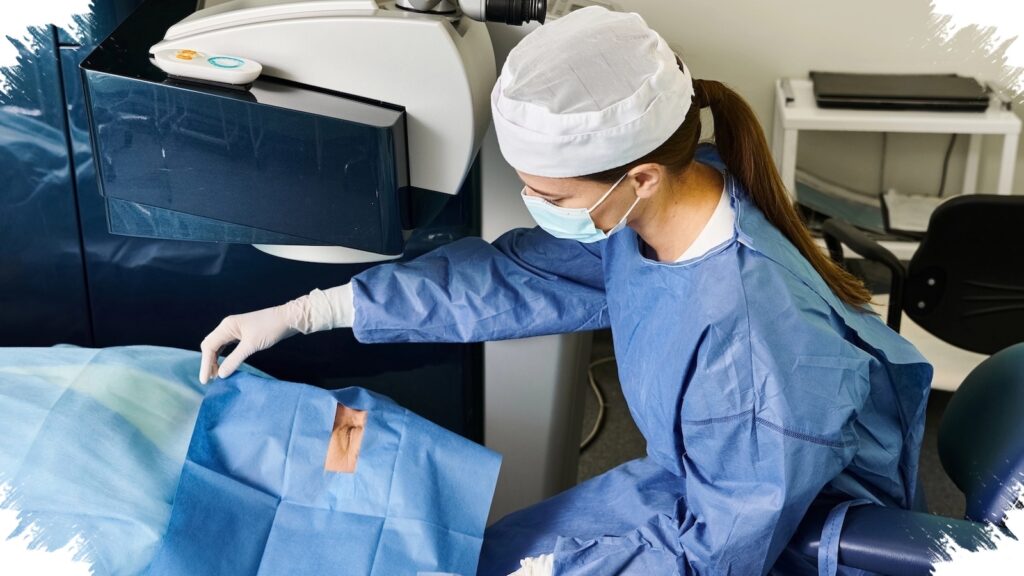
A surgical headset best known for immersive media is now being used in one of the most precise fields in medicine. Apple Vision Pro has reportedly entered the operating room and was used in what is described as the world’s first cataract surgery involving the device.
The milestone points to a broader shift in how spatial computing may fit into modern healthcare. Rather than serving only entertainment or productivity use cases, Vision Pro is now being tested in a setting where clarity, timing, and visual precision matter at the highest level.
How the headset was used in surgery
According to Macrumors, New York eye surgeon Dr. Eric Rosenberg of SightMD became the first surgeon to perform cataract surgery with Apple Vision Pro. The historic procedure took place in October 2025, and Rosenberg has since completed hundreds of additional operations with support from a system called ScopeXR.
ScopeXR is a mixed reality surgical platform developed specifically for Vision Pro. It was built to make the headset more effective inside the operating room, where surgeons need live visual guidance without losing concentration on the procedure itself.
The system connects to a live feed from a digital 3D surgical microscope. That feed is then displayed inside the headset in stereoscopic 3D, giving the surgeon a deeper and more detailed view of the surgical field.
Why the system matters in eye surgery
In cataract surgery, the ability to see fine details clearly can make a major difference. ScopeXR allows important diagnostic data to appear as an overlay before surgery, while the surgeon continues to monitor eye tissue in a more immersive view.
This setup also supports collaboration across locations. Another specialist can join the procedure virtually and see the same operating view as the primary surgeon, which adds a remote consultation layer without interrupting the surgery.
For Dr. Rosenberg, that capability is part of what makes the technology promising for the future of medicine. He has suggested that it could allow some of the best doctors in the world to participate in surgeries from anywhere and at any time.
A potential tool for training and access
The use case is not limited to advanced procedures alone. The same system may also help younger doctors who are still learning, since it can provide real-time visibility and remote guidance during surgery.
It may also become useful in urgent situations when a specialist is not physically present. In that kind of scenario, a remote expert could still contribute to the operation through the mixed reality interface.
That broader reach could matter for hospitals in areas with limited specialist availability. Access to high-level surgical support may become easier if the technology continues to mature and see wider adoption.
Why Vision Pro fits a professional setting
Apple Vision Pro starts at US$3,499, but its design gives it features that fit demanding professional environments. Its high-resolution display supports extremely sharp visuals, which is important when surgeons work with delicate tissue and small structures.
Apple’s spatial computing approach also helps place digital information within the real operating environment without pulling the surgeon away from the task. Hands-free interaction adds another advantage, since it allows access to information without touching the device during a procedure.
Remote collaboration remains another strong point. That makes the headset useful not only for surgery, but also for consultation, supervision, and guided support in real time.
Apple’s search for a stronger niche
Vision Pro was introduced for a broad consumer audience, but mass adoption has not matched expectations. Its high price and large form factor have been major barriers to wider use.
As a result, Apple is increasingly associated with specialized fields where the value of the hardware is easier to justify. Healthcare, flight training, industrial design, technical education, and professional simulation are among the areas where Vision Pro appears to have more practical momentum.
Its move into cataract surgery shows that the device may be finding a clearer role in professional workflows. In operating rooms, where precision and information access are critical, spatial computing may now be starting to prove its value in a very literal way.