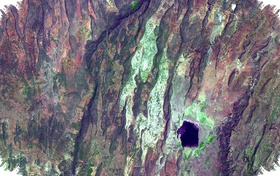
The slow split across East Africa is drawing attention because it is not being driven by one force alone. Beneath the surface, rising magma is weakening the crust, while changes at the surface are removing pressure and helping the rift open faster than expected.
That combination is unfolding along the East African Rift System, a vast tectonic zone stretching from Ethiopia to Mozambique. Scientists say the process is still measured in millimeters per year, but over geologic time it is reshaping the continent’s future.
Heat from below is thinning the crust
One major driver comes from deep inside the Earth. Researchers from the University of Pisa have highlighted magma activity in Afar, Ethiopia, as an important factor in the weakening of the East African Rift.
Hot rock from the mantle is pushing upward and thinning the crust more quickly. The force is linked to a superplume, a flow of hot material rising from deep within the Earth and pressing against the crust from below.
That pressure does more than change the underground structure. It also contributes to stronger volcanic activity and earthquakes across the region, while the continent’s crust becomes progressively weaker.
Drying lakes are changing surface pressure
A separate force is working from above. A study published in Scientific Reports found that long-term drying in the climate has helped speed up the splitting process since 5,000 years ago.
Scientists from the University of Auckland and Syracuse University found that shrinking water levels in large East African lakes reduced the load on the Earth’s surface. With less weight pressing down, the crust shifted more easily.
The study estimated that this change increased crustal motion by about 0.17 millimeters per year above the natural rate. That number is small, but in tectonic terms it matters because the effect accumulates continuously over long periods.
The most visible changes are already appearing
The clearest signs can be seen in the Turkana Rift Zone in Kenya. There, the crust has been reported at only about 13 kilometers thick, showing how far the thinning process has progressed.
Large cracks have also been observed in several places, including fissures that appeared suddenly in Kenya after heavy rain or seismic activity. These surface breaks show that the continent is not only stretching deep below ground, but also leaving visible marks on land.
For communities living along the East African Rift System, that matters directly. As the crust weakens and fault lines become more active, the chances of earthquakes and volcanic eruptions may increase.
A fast process, but not a near-term breakup
Even with the accelerated pace, the split remains slow by human standards. The movement is still happening at millimeter scale each year, which means a new ocean will not form anytime soon.
What makes East Africa important is the chance it gives scientists to watch a continent moving from rifting toward the early stages of ocean formation. The same kind of process has happened in Earth’s geological history and helps explain how landmasses change over immense spans of time.
The East African case also shows that continental breakup does not come from a single trigger. Magma, tectonic movement, and climate-driven surface changes are all acting together, gradually carving a new landscape that will continue to evolve for millions of years.