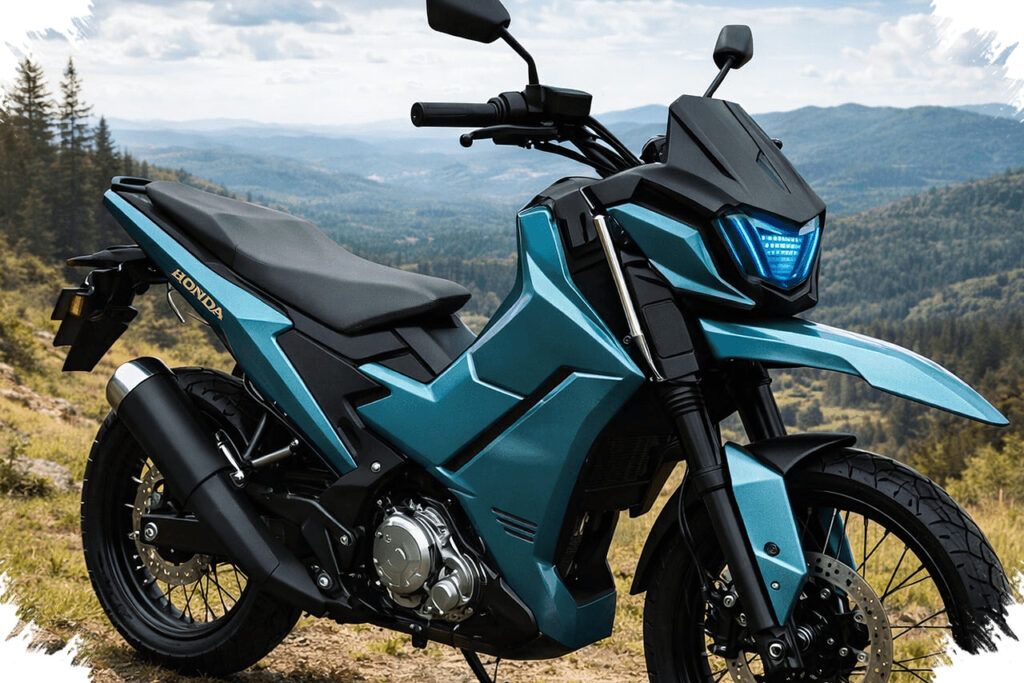
What makes the Honda X-Tracker 2026 stand out is not a single feature, but the way it tries to cover two very different needs at once. It is aimed at riders who want a practical daily motorcycle without giving up the ability to handle long-distance touring or light off-road use.
That positioning matters because demand for adventure-style motorcycles continues to grow in Indonesia. In that context, a model that can move between city traffic and trips outside town feels especially relevant.
Built for more than one riding scenario
Honda has shaped the X-Tracker 2026 around flexibility from the start. The motorcycle is designed to feel manageable in urban traffic while still remaining composed on open roads.
Its proportions are presented as balanced for both uses. In the city, the bike is expected to stay agile in congestion, while on longer routes it is meant to offer better stability.
The design follows that same logic. The bodywork uses aerodynamic lines and a frame that looks sturdy, creating a modern appearance without losing the practical side of the package.
Comfort is treated as a priority
Long-distance riding is one of the main selling points here. Honda is said to prepare a wider and softer seat so the rider can stay supported over extended trips.
That choice is important for an adventure-style motorcycle, where comfort often becomes a deciding factor during long hours on the road. A more supportive seat should help reduce fatigue when touring.
The handlebar position is also made ergonomic. This is intended to create a more relaxed riding posture, whether the motorcycle is used briefly in town or for hours outside the city.
Engine and efficiency are central to the package
On the powertrain side, the Honda X-Tracker 2026 is expected to use a 250 cc to 300 cc liquid-cooled engine. That range is considered suitable for both daily commuting and long-range riding.
The engine character is described as responsive, with optimal torque in the low and middle rev range. That kind of delivery is especially useful in Indonesian riding conditions, where those rev ranges are used often.
A six-speed manual transmission completes the setup. With six gears, the rider gets more room to manage power in dense traffic and on open roads alike.
Fuel efficiency is also part of the appeal. With newer engine technology, consumption is projected at around 30–35 km per liter, depending on riding style and road conditions.
For touring use, a large fuel tank adds another practical advantage. It reduces the need for frequent refueling stops during long trips.
Suspension, brakes, and display support the practical approach
Honda equips the motorcycle with upside-down front suspension and a rear monoshock. The combination is meant to handle vibration well across different road surfaces.
This setup should help the bike deal with potholes, gravel, and even dirt paths. At the same time, it is intended to preserve comfort without weakening the motorcycle’s light-adventure character.
Braking hardware uses disc brakes at both ends. On certain variants, ABS is also available to help reduce the risk of wheel lock during sudden braking.
ABS becomes especially useful on slippery roads or in emergency situations that demand a quick response. It adds an important layer of safety for riders who use the motorcycle in varied conditions.
The digital instrument panel reinforces the modern feel. It displays speed, fuel level, engine revs, and gear position in a format that is designed to stay easy to read, even under bright sunlight.
Market positioning and support network
In the domestic market, Honda motorcycles are distributed under Astra Honda Motor. A wide dealer and authorized service network gives the X-Tracker 2026 an additional advantage for buyers who value after-sales support.
The model is also expected to arrive in several variants to reach different types of customers. One version already mentioned is the Standard variant, although further details on the lineup and pricing have not been disclosed.