


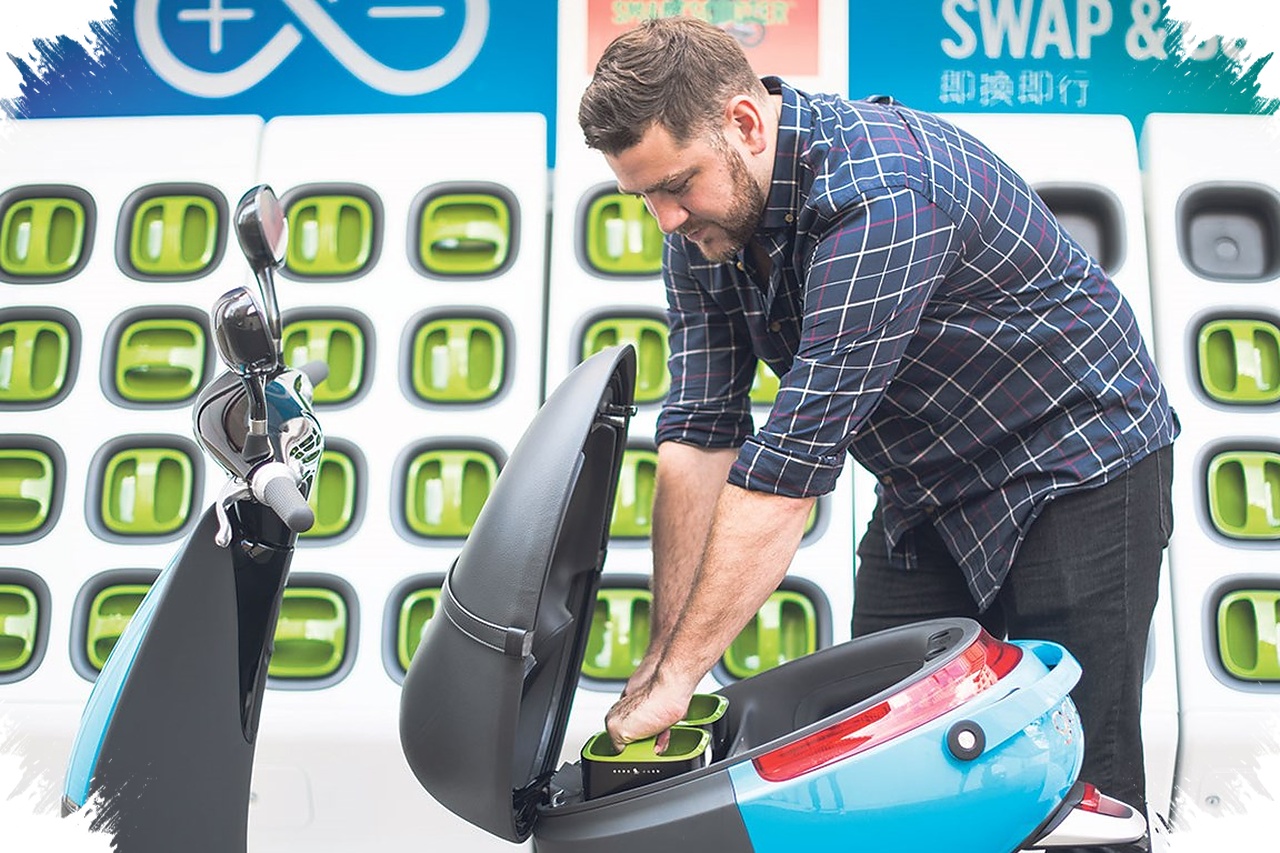
Battery swapping is becoming one of the clearest signs that Indonesia’s electric motorcycle market is moving into a new phase in 2026. The appeal is no longer limited to lower emissions, because the refueling experience now feels much closer to filling up at a petrol station.
For daily riders in major cities, that shift matters. What used to be a major obstacle—long charging time—has started to fade as battery replacement can now be done in minutes.
A faster answer for urban mobility
The battery swap model works by replacing an empty battery with a fully charged one at a dedicated station. Riders do not need to wait for a long charging cycle at home or at another location.
That approach fits the pace of city travel, where motorcycles are often used from morning until night. It also reduces range anxiety, since a depleted battery can be exchanged quickly when needed.
Why the model is gaining attention
The strongest demand comes from urban users who need practical and flexible transportation. Office workers, students, and online motorcycle taxi drivers are among the groups that benefit most from the system.
Instead of adjusting routines around charging time, riders can simply stop at a swap station once the battery runs low. The process is designed to keep mobility moving with as little downtime as possible.
BaaS makes the upfront cost lighter
The growth of battery swapping is closely linked to Battery as a Service, or BaaS. Under this model, buyers do not need to purchase the battery outright when they buy an electric motorcycle.
Instead, the battery is rented through a monthly subscription system. That structure lowers the initial purchase price and broadens access for more potential buyers.
It also helps on the cost side. Users only pay a battery rental fee that is considered relatively affordable compared with daily fuel spending, and many swap services are said to provide lifetime battery warranty during the subscription period.
Manufacturers are building the ecosystem
Several electric vehicle makers have started expanding their battery swap ecosystems more seriously in Indonesia. VinFast is one of the most aggressive players, entering the market with models such as VinFast Evo, VinFast Feliz II, and VinFast Viper.
Those models will be supported by V Green’s swap network in several major cities. Smoot Motor Indonesia is also expanding its own service, with Smoot Tempur and Smoot Zuzu backed by more than 1,500 swap points across Indonesia.
Volta Indonesia has also been active through products such as Volta 401 and Volta Mandala. The competition in electric motorcycles is therefore no longer only about the product itself, but also about how ready the supporting infrastructure is.
Japanese brands are now part of the map
The move toward battery swapping is not limited to new entrants. Honda has introduced the Mobile Power Pack system on the Honda EM1 e: and Honda CUV e:.
Yamaha is also said to be conducting serious study into swap battery-based electric vehicles in Indonesia. That signals how battery exchange is increasingly viewed as part of the wider two-wheeled electrification strategy.
Stations are getting closer to everyday users
Infrastructure expansion is a key reason the market is responding more positively. Swap stations are now increasingly found in minimarkets, petrol stations, and strategic public areas in big cities.
Growth has been visible in regions such as Jabodetabek, Bandung, Surabaya, and Bali. As more points become available nearby, electric motorcycles make more sense for everyday use.
Digital access has also improved the experience. Many electric motorcycle apps now include the nearest swap-station search feature, while some services even allow users to reserve a battery in advance.
Battery condition can also be monitored directly through a smartphone app. That makes the replacement process more planned and less uncertain for regular riders.
A model suited to city riding
Battery-swapping electric motorcycles are seen as especially well matched to inner-city travel. Their usage pattern suits busy schedules that require a vehicle to keep moving throughout the day.
In 2026, the system is increasingly being viewed not as an extra feature, but as a possible new standard for two-wheeled electric mobility in urban areas. The combination of a lower entry price through BaaS, a wider station network, and fast battery replacement is helping electric motorcycles look more practical for city commuters.