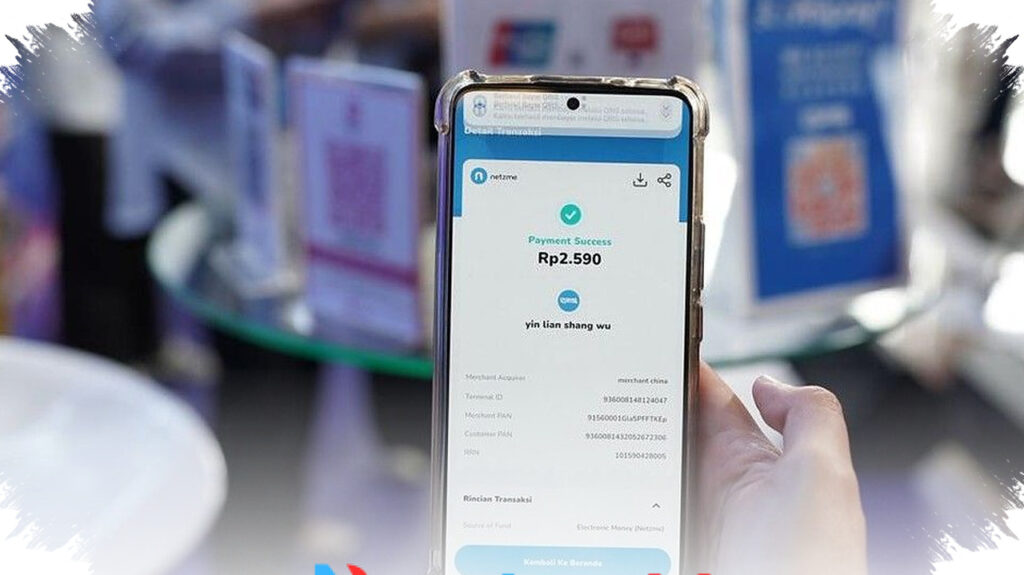
For many small businesses, the most practical way to benefit from cross-border tourism is not through a new marketing campaign, but through a payment method that simply works at the counter. That is the main significance of Netzme joining the first wave of Indonesia–China QRIS implementation, which now allows merchants to accept payments from Chinese visitors more directly.
The move gives Indonesian MSMEs a wider payment channel without adding complicated operational steps in stores. It also positions Netzme as one of the early players in a system designed to make cross-border transactions more inclusive and efficient.
The initiative was developed through cooperation between Bank Indonesia and the People’s Bank of China. Its broader goal is to support local currency use in international transactions while expanding the payment ecosystem across borders.
Netzme CEO Vicky G. Saputra said the infrastructure matters because Indonesian MSMEs need to be ready to serve global consumers. He pointed to travelers and business visitors from China as one group that can immediately feel the benefit of the system.
In this scheme, Netzme takes on a dual role as both issuer and acquirer. That means the company handles two directions of payment flow: Indonesians paying at merchants in China, and foreign funds being received by domestic merchants.
On the issuer side, Indonesian users can pay at merchants in China through the Netzme Pay app by scanning a QR code. On the acquirer side, merchants connected to Toko Netzme can accept payments from Chinese tourists using Alipay or UnionPay.
The funds received by merchants are converted directly into rupiah under Indonesia’s QRIS standards. This removes the need for merchants to handle manual currency conversion while keeping the payment process simple for cross-border customers.
The first phase of implementation began on 30 April 2026. From that point, the system was prepared to support both outbound payments by Indonesians and inbound payments at domestic merchants.
The rollout also comes at a time when QRIS adoption in Indonesia continues to expand quickly. According to Bank Indonesia, by the first quarter of 2026 QRIS had been used by more than 44 million merchants and 61.7 million users in the country.
Cross-border usage has also shown solid momentum. Inbound transactions reached 2.79 million transactions with a value of more than Rp713 billion, while outbound transactions surpassed 737,000 transactions.
Vicky said that growth shows digital payments have become core infrastructure for business players. Netzme, he added, wants to make sure the innovation is actually used by merchants in daily transactions, not just introduced as a technical milestone.
The company is also preparing the next stage of expansion for QRIS cross-border adoption. One planned step is participation in the grand launching of QRIS Indonesia–China in Shanghai in June 2026.
Beyond that, Netzme said it will continue adjusting its services to follow the development of the ecosystem and regulation so the reach can expand across more regions. Merchant education remains part of that effort, since business owners need to understand the direct commercial opportunity created by cross-border payments.
As part of that approach, Netzme introduced the “QRIS Soundbox Goes Global, Free Trip to China!” program. The program is aimed at active merchants using Toko Netzme and QRIS Soundbox, with prizes that include travel to China, accommodation, and pocket money, subject to terms and conditions.
Through that program, selected merchants can observe China’s digital payment ecosystem firsthand. The broader message is clear: QRIS cross-border expansion is not only about payment technology, but also about preparing MSMEs to serve a wider market.