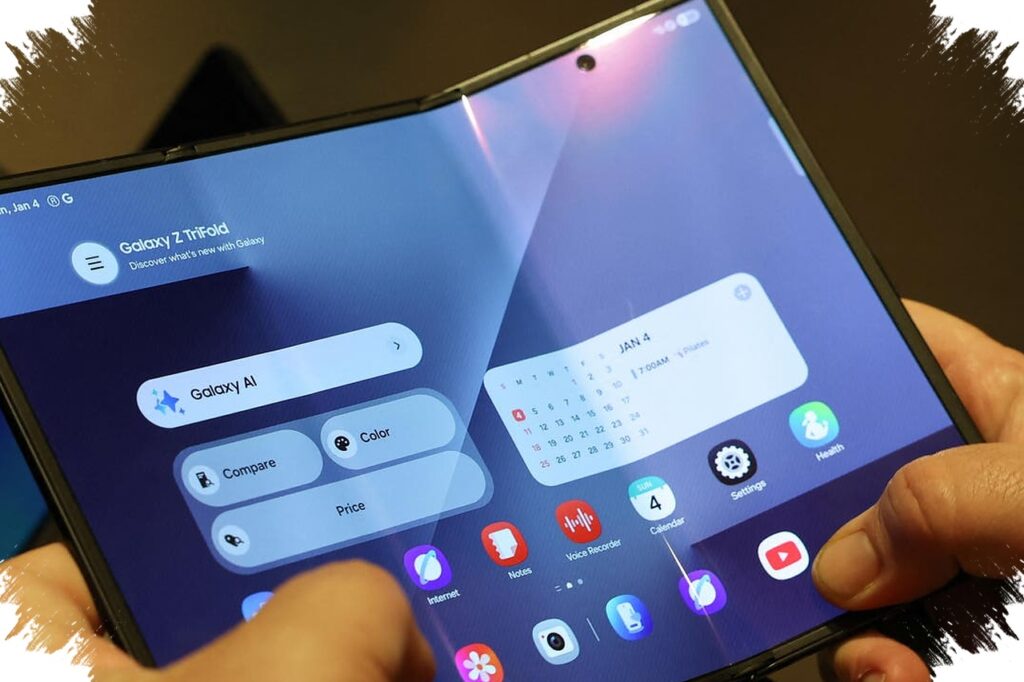
Samsung appears to be preparing a sharper split for its foldable lineup, with the Galaxy Z Fold 8 and a new Galaxy Z Fold 8 Wide taking different paths. One is aimed at portability and everyday flexibility, while the other is being shaped to feel closer to a tablet and better suited to productivity.
That shift matters because it suggests Samsung is treating foldables as a more central part of its premium strategy. Instead of presenting the Fold line as a single niche option, the company seems ready to offer two distinct experiences for users with different priorities.
Two foldables, two priorities
The standard Galaxy Z Fold 8 is described as the more mobile-focused model. It is expected to emphasize easier handling and stronger camera appeal, which would make it the more conventional choice for users who want a premium foldable without sacrificing portability.
The Galaxy Z Fold 8 Wide, by contrast, is said to target people who want more room to work on screen. Its design direction points toward a wider, more tablet-like experience that should better support multitasking, reading, and productivity tasks.
Different display philosophies
Reported display details make the split even clearer. The standard model is said to use an 8.0-inch Dynamic AMOLED 2X main display with a tall, slightly boxy shape, paired with a 6.5-inch cover screen in a 20:9 ratio.
The Wide model takes a different approach. It is said to feature a 7.6-inch Dynamic AMOLED 2X main panel, but with a 4:3 “passport-style” ratio that makes it feel wider and more tablet-like when opened. Its cover display is also described as a 5.4-inch panel with a wider format.
The physical dimensions reflect that difference in intent. The standard version is listed at 158.4 x 143.2 x 4.5 mm when unfolded, while the Wide version measures 123.9 x 164.4 x 4.3 mm. In practical terms, one looks taller, while the other spreads out more horizontally.
Shared core hardware keeps the lineup consistent
Despite the different form factors, both devices are said to share the same performance base. Each model is expected to run on the Snapdragon 8 Elite Gen 5 chipset, with RAM options of 12GB and 16GB LPDDR5X.
Battery support also appears to be aligned across the two models. Both are reported to carry a 5,000 mAh battery with 45W charging, suggesting Samsung wants a consistent flagship experience regardless of which version buyers choose.
Cameras and design details show the split more clearly
The camera setups are not identical either. The standard Galaxy Z Fold 8 is said to include a triple rear camera system with 200MP, 50MP ultra-wide, and 10MP telephoto sensors.
The Wide model is reported to use a simpler dual-camera setup with 200MP and 12MP ultra-wide sensors. There is also a claim that the series brings a major upgrade to the ultra-wide camera, with a 50MP sensor described as the first major change of that kind since the Z Fold 3 era.
On the front, Samsung is said to be shrinking the punch-hole camera by 32% compared with the previous generation. It is also described as 38% smaller than the one on the S26 Ultra, while the selfie camera itself remains 10MP.
Accessories and materials may differ as well
Leaked dummy units reportedly show a magnetic ring on the Z Fold 8 series, hinting at support for magnetic accessories such as chargers and mounts. That detail would fit Samsung’s broader move toward a more integrated accessory ecosystem.
S Pen support is another possible dividing line. The standard Z Fold 8 is said to support an external S Pen, while the status of the Wide model remains uncertain. For productivity-minded users, that difference could matter as much as the screen shape itself.
Material choices also appear to vary. The standard model is said to use an aluminum frame with a possible titanium element, while the Wide version is reported to pair an aluminum frame with a glass back.
The leaked internal codenames reinforce the idea that these are being developed as two separate products. The standard Galaxy Z Fold 8 is linked to Q8, while the Galaxy Z Fold 8 Wide is associated with H8.
Taken together, the details point to a clear strategy: Samsung may no longer be designing one Fold for all users. Instead, it looks ready to offer two premium foldables with distinct identities, one centered on mobility and the other on a more tablet-like way of working.