


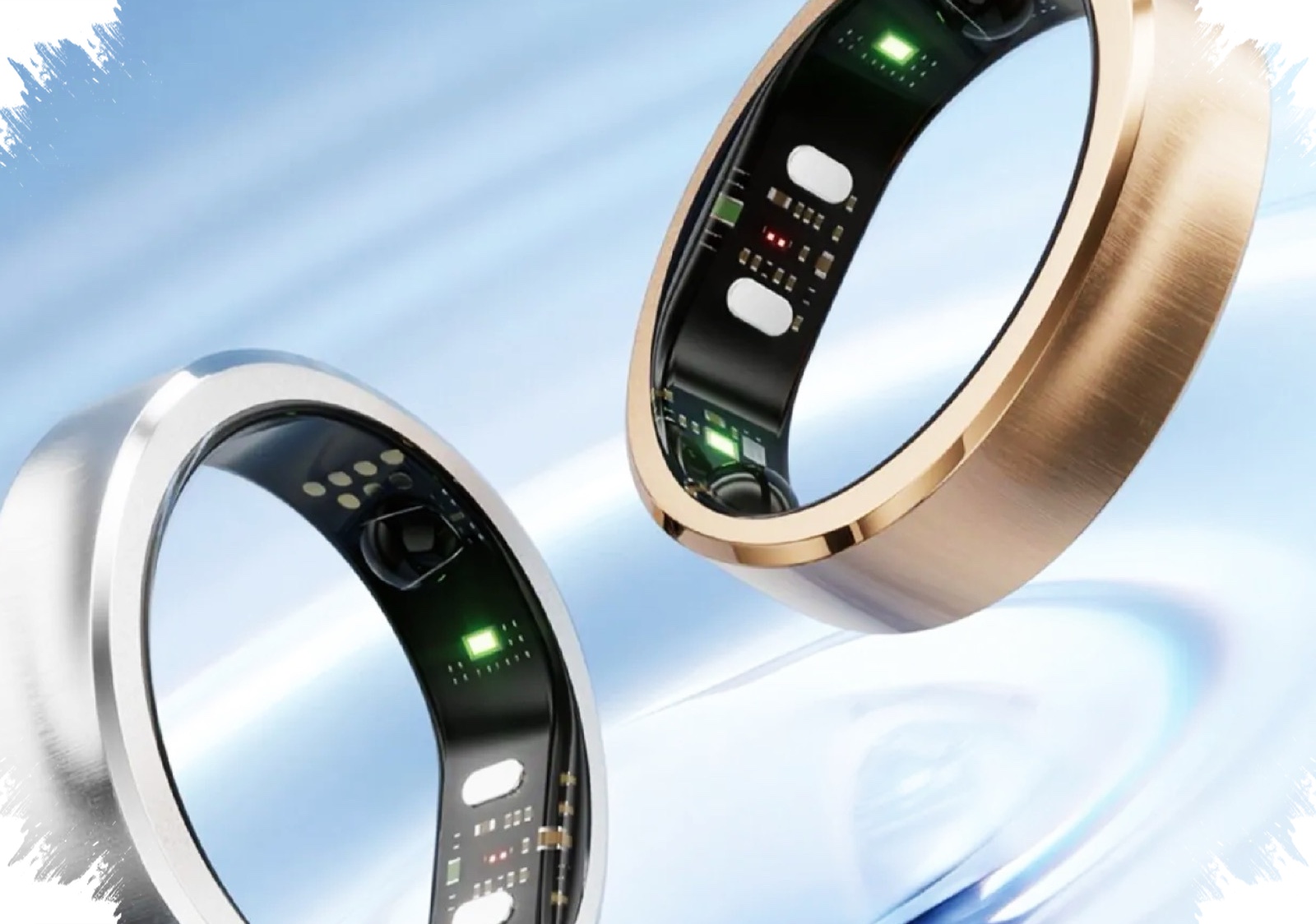
RingConn Gen 3 arrives with a clear message for the smart ring market: advanced health tracking does not have to come with a monthly fee. That positioning puts it in direct competition with Oura Ring 4, while adding a feature Oura does not offer.
The new ring was opened for pre-order on 5 May and is scheduled to ship on 29 May. RingConn first introduced the device at CES 2026, and the commercial rollout follows after that announcement.
A different kind of health focus
The most distinctive addition on RingConn Gen 3 is Vascular Health. After the ring is calibrated with blood pressure cuff readings, the feature shows vascular load trends over time, including Stable, Slight, and Noticeable.
RingConn is careful to note that Vascular Health is not a blood pressure monitor. Instead, it is designed to help users understand longer-term blood vessel health trends and how lifestyle changes may influence them.
That makes the feature more about context than instant readings. For users interested in long-term health monitoring, it adds a layer that is not present on Oura Ring 4.
Health tracking without a subscription
RingConn is also using price structure as a major advantage. Unlike Oura Ring 4, which requires a $6 monthly subscription, RingConn Gen 3 does not add recurring charges after the initial purchase.
The ring starts at $349 for Royal Gold, Future Silver, and Matte Black. Brushed Silver and Brushed Rose Gold are priced at $369.
Buyers who order through RingConn’s online store can get a 10% discount. That lowers the price to $314 or $332, depending on the finish selected.
What the ring tracks
Beyond Vascular Health, RingConn Gen 3 covers a broad set of wellness metrics. It monitors activity, sleep, stress, blood oxygen, heart rate, sleep apnea, and women’s health.
The company is clearly aiming at the modern smart ring segment, where health data breadth matters as much as design. In that sense, RingConn Gen 3 is not positioned as a simple step counter or sleep device.
Haptics, but not phone alerts
RingConn Gen 3 also includes an internal vibration motor. The company says it can be used for health alerts, movement reminders, and low-battery notifications.
It does not handle app notifications from a smartphone. That limits its use as a communication device, but keeps the haptic system focused on wellness and daily habits.
RingConn says software and battery improvements were made to reduce the impact of the vibration feature. That matters because haptics often draw extra power in wearables.
Battery life remains one of the device’s stronger selling points. With vibration mode off, RingConn Gen 3 is rated for 11 to 14 days, and that drops slightly to around 10 to 12 days when haptics are enabled.
Materials, size, and durability
The ring uses titanium and epoxy resin, the same material combination found on RingConn Gen 2. It is also rated IP68 and can withstand water up to 100 meters.
At 2.3 mm thick, RingConn Gen 3 is 0.3 mm thicker than RingConn Gen 2 and RingConn Gen 2 Air, but it is still thinner than Oura Ring 4, which measures 2.88 mm. Its weight ranges from 2.5 to 3.5 grams depending on size, while Oura Ring 4 weighs 3.3 to 5.2 grams.
RingConn has not confirmed the ring’s width. Sizes run from 6 to 15, and a sizing kit is recommended for buyers who are unsure about the correct fit.
Charging and compatibility
Each retail box includes a portable charging case, which makes the ring easier to carry during travel. The ring itself takes about 90 minutes to charge, while the charging case needs around 120 minutes.
Connectivity is handled through Bluetooth 5.0. RingConn’s app is available on both Android and iOS, giving the device support across the two major mobile ecosystems.
Oura Ring 4 remains the obvious benchmark here, especially with its broader app ecosystem and choices such as titanium or ceramic finishes. But RingConn Gen 3 is pushing a different formula: no subscription, long battery life, and a health feature set built to stand out in a crowded category.
Competitors are not standing still either. Ultrahuman Ring Pro is scheduled to arrive in the US on 20 June with a price of $479, while non-ring alternatives such as Whoop 5.0 and the latest Fitbit Air also remain in the conversation for users who prefer not to wear a ring.