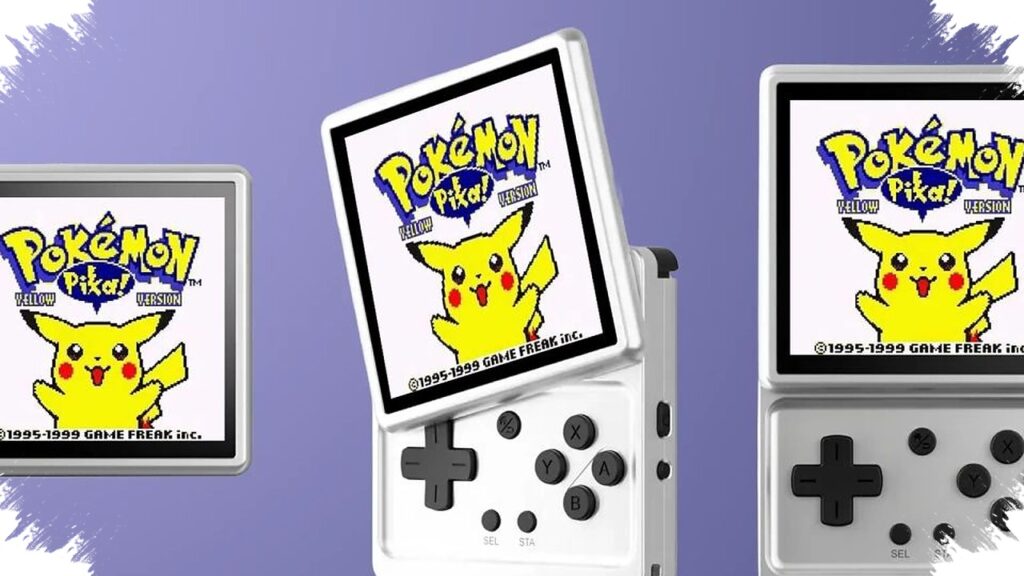
A handheld retro device does not usually stand out because of its screen mechanics, but the Anbernic RG Rotate does exactly that. Its 3.5-inch IPS panel can rotate, and that single design choice makes the device immediately different from most budget handhelds.
According to ETA Prime, the display uses a 720×720 resolution and supports both vertical and horizontal orientations. That gives the RG Rotate a practical advantage for arcade-style vertical games while still keeping it usable for classic titles that are more commonly played in landscape mode.
A screen that serves more than novelty
The square panel is the clearest sign that Anbernic is aiming for function rather than showmanship. Users can switch the display position to match the game type, then jump straight into play without needing another device or awkward workarounds.
The rotating mechanism also has a practical role beyond display flexibility. It can wake the handheld from sleep and bring it back into a gaming session quickly, which adds to the sense that the feature was designed for everyday use.
There is still a trade-off with this format. Games that were not designed for a square aspect ratio will show black borders on the sides, so the device is not trying to hide the limits of the screen layout.
Built for emulation, not high-end gaming
Under the unusual design, the RG Rotate uses the Unisoc T618 chipset and Mali G52 GPU. It comes with 3GB of RAM, 32GB of internal storage, and microSD support up to 2TB.
Those specifications place it firmly in retro-emulation territory rather than the premium gaming segment. Android 12 broadens its appeal by opening access to Google Play Store apps, games, and emulators.
Wireless connectivity is also covered with Wi-Fi 5 and Bluetooth 5.0. Power comes from a 2,000mAh battery, which fits the handheld’s focus on portable, lighter gaming sessions.
Retro systems it can handle well
In practice, the RG Rotate is said to run a wide range of older systems smoothly. The list includes NES, SNES, Sega Genesis, Game Boy Advance, Nintendo DS, N64, PlayStation 1, Dreamcast, and PSP.
That makes it a strong fit for players who want a compact device for classic libraries rather than a machine aimed at modern performance. For many retro fans, consistent emulation matters more than raw power.
The limits appear when the device is pushed toward more demanding systems. PS2, GameCube, and Wii can be challenging, and some games may need emulator adjustments before they become playable.
Compact body, two material options
Anbernic is offering the RG Rotate in two body versions. The silver aluminum model is aimed at users who want a more premium feel and better durability, while the black plastic version is lighter for easier carry.
Both versions remain small enough to fit in a pocket or a small bag. That makes the handheld suitable for commuting, travel, or quick gaming sessions away from home.
A few extras complete the package. The device includes a glass screen protector, interchangeable L2/R2 buttons, and a lanyard as a bundled accessory.
There is one weak point on the audio side. The rear-facing speaker is functional, but sound can feel more muted when the device is placed on a flat surface.
Pricing that keeps it competitive
Price is another reason the RG Rotate is hard to dismiss. The aluminum version is priced at $99, while the plastic model sits around $82–$83.
At that level, Anbernic combines a rotating screen, Android 12, compact dimensions, and broad retro-emulation support in one package. The appeal is less about running demanding games and more about offering a focused handheld that feels different every time the screen is rotated to suit the game being played.