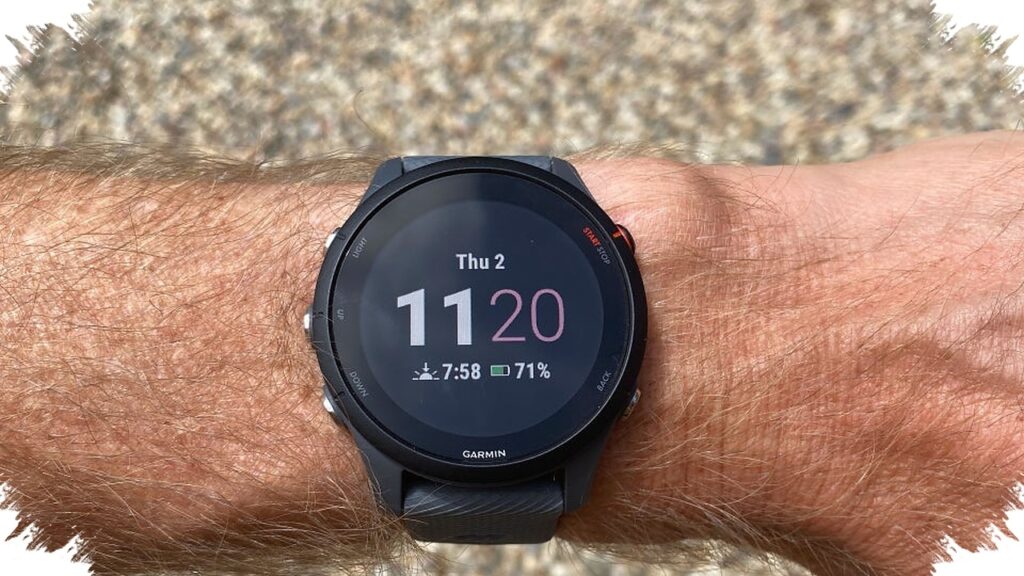
For runners who care more about training data than flashy finishes, Garmin Forerunner 255 still stands out in 2026. The watch remains appealing because it keeps its priorities on the essentials: accurate GPS, long battery life, and training features that are actually useful on the road, track, or trail.
That practical approach is one reason the model continues to attract attention even as newer smartwatches lean hard into AMOLED screens, AI features, and premium styling. For many athletes, Forerunner 255 offers a more rational balance between function and price than a luxury-looking smartwatch.
Built for training, not for display
Garmin did not position the Forerunner 255 as a fashion piece. Instead, the watch brings features that were once associated with more expensive models, including multi-band GPS, triathlon mode, HRV tracking, training analysis, running power, and full multisport support.
It also includes daily suggested workouts and a morning report. Those tools make the watch feel closer to a training assistant, since they can factor in body condition, sleep quality, and recovery time when suggesting what to do next.
GPS accuracy remains a major advantage
One of the strongest reasons the Forerunner 255 still matters is its dual-frequency, multi-band GPS. That setup helps keep location tracking accurate in dense urban areas, on trail routes, and in other places where GPS signals are harder to read.
Features like that are often reserved for much more expensive sports watches. For that reason, the Forerunner 255 continues to look strong in terms of value, especially for runners who want dependable tracking without moving into a higher price tier.
A screen choice that favors endurance
Garmin also chose a transflective MIP display instead of AMOLED. That decision helps the watch save battery and stay readable under direct sunlight, which is useful for outdoor runs, marathons, and trail sessions.
The screen is less about visual drama and more about practical use during training. For many runners, that is exactly the right trade-off, because the watch is meant to support performance rather than draw attention as an accessory.
Battery life still holds up
Battery endurance is another reason the Forerunner 255 continues to find buyers in 2026. The 46mm variant can last up to 14 days in smartwatch mode, while GPS mode can reach up to 30 hours.
That remains highly competitive, especially compared with many lifestyle smartwatches that need charging every one or two days. Combined with Garmin’s efficient software and the MIP display, the watch remains suitable for intense training, hiking, and long-distance running events.
Price has become part of the appeal
When it first launched, the Garmin Forerunner 255 started at Rp5,8 jutaan. On the used market, it is now much easier to reach for buyers who want a serious training watch without paying flagship-level prices.
The following prices were recorded for several variants in Indonesia:
| Model | New price | Used price |
|---|---|---|
| Garmin Forerunner 255 | Rp5,8 jutaan | Rp2,5-3,8 jutaan |
| Garmin Forerunner 255S | Rp5,8 jutaan | Rp2,5-3,8 jutaan |
| Garmin Forerunner 255 Music | Rp6,6 jutaan | Rp3,5-3,9 jutaan |
| Garmin Forerunner 255S Music | Rp6,6 jutaan | Rp3,5-3,9 jutaan |
That gap helps explain why interest has not faded. The features still feel current, while the lower used-market entry point makes the watch easier to justify for runners focused on function over luxury.
Still relevant for serious runners
The Forerunner 255 is not built to be the most fashionable smartwatch in the room. It is built to help athletes train better across more than 30 sports modes, including running, swimming, cycling, HIIT, and triathlon.
Its lightweight design, accuracy, and long battery life keep it relevant for users who want a focused running watch rather than a premium lifestyle device. For that audience, the Forerunner 255 still makes a strong case in 2026.