


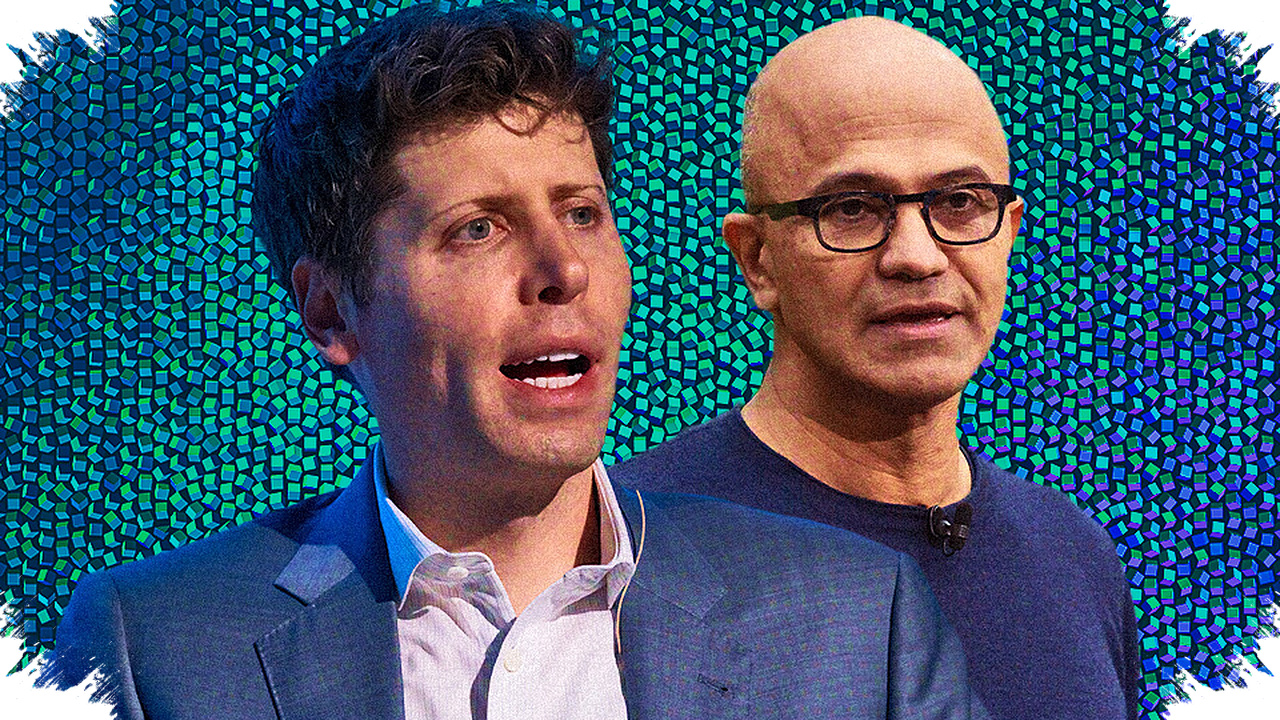
The battle over OpenAI’s leadership spilled into federal court with an unusually sharp rebuke from Satya Nadella. The Microsoft chief said the explanation for Sam Altman’s ouster felt incomplete and described the handling of the episode as “sort of amateur city.”
That remark came as Nadella testified in California in the third week of Elon Musk’s lawsuit against OpenAI. His testimony put fresh attention on one of the most chaotic moments in the AI industry, and on how quickly the fallout spread beyond OpenAI itself.
A crisis that moved beyond OpenAI
Microsoft was not a distant observer in the dispute. The company has long been one of OpenAI’s closest business partners, and it also became an early investor in the AI firm.
Nadella said the OpenAI executives offered no clear explanation when Altman was removed as CEO in 2023. At the time, OpenAI’s board said Altman was not “consistently candid” in his communication.
For Nadella, that language did not explain a decision that important. He said he was “pretty surprised” by the move and expected a far more detailed account, especially given Microsoft’s role as an investor and strategic partner.
What Microsoft heard, and what it did not
Nadella also told the court that his efforts to reach OpenAI executives after Altman’s firing did not produce a convincing answer. From his perspective, the episode looked poorly managed, and he suggested that jealousy or bad communication may have played a part.
That testimony added a corporate dimension to a dispute that already had become a leadership crisis. It suggested the problem was not limited to a boardroom disagreement, but also involved tension around power, trust, and communication inside one of the world’s most closely watched AI companies.
The conflict quickly forced Microsoft into a sensitive position. In October last year, Microsoft disclosed that it held about 27 percent of OpenAI’s for-profit unit, which was valued at around $135 billion at the time.
Microsoft’s rapid response changed the pressure
When Altman was pushed out, Nadella moved quickly. He said Microsoft was prepared to hire Altman and OpenAI co-founder Greg Brockman.
That offer changed the balance of pressure around OpenAI. The company eventually brought Altman back as CEO after hundreds of employees threatened to join Microsoft if he was not restored.
The scale of the internal backlash became clearer in later testimony from OpenAI co-founder Ilya Sutskever. He said the decision to remove Altman came after what he described as a pattern of lies and attempts to pit OpenAI executives against one another.
Sutskever later changed his position once the threat to the company became real. He said he supported Altman’s return after seeing Microsoft’s offer to employ every OpenAI worker and after 95 percent of employees signed a letter threatening to leave if Altman was not reinstated.
Musk’s case keeps Microsoft in the frame
The legal fight also placed Microsoft directly in the path of Musk’s lawsuit against OpenAI. Microsoft is named as a defendant, with Musk accusing it of helping with alleged violations of a charitable trust.
Musk testified last month that he feared Microsoft’s investment would effectively allow it to take over OpenAI. He said he worried Microsoft was “really trying to steal the charity.”
Nadella told the court that Musk never contacted him about those concerns. When asked whether Musk knew how to reach him, Nadella replied that they had each other’s phone numbers.
That exchange underscored how little direct communication existed among some of the most influential figures in the AI industry, even as the dispute grew more public and more consequential.
An old email returned to the spotlight
Musk’s lawyer, Steven Molo, also pointed to an email Nadella sent to Microsoft executives in 2022. In it, Nadella wrote, “I don’t want to be IBM and OpenAI to be Microsoft.”
The exchange drew on a familiar piece of technology history. In 1980, IBM signed a non-exclusive agreement to distribute Microsoft’s DOS operating system on IBM personal computers, a deal that helped propel Microsoft in the operating systems market.
When asked whether Microsoft eventually became a much more prominent and important company than IBM, Nadella answered, “That’s right.”
That answer added another layer to the courtroom narrative: even within Microsoft, there was awareness of the risk of helping a partner grow into a force that could one day overshadow the company itself. After Nadella and Sutskever testified, OpenAI chairman Bret Taylor also took the stand and described Altman’s firing period as “dire.”