


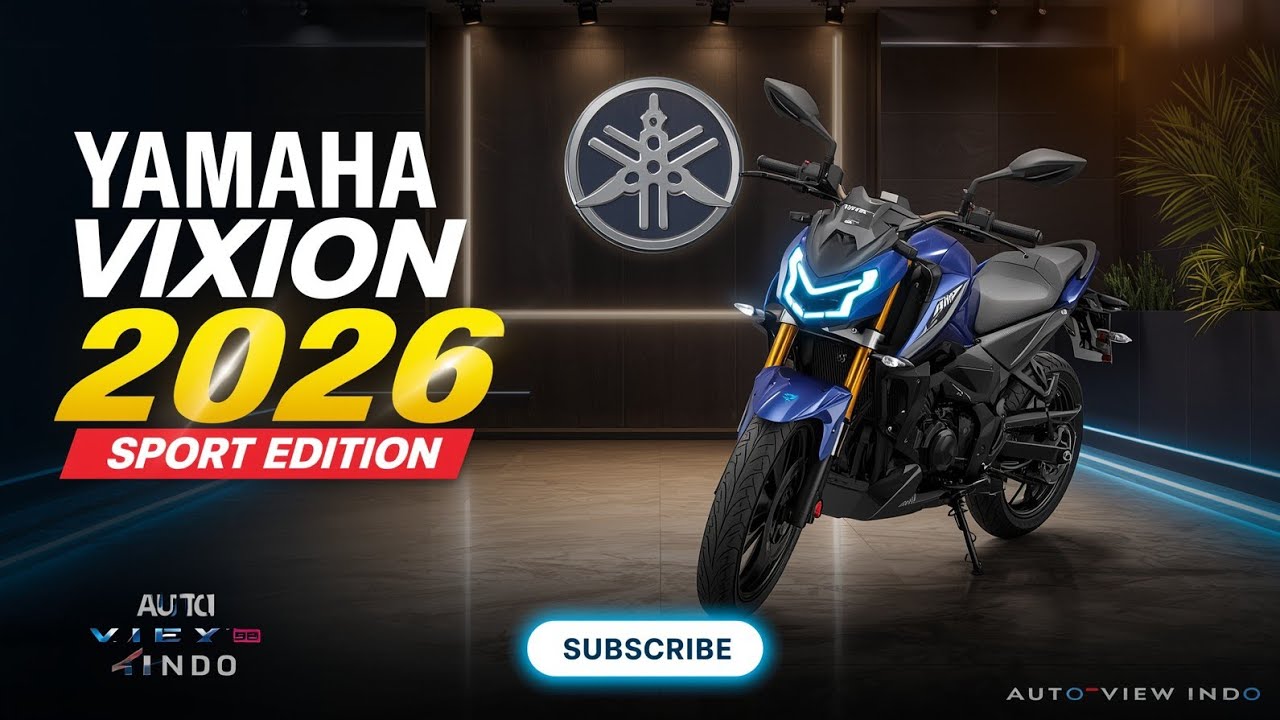
Yamaha’s Vixion lineup is set to take a more serious step forward with the 2026 model, and the biggest change is not cosmetic. The move to a 155cc VVA engine places the bike in a more elevated position within the sport naked segment, especially as competition in the 150 cc class continues to intensify.
That upgrade also signals Yamaha’s intent to keep the Vixion name relevant in Indonesia, where the model has long been familiar to riders. With an early 2026 launch, the motorcycle is being positioned for both everyday use and riders who want a stronger performance package without losing practicality.
Engine Upgrade Becomes the Main Story
The key update sits in the powertrain. Yamaha uses a 155cc Liquid Cooled 4-Valve SOHC engine with Variable Valve Actuation, or VVA, a setup designed to deliver more even power across the rev range.
This character is aimed at daily riding, especially in stop-and-go city traffic where smooth and responsive acceleration matters. Yamaha states that the engine produces a maximum of 19 hp at 10,000 rpm and 14.7 Nm of torque at 8,500 rpm.
Made to Feel Lighter in Daily Use
Another notable change comes through the Assist & Slipper Clutch. The system reduces clutch pull effort, which can make congested commutes and longer rides less tiring for the rider.
Its role is not limited to comfort alone. The slipper function also helps keep the rear wheel more stable during aggressive downshifts, which adds confidence when road conditions are less than ideal.
That makes the Vixion 2026 more than just a sportier-looking machine. It is also being shaped as a motorcycle that remains approachable for newer riders moving up a class and for experienced users who want stable performance.
Modern Lighting and a Cleaner Look
Visual updates are centered on lighting, with Full LED applied across the main sections. The headlamp is designed to provide better brightness for night riding while remaining efficient in power use.
Yamaha also integrates the turn signals into the body design, giving the motorcycle a cleaner appearance. The result is a more modern look that still serves practical everyday use.
This kind of update matters in markets where riders often deal with limited street lighting. Better visibility can add value without requiring further modification, especially for those who travel through suburban roads or intercity routes.
Digital Displays and Braking Support
The cockpit is fitted with a full digital multifunction instrument panel. It shows key information such as speed, rpm, fuel level, and Shift Timing Light in a clearer and more informative layout.
The Shift Timing Light helps riders keep the engine within its ideal operating range. That feature adds a modern touch while still supporting practical riding behavior.
Braking hardware also receives attention through disc brakes at both the front and rear. Yamaha says the setup provides consistent stopping power for both relaxed and more aggressive riding.
Chassis and Comfort Remain Familiar
Even with the mechanical upgrade, Yamaha keeps the Deltabox frame that has long been associated with the Vixion. It is paired with an Aluminium Rear Arm to preserve stability and agility during quick maneuvers.
The brand’s approach shows that the Vixion’s core handling character is still intact. The goal is to maintain precision even when the motorcycle is used on uneven roads.
Comfort is supported by a new seat that is said to be softer. The riding position is also designed to stay ergonomic for short trips and longer journeys alike.
Key Package at a Glance
The 2026 Vixion package includes a 155cc Liquid Cooled SOHC VVA engine, 19 hp at 10,000 rpm, and 14.7 Nm at 8,500 rpm. It also brings Assist & Slipper Clutch, Full LED lighting, front and rear disc brakes, a full digital panel, and a Deltabox frame with Aluminium Rear Arm.