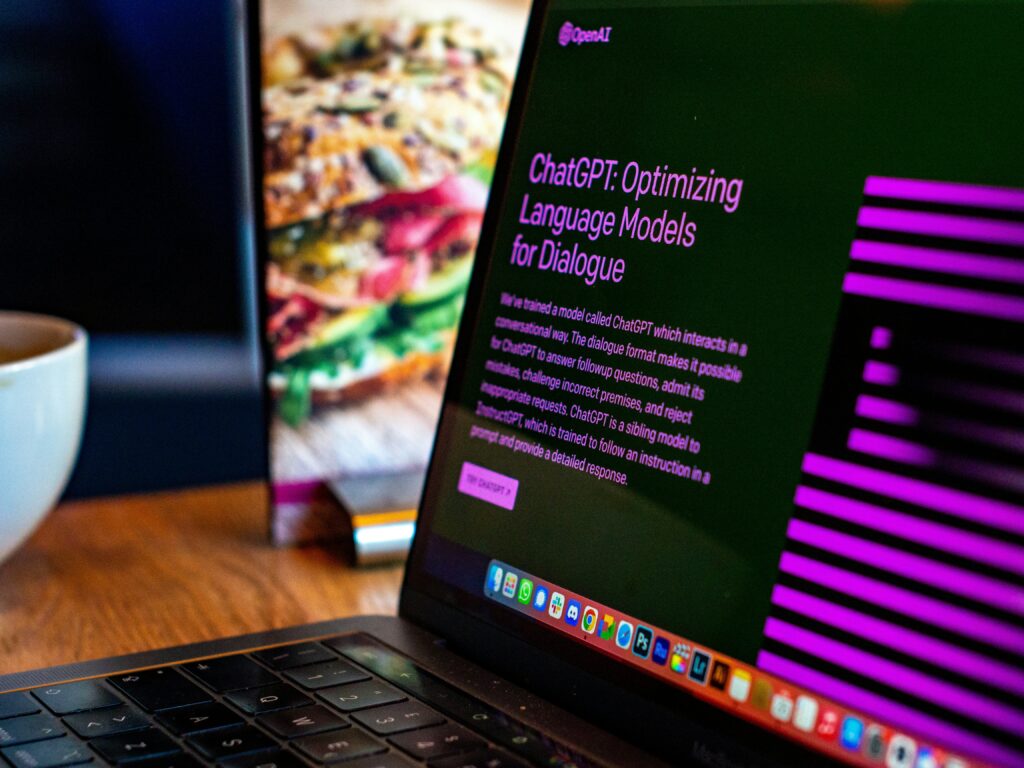
The biggest mistake many users make with ChatGPT is treating it like a search engine. That habit often leads to answers that feel broad, off-target, or only partly useful.
In 2026, that approach matters even less because modern AI models do not work like Google. ChatGPT 5.2 and Gemini 3 are built to process input and generate output from instructions, not to simply display links.
Why AI responds differently from search
AI does not understand language the way humans do. It relies on neural networks trained on large datasets to detect patterns and produce responses.
For language models, transformer architecture predicts text based on the user’s input. That means a short or vague prompt often leaves the system without enough direction to infer the real intent.
Search engines are designed to help people find information. Conversational AI, by contrast, needs clearer instructions so its answers stay aligned with the task.
This is why many users feel disappointed when they ask ChatGPT as if they were typing a search query. The model may still answer, but the result can be too general because the request itself was too open-ended.
Why weak prompts create weak output
A common problem starts with wording that is too broad. Requests such as “make content” or “explain this topic” usually lead to answers that sound generic and lack focus.
Another mistake is expecting the system to fill in missing context automatically. AI needs to know the background, the audience, the format, and the output limits before it can produce something closer to the intended result.
The quality of the answer also depends on how clearly the user defines boundaries. Length, tone, point of view, and the scope of discussion all shape the final response.
Many people stop after one unsatisfactory attempt. In practice, AI works better through iteration, with prompts refined step by step until the output becomes more precise.
How to guide the model more effectively
The strongest prompts are specific and descriptive. Users should say what they want, who it is for, and what form the final output should take.
Role-based prompting can also help narrow the response. ChatGPT can be asked to act as a professional writer, designer, or data analyst so the answer follows a more focused perspective.
If the first result is not right, the prompt should be tightened or rewritten. Small changes in wording often make the output more consistent and closer to the goal.
The same principle applies beyond text. When generating images, details such as the subject, action, environment, art style, and lighting can strongly affect the result.
AI tools are becoming more specialized
The current AI ecosystem is no longer built around one tool for everything. Different systems now serve different tasks, from writing and coding to research and data analysis.
Image generators are used to create high-quality visuals. Video tools such as Veo 3.1 and Clang 3.0 are used to turn text prompts into cinematic clips.
There are also audio tools such as Suno Music AI for voice cloning, narration, voice swapping, and music composition. For productivity, tools like Zapier and Open Claw act as digital assistants that support repetitive automation tasks.
That range shows why ChatGPT should not be treated like a simple search box. AI is now a collection of systems chosen according to the task, not a single answer engine for every need.
Its use is already visible in customer service chatbots, promotional material creation, multimedia production, and workflow automation such as scheduling and data entry. In that setting, the real value of AI is not instant lookup, but the ability to help people work with ideas, refine results, and improve output through better instruction.