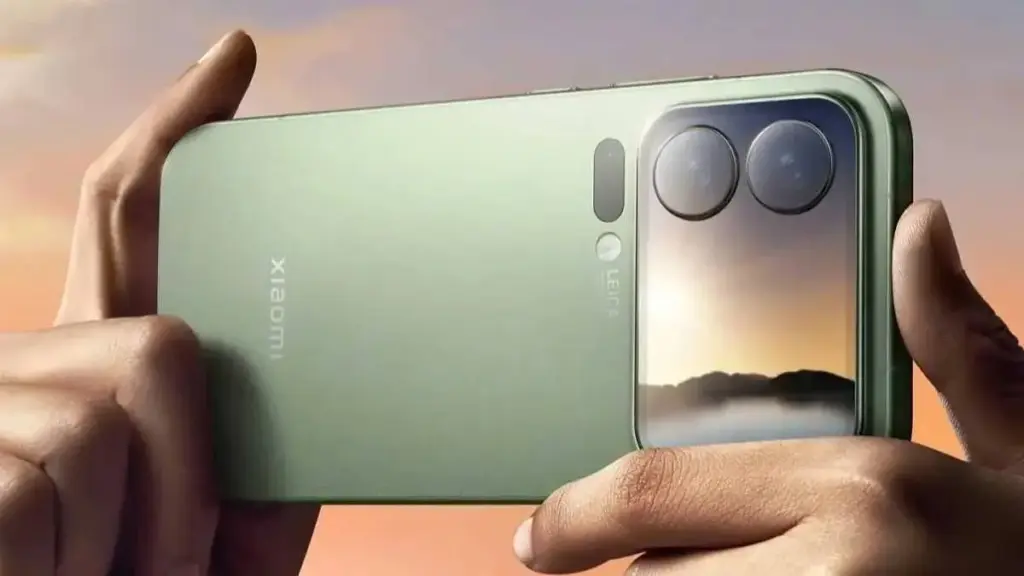
Xiaomi is pushing the idea that a thin flagship does not have to compromise on battery life, and the Xiaomi 17 Max is built around that message. Its 8,000mAh battery immediately sets it apart in a class where large-capacity cells are still uncommon.
The company pairs that battery with an aggressive charging setup. The phone supports 100W wired charging, 50W wireless charging, and 100W PPS charging, which keeps the focus on fast top-ups rather than endurance alone.
A slim body for such a large battery
Xiaomi says the 17 Max uses Jinshajiang battery technology. The company claims it relies on up to 16 percent silicon content and delivers 894Wh/L energy density.
To keep power delivery efficient, Xiaomi also adds the Surge P3 fast-charging chip and the Surge G2 battery management chip. The goal is to maintain charging efficiency while also supporting battery handling and safety.
Even with the large battery inside, the device stays relatively thin for its category. The black model measures 8.15 mm thick, while the blue and white versions come in at 8.2 mm.
Flagship display with a premium finish
On the front, the Xiaomi 17 Max uses a 6.9-inch flat OLED panel. It features ultra-thin 1.28 mm bezels and rounded corners, giving the phone a clean flagship look.
Xiaomi says the display uses SuperPixel technology, which is said to deliver 2K resolution while using less power than a standard 1.5K panel. The screen also supports an LTPO refresh rate range from 1Hz to 120Hz.
Peak brightness reaches 3,500 nits, and protection comes from third-generation Dragon Crystal Glass. Xiaomi claims that this glass improves drop resistance by up to 20 times.
Users also get DC-like dimming and 2160Hz PWM dimming. Those options add more flexibility for viewing comfort in different lighting conditions.
High-end hardware under the hood
Performance is handled by the Qualcomm Snapdragon 8 Elite Gen 5. Xiaomi combines the chipset with LPDDR5X RAM and UFS 4.1 storage.
The company also includes a 5,500 mm² vapor chamber to help keep temperatures under control during sustained heavy use. Xiaomi highlights the phone’s ability to handle demanding sessions, including games such as Genshin Impact at maximum settings.
The cooling system is meant to support long periods of heavy workload. That approach fits the phone’s broader positioning as a device built for endurance and performance together.
Leica cameras and broad feature support
The rear camera system carries the Leica branding and uses three sensors. The main camera is a 200-megapixel HP9 sensor with a 1/1.4-inch size and an ultra-high transmittance pyramid coating.
It is joined by a 50-megapixel ultra-wide camera and a 50-megapixel periscope telephoto camera. The telephoto unit supports 3x optical zoom and 6x lossless optical zoom, and it can also shoot macro images from 15 cm away.
A 32-megapixel selfie camera sits on the front. Xiaomi also points to support for 4K live streaming directly from the device.
The phone runs Android 16 with HyperOS 3.0. Color options include white, sky blue, and pixel black.
Pricing and other details
Xiaomi prices the 17 Max starting at 4,299 yuan for the 12GB + 256GB variant. The 16GB + 256GB model costs 4,599 yuan, while the 12GB + 512GB version is listed at 4,899 yuan.
At the top end, the 16GB + 512GB model is priced at 5,299 yuan. Weight ranges from 219 grams to 225 grams depending on the color variant.
Other features include dual stereo speakers, a 3D ultrasonic fingerprint sensor, Wi-Fi 7, Bluetooth 5.4, NFC, USB 3.2 Gen 1, reverse wireless charging, and an IP69 rating. With that package, the Xiaomi 17 Max is positioned as a flagship that puts exceptional battery life at the center without giving up high-end display, performance, or camera hardware.
Source: www.gizmochina.com