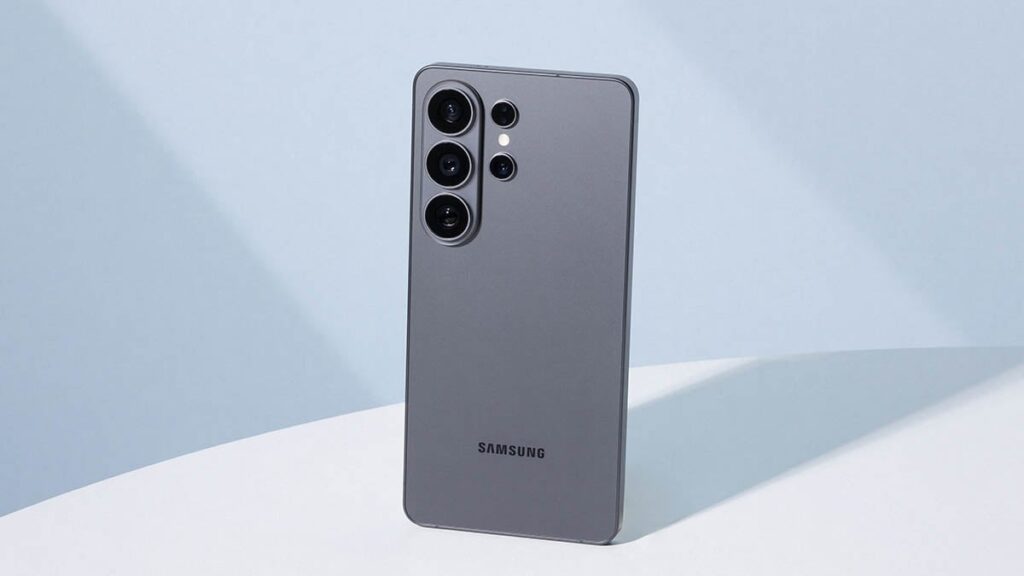
The toughest test for a concert phone camera is often not the zoom level, but the light. At One Ok Rock’s Jakarta show, Samsung Galaxy S26 Ultra reportedly handled that challenge well, especially when the stage went dark, the backlight grew harsh, and the performers kept slipping into heavy contrast.
That performance mattered because the filming position was far from ideal. The footage was captured from the CAT 1 stands, gate 2I, row 28, seat 411, an area near the middle but still among the back rows, while the stage did not use an extended platform.
A difficult concert environment
The concert took place on Saturday, 16 May 2026, and its lighting setup made recording unusually demanding. Rather than giving each member a steady spotlight, the production leaned on lighting and lasers to create atmosphere.
That approach meant the faces of Takahiro Moriuchi, Toru Yamashita, Ryota Kohama, and Tomoya Kanki were often covered by backlight. For a phone camera, that kind of scene usually leads to dark footage, blown highlights, or visible noise when zoom is pushed too far.
The challenge was made worse by the size of the main stage, which was relatively small. From the tribune area, the band appeared even farther away because there was no extended stage to reduce the distance.
How Galaxy S26 Ultra held up
Samsung Galaxy S26 Ultra was used with a mix of standard video mode and Pro Video. The recording most often relied on 1x, 2x, 5x, and 10x zoom, with occasional use of 20x even though the device supports up to 25x magnification.
In that low-light setting, the footage stayed stable and sharp enough to follow the performance from a distance. The members’ faces remained visible in many moments, and the stage lighting kept its color without becoming overly broken up or grainy.
Nightography appears to be the main factor behind that result. On the Galaxy S26 Ultra, the updated camera hardware makes the low-light advantage more noticeable during night concerts.
Camera changes that matter in the dark
The 200 MP main camera now uses an f/1.4 aperture, wider than the f/1.7 aperture on the previous generation. That larger opening allows the sensor to capture about 47 percent more light.
With more light entering the camera, the phone does not need to push ISO as aggressively. The result is less noise and brighter video that does not lose detail too quickly, which is especially useful in a concert environment where dark areas and moving lights dominate the frame.
The effect was also supported by the 50 MP telephoto camera. It now uses an f/2.9 aperture, compared with f/3.4 before, and can capture about 37 percent more light.
That improvement matters for viewers seated far from the stage. Even at higher zoom levels, the video can stay bright while detail does not fall off immediately, making the telephoto lens more useful for bringing performers closer without sacrificing quality too fast.
Why the footage stands out
The dynamic range was also described as wider. Bright areas such as stage lights and laser effects did not easily overexpose, while darker parts still retained enough detail to remain readable.
That balance is important in concerts like One Ok Rock, where lighting is intentionally dramatic and often changes quickly with the music. The camera is not only trying to brighten the scene, but also to prevent the brightest elements from becoming washed out when the lighting turns extreme.
For fans sitting far from the stage, that difference is significant. The advantage becomes clearest when the lighting is deliberately dark, the lasers move aggressively, and the distance from the stage leaves the camera with very little room for error.
The result can be seen in the fancam of “C.U.R.I.O.S.I.T.Y” recorded in 4K or 2160p60. KompasTekno also showed another clip captured live at One Ok Rock’s Detox in Asia concert at Indonesia Arena in Central Jakarta using the Samsung Galaxy S26 Ultra.