


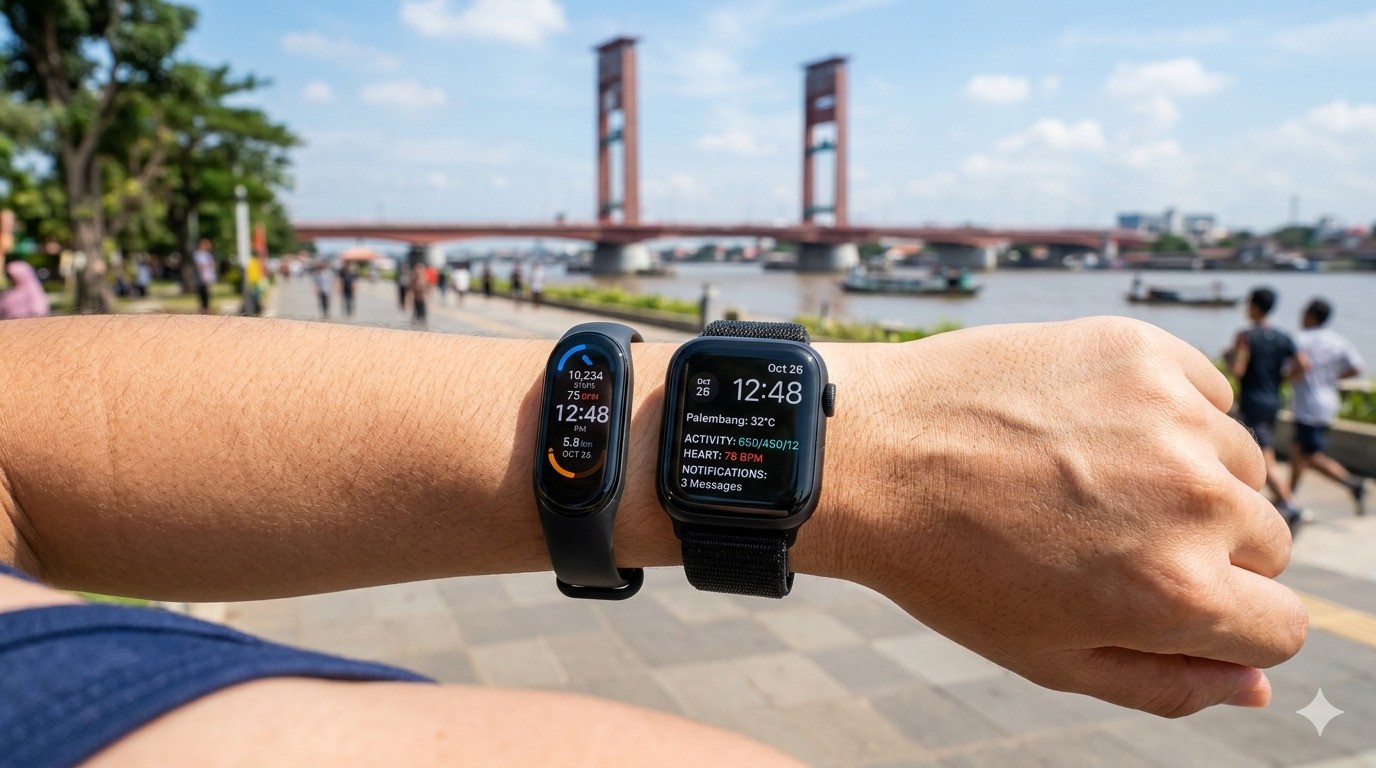
Many shoppers instinctively reach for a smartwatch when looking at wearable devices, but that choice is not always the most practical one. For users with simple daily needs, a smart band can be the more sensible purchase because it is lighter, more affordable, and easier to keep running for long periods.
A smaller device with a narrower focus
A smart band is built primarily as a fitness tracker. Its slim, minimal design makes it comfortable to wear during intense exercise and even while sleeping, which is useful for people who want a device that stays out of the way.
That more compact design also helps keep the experience efficient. With a smaller screen and a more specific set of functions, the device is aimed at users who mainly want to monitor heart rate, step count, and general physical activity.
Battery life is where the difference becomes clear
One of the strongest advantages of a smart band is endurance. A single charge can generally last one to two weeks, which means users do not need to look for a charger as often.
For people who value convenience, that long battery life can matter more than extra features. It fits a routine built around everyday tracking rather than constant interaction with digital functions.
Smartwatch targets a wider digital role
A smartwatch sits in a different category because it is designed as an extension of a smartphone. It still tracks health, but it also opens access to a broader app ecosystem and a larger, sharper display.
That wider screen makes messages easier to read in full. Users can also reply to quick chats, make phone calls, and navigate with standalone GPS without touching a phone.
Some premium versions even include built-in cellular capability. The tradeoff is that the added versatility usually comes with shorter battery life and a heavier feel on the wrist.
Which device fits the daily routine
The real difference between the two devices is not just appearance. They serve different usage patterns, so the better choice depends on what the wearer actually needs day to day.
A smart band is better suited for exercise and basic monitoring. A smartwatch makes more sense for users who move often and want fast access to more digital functions.
Choosing based on style alone can lead to unnecessary spending. Understanding personal needs before buying helps avoid features that never get used.
Practical value still depends on lifestyle
If the main priorities are comfort, simplicity, and a budget-friendly price, a smart band remains the more logical option. It is also attractive for users who prefer not to charge their device too frequently.
A smartwatch becomes more appealing when daily activity demands a digital assistant that supports work productivity and also matches casual or formal wear. In that setting, the extra functions can provide real value.
For users who want a wearable that is practical, light, and long-lasting, the smart band continues to stand out.