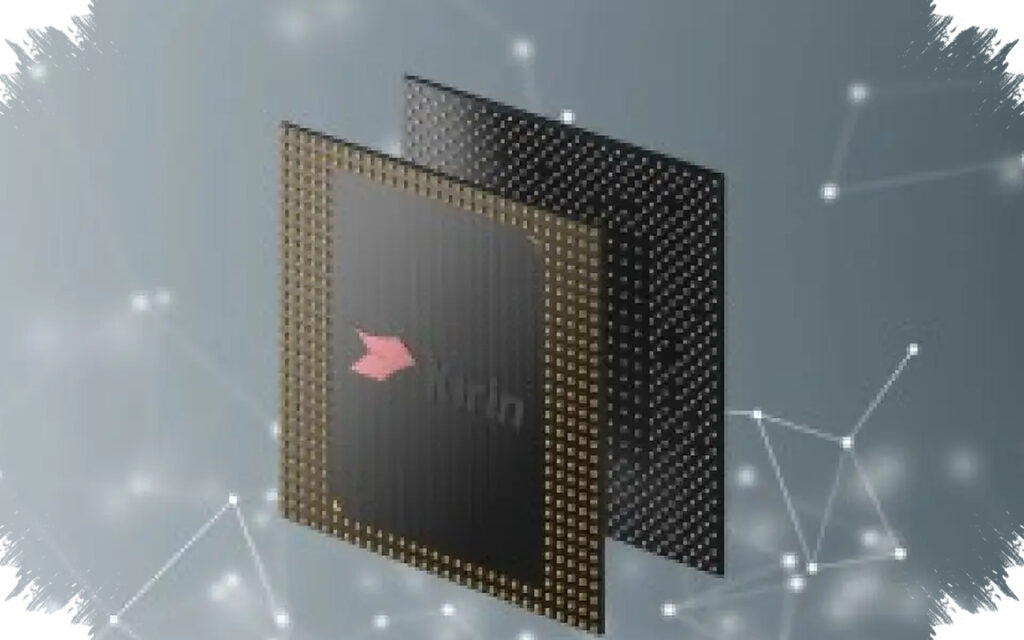
Huawei’s next flagship phone line is shaping up around a new Kirin chip that Huawei positions as being in the same performance class as modern 3nm designs. The company has not said the chip is actually manufactured on a 3nm node, but it is clearly framing the Mate 90 Series as a major step forward in both speed and power efficiency.
That signal emerged during a keynote at the Phoenix Bay Area Finance Forum and Financial Summit in Shenzhen. In that setting, Huawei representatives outlined a new mobile processor that is expected to underpin the Mate 90 Series and give the lineup a much stronger hardware story.
A new architecture at the center
The chip is described as Huawei’s first mobile processor to use a new architecture called LogicFolding. Huawei says the design is built on Tao Scaling Law and focuses on reorganizing internal circuit structure so communication delays between components can be reduced.
That approach is the basis for Huawei’s comparison with today’s advanced 3nm chips. The claim refers to performance and efficiency behavior rather than a direct fabrication announcement, which keeps the language ambitious while still leaving the exact production process unspecified.
Big gains in transistor density
One of the clearest figures shared by Huawei is a 53.5% increase in transistor density compared with the previous generation. Higher transistor density usually gives a chip more room to process data faster and handle more demanding workloads.
For everyday use, that kind of jump can matter most when a device is running heavy apps or juggling multiple tasks at once. It also suggests Huawei is trying to close the gap on the type of hardware efficiency often associated with newer manufacturing classes.
Gaming performance gets the headline boost
Huawei says the biggest raw performance improvement reaches 41%, which is likely to catch the attention of mobile gaming users first. The company also says the core peak frequency is up 12.7%, a detail that points to stronger sustained behavior under load.
For competitive games and graphically heavy open-world titles, that combination could translate into steadier frame rates. It may also help reduce FPS drops during intense scenes, which is often where flagship hardware is judged most harshly.
Efficiency is part of the pitch
The performance story is paired with a power-efficiency claim rather than treated as a trade-off. Huawei says the new architecture improves energy efficiency, especially when the chip is pushed hard in tasks such as 3D game rendering.
That matters because better efficiency can mean lower power draw during peak use. In practical terms, it may help keep heat in check and support longer battery life during daily use, even when the phone is being asked to do more.
What remains unknown
Despite the strong technical claims, Huawei has not revealed the official name of the new Kirin chipset. The company has also kept the full Mate 90 Series specification list under wraps for now.
What is already clear is that the Mate 90 Series is scheduled to arrive in the fall season, around the end of the year. As that launch window gets closer, the chipset is likely to remain the main point of attention for anyone following Huawei’s next flagship move.