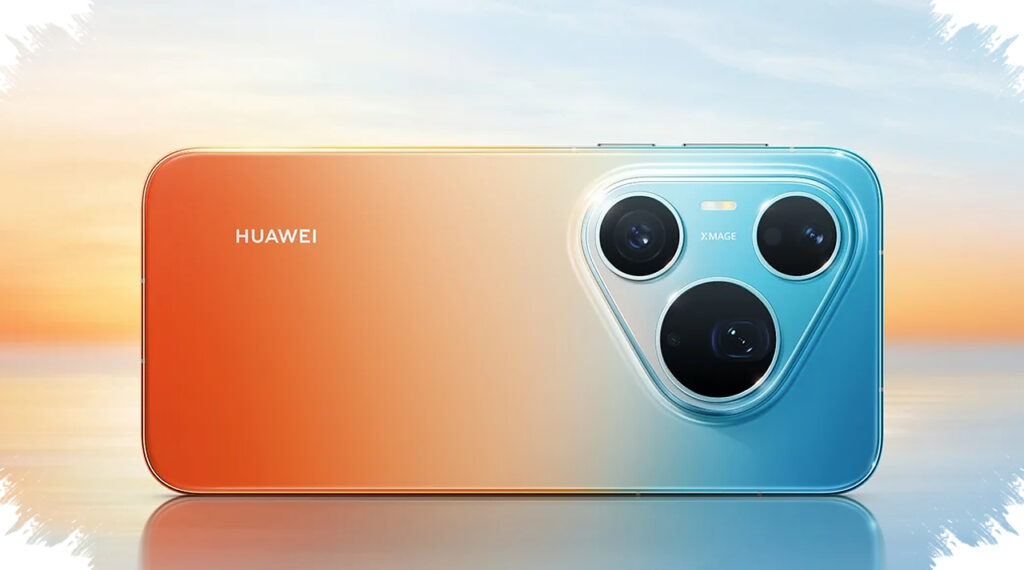
Huawei appears to be testing a camera approach that focuses less on bigger hardware and more on how multiple sensors work together. The goal is to make zoom transitions feel smoother, especially on the company’s next flagship Pura phone, which is widely believed to be the Pura 100 series.
The tip comes from Digital Chat Station and points to a system built around multi-camera fusion. Instead of relying on a single lens at a time, the phone would pull image data from the main, ultrawide, and telephoto cameras simultaneously before producing the final photo.
A different way to handle zoom
That kind of setup could matter most when switching between focal lengths. On many phones, the shift from one lens to another can bring small changes in color, exposure, and detail that users notice while zooming in or out.
Huawei’s reported direction aims to reduce those jumps by processing multiple camera feeds at once. If the system works as intended, the result would be a more consistent image output across different shooting modes, not just a better picture from one specific camera module.
Multi-spectral data is part of the plan
The leak also suggests Huawei wants to bring multi-spectral sensor data into the same pipeline. That sensor would be processed together with the main, ultrawide, and telephoto cameras to create a more unified final image.
Huawei has already used multi-spectral sensors in some of its recent flagships. They help with color accuracy and scene recognition, both of which can shape how consistent photos look across different lenses and lighting conditions.
When that data reaches the image signal processor at the same time as the camera feeds, color and detail may appear more uniform. The effect would not be limited to one lens, since the processing would work across multiple focal lengths.
The real benefit may show during zoom changes
The most noticeable improvement could come during zoom transitions. Smartphone cameras often struggle to keep the same look when moving from one lens to another, and those differences become more obvious as users zoom.
A deeper fusion approach could help reduce that inconsistency. That would make the zoom experience feel smoother, with fewer visible shifts in the middle of the transition.
Still under testing, not a final spec yet
Even so, the reported technology is still at the testing stage. There is no detailed explanation yet on how each sensor would contribute to the final image or how the system would divide processing roles across the camera modules.
That means the feature should not be treated as a confirmed final specification. Huawei has not officially confirmed the system, and features under test can still change significantly before a product reaches the market.
The Pura 100 series is the phone line most closely linked to this rumor. If the technology does make it into the final device, it could become one of the more interesting camera upgrades to watch in Huawei’s next flagship lineup.
Part of Huawei’s wider imaging strategy
The reported direction also fits Huawei’s recent imaging strategy. The company has increasingly mixed hardware and computational photography to improve overall camera quality rather than focusing only on sensor size or zoom reach.
In that context, multi-camera fusion could become a more meaningful differentiator than a simple hardware bump. By merging data from several sensors and the multi-spectral unit, Huawei may be aiming for better color, more detail, and smoother continuity between cameras.
Source: www.gizmochina.com