
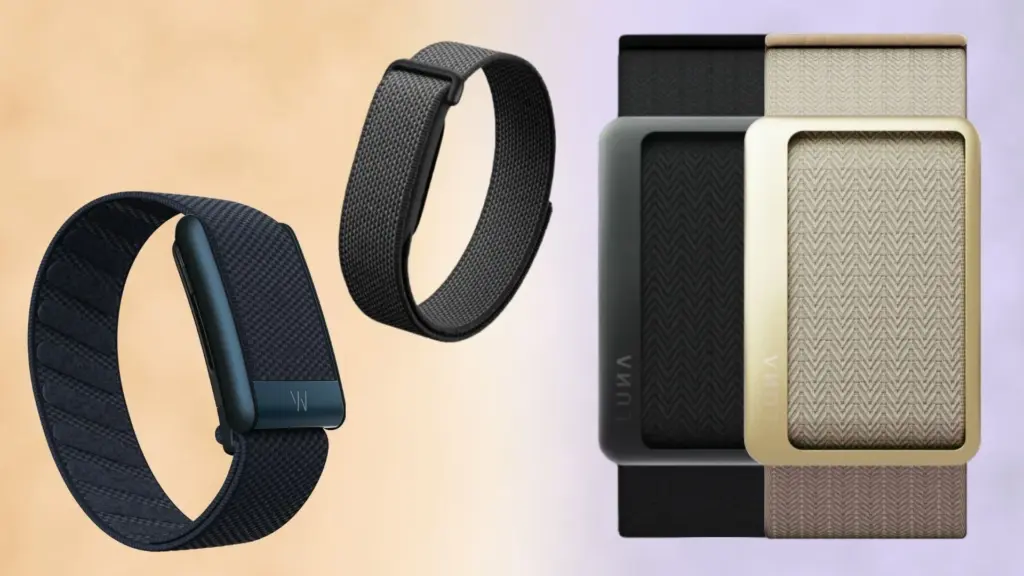
A new screenless wearable is entering the conversation around fitness and wellness tracking, and its pitch is unusually direct. Luna Band is aiming at the space occupied by Fitbit and Whoop, but it is doing so with a different promise: AI-driven guidance, no display, and no mandatory subscription.
That positioning matters because the three devices may all have moved away from screens, yet they are not chasing the same user. Luna Band is built as a screenless wellness band, Fitbit Air is presented as a screenless fitness tracker, and Whoop 5.0 remains the most performance-focused of the group.
Three products, three different priorities
Luna Band centers its experience on sleep, recovery, stress, body signals, and other wellness metrics. Those inputs are meant to be turned into daily guidance through AI, making the device feel more like a personal wellness assistant than a traditional tracker.
Fitbit Air takes a broader route. It monitors heart rate, sleep, activity, and everyday fitness, which keeps it closer to the familiar mainstream tracker formula. Whoop 5.0 goes further into recovery, strain, readiness, sleep quality, and performance optimization, which explains why it continues to appeal to more serious athletes and highly committed users.
The comparison shows that the competition is not only about hardware design. It is also about how each company defines the job of a wearable, from general wellness to daily fitness to detailed performance analysis.
Luna’s main advantage is software
The clearest selling point for Luna Band is LifeOS, its AI-based platform. The system is designed to take raw health data and translate it into more personalized and easier-to-understand daily guidance.
That approach gives Luna a more conversational feel than many wearables on the market. Instead of leaning on numbers and charts alone, it tries to deliver wellness direction in a simpler form that is easier to use day to day.
Fitbit Air brings a different strength through the wider Fitbit ecosystem and Google AI-powered coaching and insights. Whoop 5.0, by contrast, stays focused on deep analytics, especially for people who want a detailed view of training load, recovery, and body readiness.
Cost structure separates the devices further
Business model is another major difference in the race. Luna Band is said not to require a subscription, which means the core experience depends on the device purchase rather than recurring payments.
Fitbit Air sits in the middle with an optional premium service. That means advanced features remain available without making a subscription mandatory for core use. Whoop 5.0 still relies heavily on a membership model, which makes ongoing cost a key part of the buying decision.
For many users, that distinction may matter as much as the feature set. A device that avoids required monthly fees can feel more approachable, especially when the main appeal is wellness guidance rather than intensive performance analytics.
Battery life adds another layer to the comparison
Battery claims also help define the character of each wearable. Luna Band is said to last more than 10 days, Fitbit Air up to 7 days, and Whoop 5.0 more than 14 days.
That puts Whoop at the top for endurance, while Luna still offers a strong balance of long battery life and a subscription-free model. Fitbit Air remains the shortest-lasting of the three based on the figures provided, though it still sits within the range many users expect from a screenless tracker.
A promising idea, but execution will matter
Even with its clear positioning, Luna Band still has to prove that its software can deliver meaningful everyday value. The AI has to feel genuinely useful if the device is going to stand out against more established rivals.
Fitbit retains the advantage of brand recognition and the broader Google ecosystem. Whoop also continues to benefit from a loyal audience, especially among users who care deeply about performance and recovery data.
That leaves Luna with a specific opening. It may appeal to people who think older trackers are too bulky or who see Whoop as too expensive and too focused on athletic performance.
If Luna’s AI recommendations prove accurate and practical, the device could carve out space among users looking for a lighter, simpler, screenless wearable. Its minimal design, voice interaction, and lack of a required subscription give it a different kind of appeal in a crowded category.